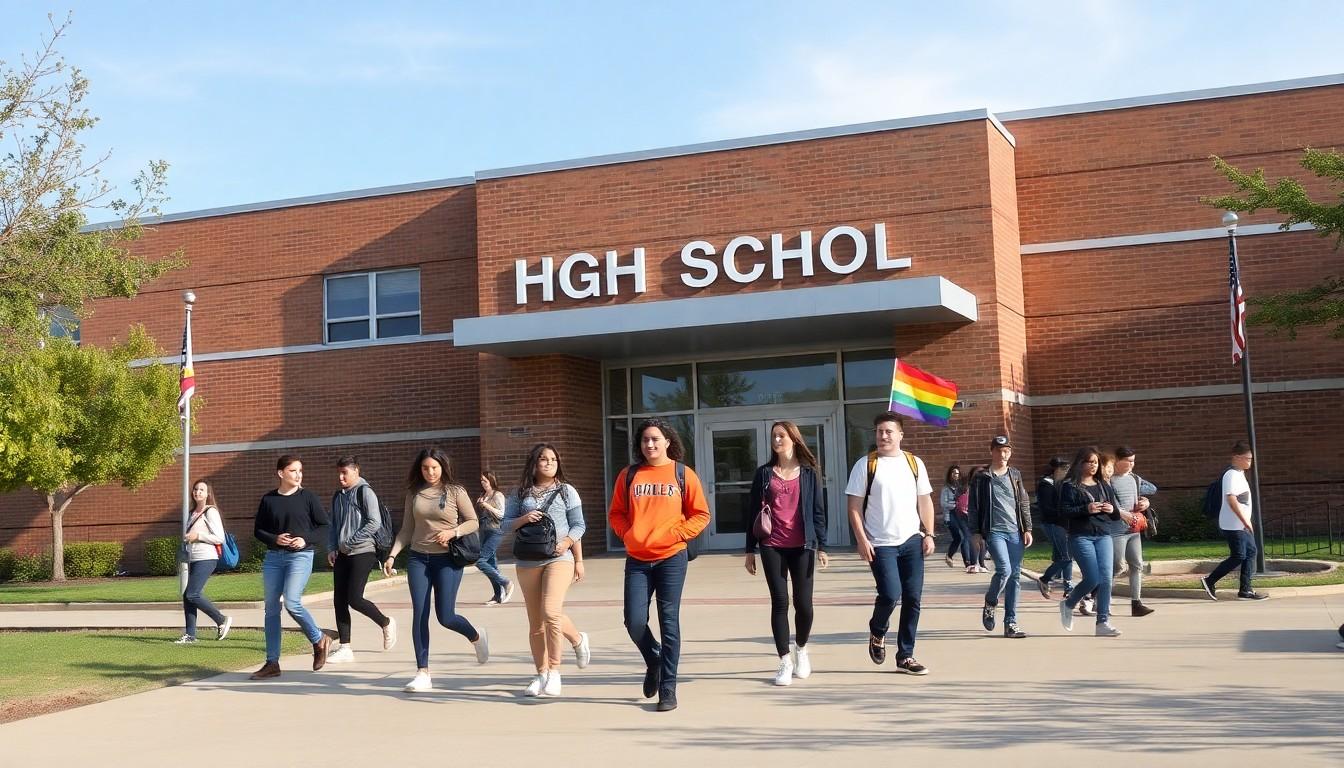
Young people in the US are reporting different identities than they did a few years ago, with the sharpest shift among girls identifying as bisexual. The change has prompted lively debate, but researchers caution that the figures show a complicated social trend rather than a simple explanation.
Essential Takeaways
- A notable fall: Recent analysis suggests fewer younger teenagers identify as lesbian, gay or bisexual.
- Girls show the biggest change: The decline appears particularly marked among girls who previously identified as bisexual.
- Boys remain steadier: Rates among boys identifying as gay or bisexual have changed much less.
- The reason isn't settled: Researchers point to several possible influences, including age, culture and the pandemic.
- Labels can change: Teen identity is often exploratory, so survey answers may shift over time.
A striking change in teenage identity
The headline finding is hard to miss: fewer young teenagers now describe themselves as lesbian, gay or bisexual than they did several years ago. The Washington Post reported that psychologist Jean Twenge called the movement a “free fall”, while also stressing that its cause remains uncertain.
That combination is important. The figures suggest a real change in how some teenagers answer identity questions, but they don't automatically explain why. A survey records what people say at a particular moment; it can't, on its own, distinguish changing feelings from changing language or social confidence. Multiple studies have reported a similar direction of travel, according to LGBTQ Nation and the Urania Institute.
Why girls are driving much of the decline
The most pronounced movement appears to be among girls, especially those identifying as bisexual. Reporting from The Washington Post and El Pais says identification among boys has stayed broadly stable, making the gender difference one of the clearest features in the data.
That doesn't mean every former label was insincere, and it certainly doesn't justify dismissing young people's experiences. Adolescence is a period of testing ideas, relationships and vocabulary, so some people may settle on a label, change it later or decide not to use one at all. As them notes, the numbers need to be read with care rather than turned into a culture-war punchline.
The pandemic may have changed the picture
The timing has encouraged researchers to look at the pandemic years, when teenagers spent more time online and away from ordinary school routines. Digital communities gave some young people new ways to explore identity, while isolation and disrupted friendships may also have altered how they described themselves.
That doesn't prove a single cause. Online influence, family attitudes, peer groups, mental health and the wider political climate could all matter, and their effects may differ from one teenager to another. Queerty's analysis highlights why the phrase “free fall” can be rhetorically powerful but statistically incomplete without knowing which age groups, questions and samples are being compared.
A label is not a lifetime contract
For parents, teachers and retailers of youth-focused services, the practical lesson is fairly simple: don't treat one survey answer as a permanent verdict. A teenager who identifies as bisexual today isn't necessarily confused, performing or destined to keep the same label forever. Equally, someone who later changes their description hasn't necessarily been lying.
The most useful response is calm curiosity. Ask what a young person means, avoid pressure in either direction and leave room for privacy. The data may be moving, but individual lives are still far more varied than a chart, as the reporting from them and LGBTQ Nation makes clear.
What the figures can and can't tell us
Researchers now face a more interesting question than whether the numbers are rising or falling: what exactly is changing? It could be the prevalence of certain attractions, the popularity of particular labels, teenagers' willingness to disclose them, or a mixture of all three.
Further studies will need to separate those possibilities and track young people over time, rather than relying only on snapshots. For now, the fairest conclusion is that LGBTQ+ identification among US teenagers has shifted, particularly among girls, but the explanation remains open. That may be less satisfying than a neat political answer, yet it's the most honest reading of the evidence.
A changing label can be part of growing up, not a story that needs a villain.
Source Reference Map
Story idea inspired by: [1]
Sources by paragraph: