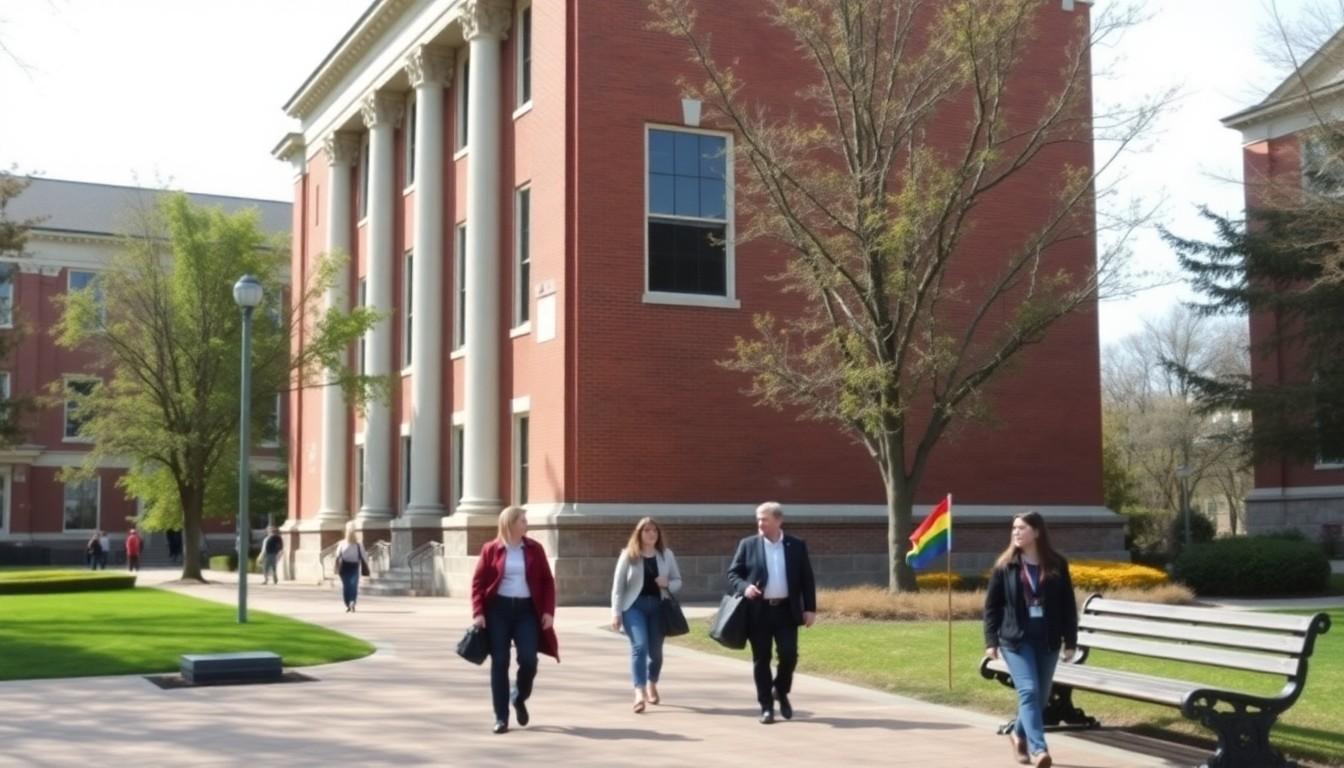
A new book is examining what happened after Tyler Clementi's death, challenging simplified accounts of Rutgers University's response and highlighting the importance of LGBTQ+ student support. Due from Rutgers University Press in May, the study draws on interviews with family members and university staff while directing proceeds towards organisations supporting LGBTQ+ young people.
Essential Takeaways
- A fresh account: Scholar Judy Farmer Jarvis interviewed 16 people for a more detailed history of the case.
- The wider picture: The book explores university crisis leadership, media coverage and the complexity of suicide.
- Campus support matters: Rutgers' LGBTQ+ resource centre and post-crisis initiatives feature prominently.
- A lasting legacy: Clementi's death helped prompt stronger anti-bullying protections in New Jersey.
- Proceeds will help: Income from the book will be donated to LGBTQ+ youth organisations.
A familiar story with missing chapters
Tyler Clementi's death became an international news story almost overnight, but the speed of that coverage left little room for nuance. Headlines often reduced the tragedy to a clash between one student's actions, a university's supposed indifference and a family's grief.
Judy Farmer Jarvis believes that version missed much of what happened behind the scenes. Her forthcoming book, Untold Stories: Tyler Clementi's Death and Crisis Leadership in Higher Education, aims to examine the response through interviews with people who had rarely spoken publicly, according to NJ Spotlight News.
That approach matters because public memory can become fixed around the first version of a story. In this case, Jarvis argues that the human and institutional details were more complicated than the polarised coverage suggested.
What happened at Rutgers?
Clementi, a Rutgers freshman from Ridgewood, died by suicide in September 2010 after his roommate, Dharun Ravi, viewed and livestreamed an intimate encounter involving Clementi. Online ridicule and attempts to obscure what had happened intensified the distress surrounding the case.
Ravi's original conviction was later overturned. In 2016, he pleaded guilty to a single privacy-invasion charge, receiving a fine and 20 days in jail, as reported by NJ Spotlight News.
Jarvis says the public narrative also overlooked the university's existing LGBTQ+ infrastructure. Rutgers had established an LGBTQ+ student resource centre in 1992, and the university organised vigils, forums and anti-bullying initiatives following Clementi's death, according to Rutgers' own retrospective coverage.
The criticism, she suggests, was not simply about what Rutgers did, but how poorly it explained that work to the media. That distinction is easy to miss when a tragedy is being compressed into a few dramatic headlines.
Why crisis response cannot be reduced to one cause
One of the book's central themes is the danger of treating suicide as the result of a single event. Bullying and harassment can be devastating, but mental health professionals generally recognise that suicide is complex and may involve several overlapping pressures.
The Tyler Clementi Foundation has kept that broader conversation alive through work with schools, sports teams, workplaces and faith communities. Its focus is not only on reacting to harassment, but on creating environments where people feel safer reporting it and seeking help.
For students, that can make a practical difference. A clearly named, visible support centre gives someone somewhere to go before a crisis becomes overwhelming. It also signals that LGBTQ+ identities are part of campus life, rather than an issue students must navigate alone.
The legal changes that followed
Clementi's death helped drive changes to New Jersey's anti-bullying framework. In 2011, higher education institutions were required to adopt clearer policies covering harassment, intimidation and bullying, extending protections that had previously focused on schools.
National advocates have since pushed for similar standards across colleges and universities. The Human Rights Campaign has backed the Tyler Clementi Higher Education Anti-Harassment Act, while the foundation continues to campaign for legislation bearing his name.
The shift reflects a wider lesson from the case: policies need to be visible, understandable and properly enforced. A rule that sits unnoticed in a handbook won't help much when a student is frightened, isolated or unsure who will take them seriously.
A legacy built around kindness and action
Rutgers created the Tyler Clementi Center to honour his life and promote work aimed at reducing bias and harassment. The centre presents Clementi as a talented musician beginning university, rather than allowing the circumstances of his death to define his whole identity.
That framing is important. Memorials can become frozen in sorrow, but education and prevention give them a more active purpose. Rutgers' later programmes have focused on tolerance, connection and challenging prejudice, according to the university's magazine.
Jarvis is also donating her book proceeds to LGBTQ+ youth organisations, linking historical reflection with present-day support. Sixteen years on, that may be the most useful kind of remembrance: not simply revisiting what went wrong, but building better places for students who need help now.
If you or someone you know is in crisis or having suicidal thoughts, call or text 988 in the United States for the Suicide and Crisis Lifeline.
It's a small but meaningful step towards remembering the full story and improving the support around today's students.
Source Reference Map
Story idea inspired by: [1]
Sources by paragraph:
- Paragraph 1: [2], [3]
- Paragraph 2: [2], [7]
- Paragraph 3: [2], [3]
- Paragraph 4: [2], [4]
- Paragraph 5: [2], [3]
- Paragraph 6: [2], [4]
- Paragraph 7: [2], [5]
- Paragraph 8: [4], [6]
- Paragraph 9: [2], [5]
- Paragraph 10: [3], [7]
- Paragraph 11: [4], [7]
- Paragraph 12: [2], [4]
- Paragraph 13: [2], [3]
- Paragraph 14: [3], [7]
- Paragraph 15: [2], [4]