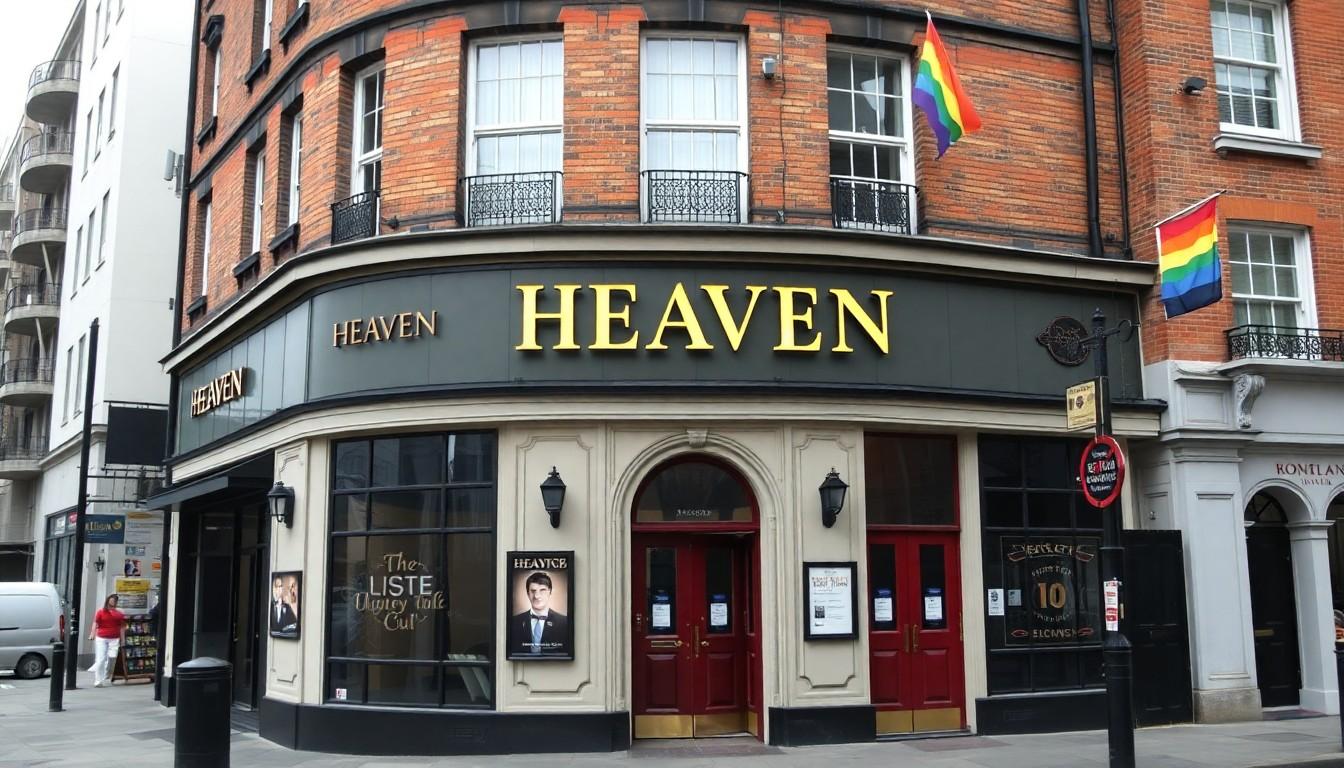
London’s legendary Heaven nightclub has received renewed protection as an Asset of Community Value, giving LGBTQIA+ communities more time to respond if the central London venue is put up for sale. The move matters because Heaven is not simply a dance floor: it’s a vivid piece of the capital’s queer history, shaped by decades of music, nightlife and belonging.
Essential Takeaways
- Renewed status: Westminster City Council has reinstated Heaven’s Asset of Community Value designation.
- A possible six-month window: If the property is marketed, eligible community groups may have time to prepare a bid.
- A landmark since 1979: Heaven has played a major role in London’s LGBTQIA+ nightlife and club culture.
- Protection isn’t permanent: The listing can slow a sale, but it doesn’t guarantee that the club will remain open.
- A charitable future is being considered: Owner Jeremy Joseph has discussed running the venue through a charitable structure.
Heaven gets another layer of protection
For a club that has pulsed through several generations of London nightlife, the latest decision offers a welcome pause. Heaven, beneath Charing Cross station, has again been recognised as an Asset of Community Value, a designation intended to acknowledge places that matter socially as well as commercially.
According to Time Out, the status can give community groups a period of up to six months to organise an offer if the building goes on the market. That doesn't give them an automatic right to buy it, but it could prevent a sale from happening at a sprint.
The distinction is important. In a property market where a central London venue can look tempting to developers, even a short breathing space may prove valuable.
Why Heaven means more than a nightclub
Heaven opened in 1979 and became one of the defining venues in London's LGBTQIA+ story. Its importance stretches beyond the sound system, glittering lights and late-night queues: for many visitors, it has been a place to meet, dance openly and feel part of something larger.
The club's long-running profile is also reflected in its place within London's wider nightlife history. Listings and historical accounts describe Heaven as a major home for electronic music and queer club culture, helping it stand out in a city crowded with famous venues.
That emotional value is difficult to capture in a balance sheet. A nightclub may sell drinks and tickets, but it can also hold memories that follow people for years. For plenty of Londoners, Heaven is tied to first nights out, chosen family and the simple relief of finding a room where they can be themselves.
The listing could buy the community time
Heaven was previously listed in 2020, but that protection expired in January 2025. Its renewal follows a fresh application from the Night Time Industries Association, which has argued for greater recognition of the role played by established nightlife venues.
The mechanism is relatively practical. If the owner decides to sell, the community listing can trigger a moratorium period, allowing qualifying groups to consider whether they can put together a serious proposal. As The Festivals UK reports, the process is designed to give local communities a chance to respond rather than watching a significant venue disappear overnight.
Still, the status shouldn't be mistaken for a preservation order. It can delay a transaction, but it doesn't force the owner to sell to a community bidder or prevent future redevelopment altogether. Think of it as a useful brake, not an impenetrable wall.
A difficult recent chapter adds urgency
The renewed protection arrives after a turbulent period for the club. Heaven faced a tenancy dispute in 2024, while its licence was temporarily suspended following an allegation involving a security worker. The accused was found not guilty in May 2025.
Those events underline how vulnerable even a famous venue can be. Heritage and reputation may attract loyal crowds, but they don't remove the everyday pressures of rent, licensing, staffing and property ownership.
According to Time Out's club coverage, Heaven remains an important part of London's nightlife landscape, yet its future depends on more than cultural affection. A venue needs a workable operating model, reliable finances and a supportive regulatory environment if it is to keep the music going.
Could a charity help secure Heaven's future?
Jeremy Joseph has said he hopes the renewed recognition will support Heaven's long-term survival, including plans to operate the venue as a charitable organisation. That idea could shift the conversation from simply keeping a club open to protecting its wider community purpose.
A charitable model wouldn't magically solve rising costs or the challenges facing nightlife, but it might make the venue's social and cultural contribution more central to its future planning. It could also help build a broader base of supporters around the club, from regulars and performers to LGBTQIA+ organisations and local campaigners.
The wider lesson is hard to miss. As property pressure reshapes central London, clubs such as Heaven are increasingly being treated as cultural infrastructure rather than disposable entertainment spaces. For anyone who has ever found confidence, friendship or freedom on a crowded dance floor, that feels like a change worth cheering.
A community listing can't guarantee Heaven's survival, but it gives the club's supporters a stronger voice when its future is under discussion.
Source Reference Map
Story idea inspired by: [1]
Sources by paragraph:
- Paragraph 1: [2], [6]
- Paragraph 2: [3], [4]
- Paragraph 3: [5], [7]
- Paragraph 4: [2], [6]
- Paragraph 5: [3], [4]
- Paragraph 6: [5], [7]
- Paragraph 7: [2], [6]
- Paragraph 8: [3], [7]
- Paragraph 9: [4], [5]
- Paragraph 10: [2], [6]
- Paragraph 11: [3], [7]
- Paragraph 12: [4], [5]
- Paragraph 13: [2], [6]
- Paragraph 14: [3], [7]
- Paragraph 15: [4], [5]