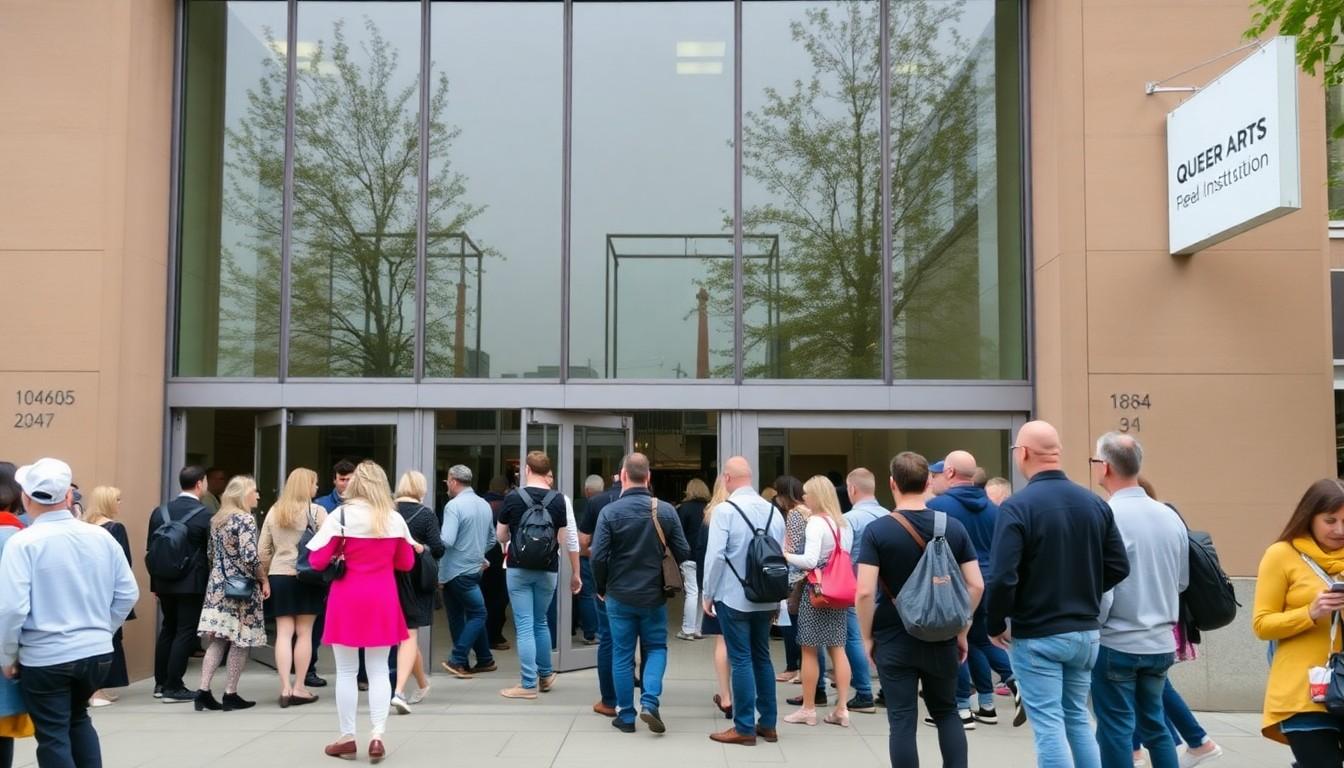
Artists, organisers and scholars are asking what creativity needs to flourish, bringing queer cultural history, present-day resistance and cross-sector solidarity into one urgent conversation. Across New England and beyond, the focus is shifting from celebrating artistic output to examining the conditions behind it, including safety, community support, fair work and collective action.
Essential Takeaways
- Three-part conversation: The programme moves from historical memory to present-day perseverance and collective liberation.
- Intergenerational focus: Established queer artists and scholars meet contemporary cultural leaders to share lessons and strategies.
- Beyond the workplace: The discussion links arts funding and working conditions with housing, safety, dignity and wider community needs.
- A regional outlook: The closing conversation looks at how organisations across New England can work together rather than operate in isolation.
- Community is central: Local queer arts projects show how shared spaces can feel both creative and protective.
Why queer artists are looking beyond the studio
Creative work rarely happens in a vacuum. Behind every performance, exhibition or mural is a network of people, spaces and resources that makes the work possible, even if audiences don't always see it.
The programme's opening discussion takes that hidden infrastructure seriously. It pairs artists and scholars who helped shape earlier queer cultural movements with artists working today, creating room for memory, comparison and practical reflection.
That intergenerational approach matters. Boston's queer arts history, as WBUR has reported, includes communities built through informal galleries, gatherings and shared creative spaces. Those places may look modest from the outside, but they can become vital meeting points when mainstream institutions feel distant or unsafe.
History offers more than a nostalgic story
Looking back isn't simply about celebrating past achievements. It's also about asking which survival tactics, organising habits and creative risks still have value now.
The conversation connects with a longer tradition of collective cultural work. Historical projects such as the Heresies Collective showed how art, publishing and political discussion could overlap, creating platforms for voices often pushed to the margins.
That history can be useful without becoming a blueprint. Today's artists face different pressures, from precarious employment to rising costs and the fragile availability of affordable venues. The lesson may be less about copying the past and more about remembering that cultural change has often started with people building alternatives together.
Creative community is a practical support system
The second panel turns towards the present, asking what it means to defend humanity while also creating the conditions for communities to thrive. That's a more demanding question than simply asking whether art is visible or popular.
New Hampshire's queer creative networks offer one example of this community-led spirit. Coverage of Queerlective has highlighted how artists can create their own structures for connection, expression and mutual support rather than waiting for established institutions to provide everything.
Projects such as We're Love Together make a similar point through public art. Murals and collaborative installations can brighten a street, certainly, but they can also make belonging visible. A colourful wall can't solve structural inequality, yet it can tell people that their presence is recognised.
What does abundant creativity actually require?
The phrase "abundant creativity" sounds optimistic, but it has a practical edge. Artists need time, money, accessible venues, rest and the freedom to experiment without treating exhaustion as proof of commitment.
That means arts organisations have responsibilities beyond presenting finished work. The Theater Offensive's Queer Literary and Arts programme, for instance, reflects the value of platforms designed specifically for queer artists and audiences, while national networks such as the NCAA Collective point towards broader organising and shared advocacy.
For audiences, the advice is refreshingly simple. Pay attention to who gets paid, who gets invited, who can physically access a venue and whose work is treated as essential rather than optional. Buying a ticket helps, but so does supporting community organisations, sharing opportunities and showing up consistently.
Liberation needs more than the arts sector
The final panel widens the frame, bringing together leaders from different sectors and across New England. Its central argument is straightforward: arts organisations cannot improve artists' lives by working only inside their own buildings.
Creative freedom is tied to wider conditions, including housing, healthcare, safety, education and the ability to participate in public life. Cross-sector organising can feel slower and messier than a single-organisation project, but it reflects how people actually live.
There is something heartening in that ambition. The strongest creative communities aren't just producing work; they're building the relationships that allow people to keep making it. For many artists, that dependable human network may be the most valuable resource of all.
It’s a small but powerful shift: treat creative freedom as a shared condition, not a private privilege.
Source Reference Map
Story idea inspired by: [1]
Sources by paragraph: