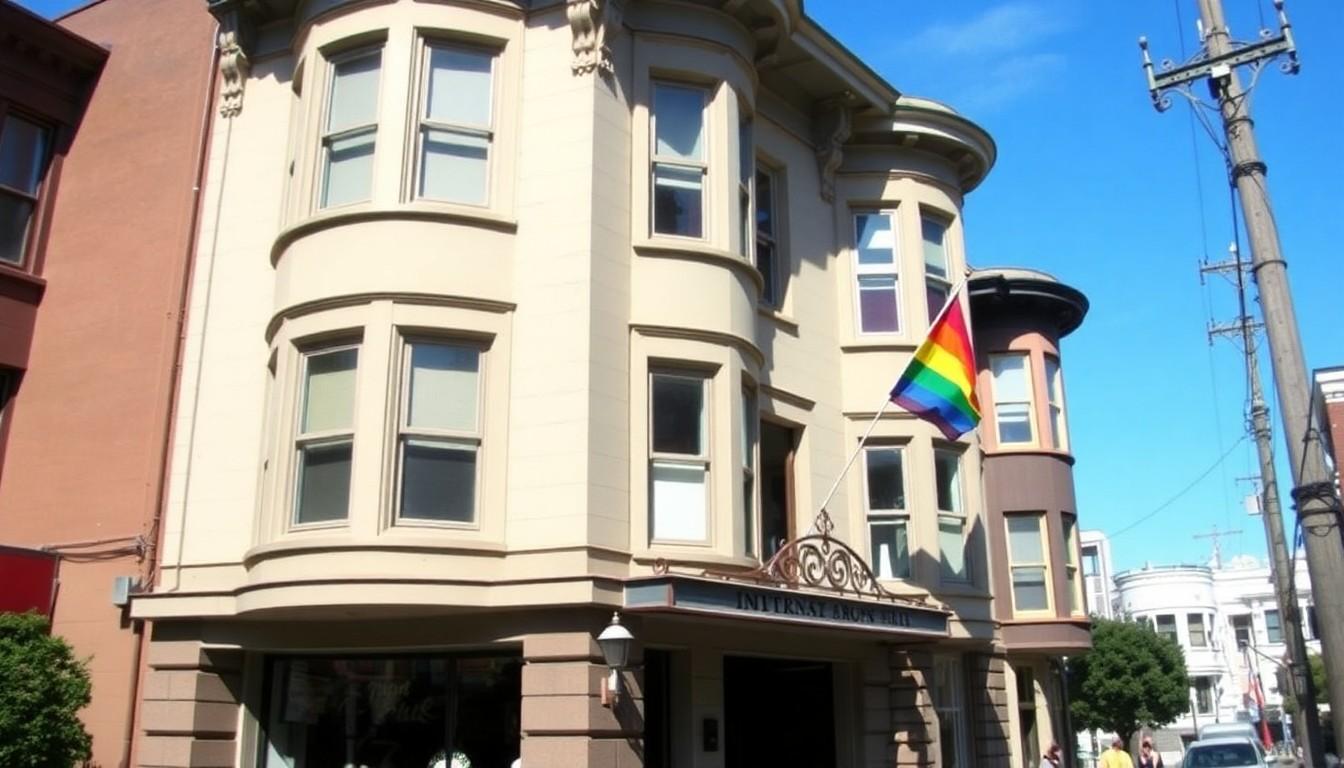
San Francisco's Alice B. Toklas LGBTQ Democratic Club helped turn hidden community organising into lasting political influence. From its discreet founding in 1971 to its role in elections, civil rights campaigns and public policy, the club's story shows how local activism can reshape a city and reach far beyond it.
Essential Takeaways
- Founded in 1971: The club became the first registered LGBTQ Democratic organisation in the United States.
- A coded name mattered: Alice B. Toklas offered members a degree of privacy when being openly gay could threaten work and safety.
- National breakthrough: Jim Foster addressed the 1972 Democratic National Convention and pushed gay rights into mainstream party debate.
- Local organising worked: Endorsement slates, phone banks and canvassing helped make LGBTQ voters a recognised electoral force.
- A leadership pipeline emerged: Club members later moved into elected office, commissions and influential public roles.
A discreet name, a bold political idea
In 1971, openly LGBTQ political organising still carried serious personal and professional risks. Against that backdrop, Phyllis Lyon, Del Martin, James M. Foster and Beth Elliott helped establish the Alice B. Toklas LGBTQ Democratic Club in San Francisco.
The name was more than a nod to literary history. As the club's historical record explains, using Toklas's name gave members a discreet way to organise while homosexuality remained criminalised in much of the United States and many political institutions were hostile to gay rights. It was a quiet label attached to a remarkably audacious project.
The club's early history is also part of a wider network of Bay Area LGBTQ institution-building. The Golden Gate Business Association, founded around the same era, similarly used a less conspicuous identity while creating economic and civic space for the community, according to OutHistory.
Jim Foster took gay rights to the national stage
The club's influence quickly moved beyond San Francisco. In 1972, co-founder Jim Foster became the first openly gay delegate to address a major party presidential convention, speaking at the Democratic National Convention in Miami Beach.
Foster argued for a gay liberation plank in the party platform. The proposal was initially rejected, but the moment still mattered: gay rights had been placed before a national political audience as a civil rights issue, rather than being treated as a subject party leaders could simply avoid.
That public intervention helped establish a pattern the club would follow for decades. It combined insider political engagement with movement pressure, a practical approach that could feel less dramatic than protest but often delivered a seat at the table.
The Alice slate proved local votes could shift power
Back in San Francisco, the club developed a more systematic method for turning community support into electoral influence. Its endorsement slates brought candidates, volunteers and LGBTQ voters together around municipal contests.
The 1973 slate included Dianne Feinstein, who would later become San Francisco mayor and a US senator. Organisers used phone banking, door-to-door canvassing and volunteer networks to demonstrate that LGBTQ voters were not merely a constituency to court symbolically. They were an organised bloc capable of affecting who won.
This was a significant shift in political behaviour. According to historical accounts collected by OutHistory, the club's local strategy helped make LGBTQ endorsements a serious consideration for candidates seeking office in San Francisco.
Crisis changed the club's priorities
The late 1970s brought a painful combination of political backlash and community loss. Alice members joined the campaign against Proposition 6, the Briggs Initiative, which sought to bar openly gay teachers from California public schools.
The assassination of Harvey Milk and Mayor George Moscone in 1978 then traumatised San Francisco. The HIV and AIDS epidemic added an even deeper emergency, forcing activists to focus on healthcare, public funding and protection from discrimination alongside electoral campaigns.
Coverage of San Francisco's LGBTQ political history shows how overlapping organisations and leaders shaped that period. The club's work was part of a broader movement that had to defend hard-won visibility while responding to grief, stigma and a public-health catastrophe.
From party recognition to a leadership pipeline
The campaign for political recognition gradually produced concrete policy gains. At the 1980 Democratic National Convention, the party adopted a civil rights plank barring discrimination based on sexual orientation, marking a national advance after years of organising.
Locally, the club backed measures including domestic partnership legislation and San Francisco's 1996 Equal Benefits Ordinance. The latter required city contractors to offer equal benefits to same-sex domestic partners, linking LGBTQ equality to the everyday mechanics of public procurement and employment.
Over time, Alice became more than a club that endorsed candidates. Its members moved into elected and appointed roles, including state legislators and city commissioners. That pipeline matters because representation isn't only about who wins one election. It's also about who gains the experience, networks and confidence to shape policy over many years.
Why the club's history still resonates
The Alice B. Toklas LGBTQ Democratic Club's story offers a useful lesson in how political change is built. National visibility can open doors, but local organisation keeps them open through endorsements, fundraising, volunteer work and persistent policy pressure.
There is also something strikingly modern about the club's original formula: build a trusted network, understand where decisions are made and make participation practical. The tools have changed, but the basic work remains recognisable.
For younger activists, the history is both encouraging and sobering. Progress can move from a discreet meeting room to the centre of government, but it still depends on people willing to keep organising when the headlines have moved on.
It's a reminder that durable political power usually starts close to home.
Source Reference Map
Story idea inspired by: [1]
Sources by paragraph:
- Paragraph 1: [2], [3]
- Paragraph 2: [2], [3]
- Paragraph 3: [3], [4]
- Paragraph 4: [2], [3]
- Paragraph 5: [4], [5]
- Paragraph 6: [4], [6]
- Paragraph 7: [3], [7]
- Paragraph 8: [2], [3]
- Paragraph 9: [4], [5]
- Paragraph 10: [2], [3]
- Paragraph 11: [4], [6]
- Paragraph 12: [2], [3]
- Paragraph 13: [2], [7]
- Paragraph 14: [3], [4]
- Paragraph 15: [2], [5]
- Paragraph 16: [3], [6]
- Paragraph 17: [2], [7]
- Paragraph 18: [3], [4]