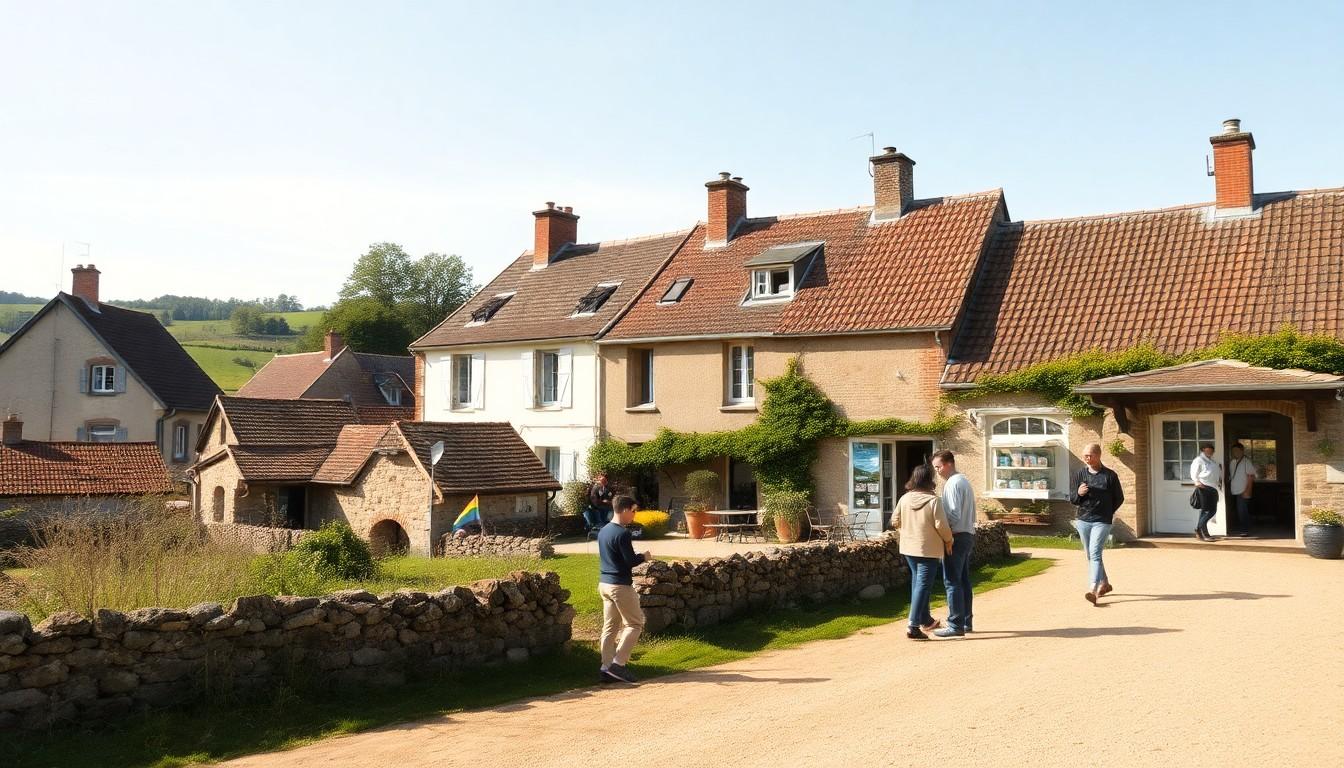
Young LGBTQ+ people in rural France are challenging the idea that big cities are the only safe places to belong. A new national study suggests many want to stay connected to rural life, even as discrimination, limited services and social visibility make daily life complicated. The result is a more nuanced picture of pride, place and belonging.
Essential Takeaways
- Rural life isn't one experience: Young LGBTQ+ people describe both local solidarity and discrimination.
- Staying is common: The study found that nearly 90% picture their future in a rural setting, either permanently or after a period away.
- Discrimination remains widespread: Around three-quarters reported feeling discriminated against, with higher levels among trans and non-binary respondents.
- Anonymity cuts both ways: Close-knit communities can expose private information quickly, but local recognition can also offer protection.
- Services are harder to reach: Specialist healthcare, support groups and trained professionals are often further away in rural areas.
The city refuge story is starting to crack
For decades, the familiar script was simple: leave the village, head for the city and find freedom among people who understand you. Popular culture helped cement that image, from Bronski Beat's Smalltown Boy to countless coming-of-age stories built around escape.
But real life rarely follows such a neat route. Research into LGBTQ+ experiences outside metropolitan areas has increasingly shown that rural communities can contain their own networks, friendships and forms of support. A quieter setting doesn't automatically mean an easier life, but nor does a crowded city guarantee safety or happiness.
That distinction matters because visibility and wellbeing aren't the same thing. Cities may offer more bars, groups, clinics and potential partners, yet they can also bring loneliness, housing pressure and the strain of starting again from scratch. As wider research on LGBTQ+ communities and rural wellbeing suggests, location shapes opportunity, but it doesn't decide someone's entire experience. (Sources: [2], [3], [4])
Many young people still see a future in the countryside
The French survey behind Fiertés d'ici gathered more than 1,000 usable responses from young LGBTQ+ people living in rural areas, alongside longer interviews about their personal journeys. Its clearest message is that leaving isn't the default dream.
Around 51% said they intended to remain in the countryside for the long term, while a further 14% expected to stay for now before possibly moving later. Only about one in ten planned to leave permanently. Others imagined a temporary departure followed by a return, suggesting that mobility can be part of rural belonging rather than a clean break from it.
Age makes a difference. Teenagers are more likely to imagine a permanent move, while older respondents are more inclined to value staying put. Family ties, memories, space and a calmer pace all play a role. For some, rural life feels less like a limitation than a place they actively want to build a future. (Sources: [2], [3], [6])
Safety is still a serious concern
The softer picture shouldn't disguise the harder facts. About 73% of respondents said they'd experienced discrimination, rising to 82% among trans people and 85% among non-binary people. Reported experiences included verbal abuse, psychological harm, bullying, threats and physical or sexual violence.
School was the most common setting where respondents felt unsafe, followed by family life and leisure or sporting spaces. That pattern reflects findings from broader research on LGBTQ+ victimisation, which has repeatedly linked hostile environments with poorer mental health and a reduced sense of belonging.
Rural communities can make the problem feel especially intense because social circles overlap. The same person might be a classmate, neighbour, relative's friend and member of a local club. If a private detail becomes public, there may be nowhere obvious to step away from it. The countryside can be peaceful, but privacy is often in shorter supply. (Sources: [4], [5], [7])
Close-knit communities can protect as well as expose
Interconnected rural life isn't only a source of pressure. Feeling known as a local, having supportive relatives and taking part in village life can create a form of social protection. The research suggests that young people who feel integrated into their community are much more likely to want to stay.
That protection can be conditional, though. It may depend less on broad acceptance of LGBTQ+ identities and more on whether someone is seen as a trusted member of the community. In other words, belonging can provide safety, but it shouldn't have to be earned by being useful, familiar or quietly discreet.
This is why the idea of a simple rural-versus-urban divide falls short. A small town might offer a cherished family network and a peaceful home, while also lacking a nearby LGBTQ+ group or a supportive clinician. Meanwhile, a city can provide specialist services and anonymity, but not necessarily a stronger emotional anchor. (Sources: [2], [3], [6])
Better services could make staying a real choice
The biggest gap is often practical rather than symbolic. Rural areas tend to have fewer LGBTQ+ centres, drop-in services, trained professionals and specialist healthcare providers. Long journeys to mental health support or gender-affirming care can turn an already difficult process into a logistical marathon.
The evidence also points to a link between access and wellbeing. Young people who feel well supported are more likely to have suitable care nearby, while those struggling the most often face the greatest distance from help. Improving online support can ease some pressure, but digital access can't replace trusted local services for everyone.
The next step is making rural LGBTQ+ life visible without romanticising it. Rural pride events, school-based support, better training for healthcare workers and properly funded community organisations can help people stay because they want to, not because they have no alternative. For many young people, that would be the real meaning of a safe place: not a dramatic escape, but an ordinary life that feels possible. (Sources: [2], [4], [6], [7])
It's time to treat rural LGBTQ+ belonging as a future to support, not a problem to escape.
Source Reference Map
Story idea inspired by: [1]
Sources by paragraph: