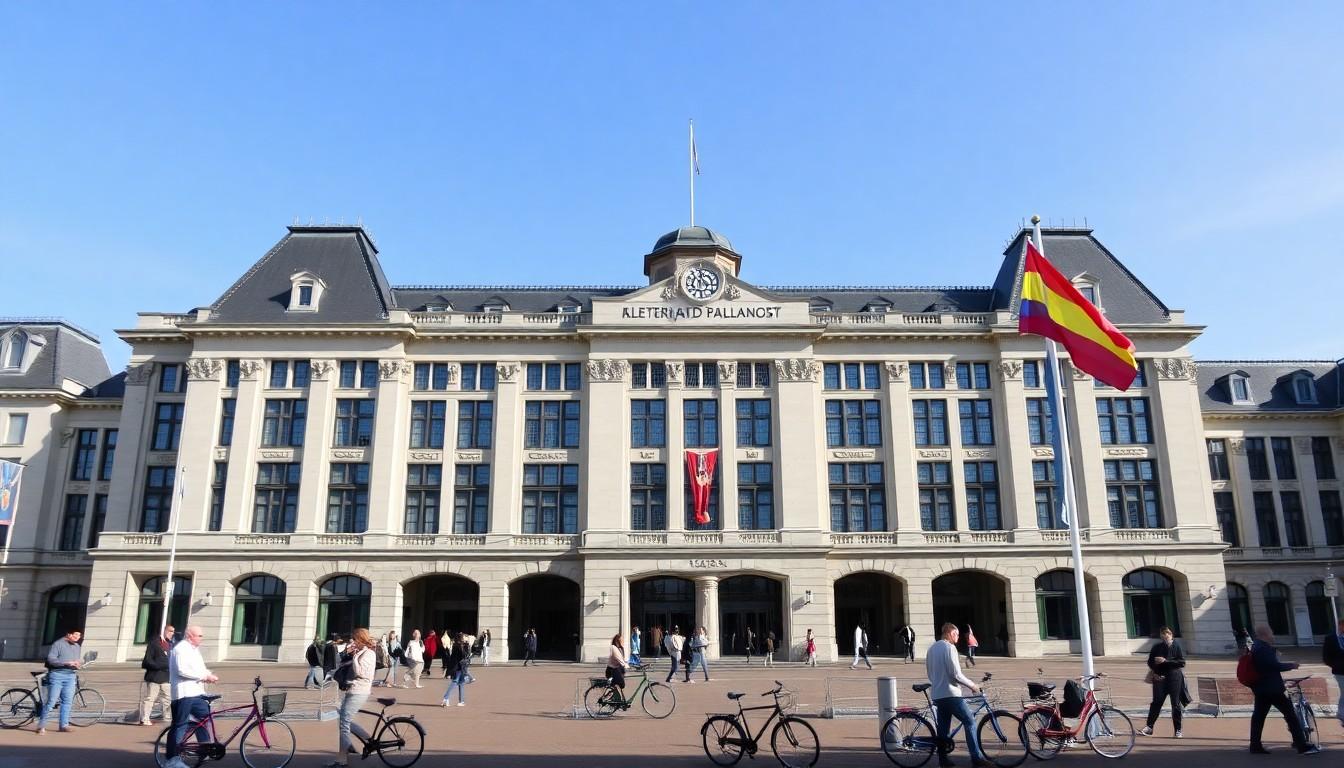
A parliamentary vote on flying a rainbow flag has reopened a bigger Dutch debate: do public symbols support LGBTQ+ people, or merely offer politicians an easy gesture when genuine protection is needed?
Essential Takeaways
- A symbolic vote: Dutch MPs backed flying a rainbow flag at parliament for the first time on Coming Out Day.
- A wider divide: Some politicians call rainbow displays performative, while supporters see them as visible reassurance.
- Public resistance: Rainbow flags have also triggered protests and negative reactions in several Dutch communities.
- The real concern: Surveys and recent reporting point to unease about declining LGBTQ+ acceptance, particularly among younger people.
- Symbols have limits: A flag can't replace education, enforcement or political consistency, but removing every visible sign sends its own message.
One flag, several political messages
A rainbow flag outside parliament is a small sight, but it carries a remarkably large argument. Supporters see colour, visibility and solidarity. Critics see a decorative gesture that costs little and changes even less.
That tension sits at the heart of Özcan Akyol's column for Brabants Dagblad. He questions the gap between politicians who say LGBTQ+ people should be free to live as they choose and those who resist a public gesture of support. The contradiction is hard to miss: a party can defend personal freedom in principle, yet treat a flag as an unnecessary distraction. Sources including NL Times and DutchNews reported that MPs nevertheless voted to display the flag at parliament. [2], [3], [4]
The timing matters, too. Coming Out Day is designed to make LGBTQ+ visibility public rather than private. A flag won't make a hostile comment disappear, but its absence can be noticed just as quickly.
Why the argument has become sharper
The Dutch rainbow-flag debate is no longer confined to town halls and school gates. In Oldebroek, residents protested against a local rainbow display, while the municipality later ended the arrangement, according to NL Times and the European Conservative. That episode showed how a simple piece of fabric can become a proxy battle over identity, tradition and who gets to define public space. [2], [7]
Other reporting suggests the pushback isn't isolated. A survey covered by NL Times found that political posters and flags often receive negative reactions, particularly when people feel public spaces are being used for campaigning or ideological signalling. The rainbow flag can therefore be welcomed as a sign of belonging by one passer-by and read as unwanted activism by another. [5]
That doesn't make every criticism hateful, but it does make the political language around the issue more revealing. When visibility becomes controversial, the question isn't only whether symbols work. It's also who feels entitled to be visible.
A flag can't do the whole job
Akyol's most pointed observation is that rainbow flags may prove their own limits. If the social climate is becoming more hostile, repeated displays can start to look like a substitute for action. The public sees the colour, but may not see stronger school policies, better protection from abuse or firm responses to discrimination.
The concern is especially relevant in schools. Reporting on the parliamentary vote noted that schools were also joining Purple Friday, turning LGBTQ+ visibility into an educational and community event rather than leaving it solely to politicians. That broader involvement matters because attitudes are shaped in classrooms, friendship groups and online spaces, not just on government buildings. [3], [4]
At the same time, dismissing symbols altogether would be too easy. Public gestures can reassure people who rarely see themselves reflected in official spaces. A flag isn't a policy, but it can signal which citizens a public institution intends to recognise.
Why consistency matters more than colour
The strongest criticism is not that rainbow flags are pointless. It's that they can become opportunistic. Politicians may invoke LGBTQ+ rights when attacking a rival party, a religious group or a migrant community, while offering less enthusiasm when LGBTQ+ people ask for direct support themselves.
That pattern is particularly visible when parties express concern about equality in one setting but object to symbolic displays in another. The Eurovision controversy, reported by NL Times, also showed how restrictions on non-national flags can provoke anger among LGBTQ+ advocates, especially when rainbow symbols are treated as political baggage rather than community representation. [6]
For readers trying to judge the debate, a useful test is simple: what follows the flag? Look for funding, anti-bullying measures, teacher support, hate-crime enforcement and clear public language. Without those, a display risks becoming a photo opportunity. With them, it can be one visible part of a credible approach.
What should happen next?
The Dutch argument is unlikely to end with one parliamentary vote. More councils will face questions about flags, schools will continue debating visibility, and residents will keep disagreeing about what belongs in shared spaces.
But the most useful conclusion isn't that rainbow flags work perfectly or fail completely. They work as signals, not solutions. The real test is whether the institutions flying them remain present when support is inconvenient, unpopular or politically costly.
A person shouldn't have to decode a flag to know whether they're safe. Still, when even a flag becomes too much for some politicians, it tells us something worth paying attention to.
It's a small symbol, but the consistency behind it is what really counts.
Source Reference Map
Story idea inspired by: [1]
Sources by paragraph: