More than 3,000 schools across the Netherlands are marking Purple Friday, with pupils wearing purple to celebrate LGBTQ+ identity and equality. The annual campaign offers a bright, visible reminder that inclusion isn't abstract: it belongs in classrooms, corridors and everyday school life.
Essential Takeaways
- A visible statement: Purple clothing and flags show support for LGBTQ+ pupils and staff.
- School-wide participation: More than 3,000 Dutch schools are taking part.
- A simple message: The campaign focuses on freedom, equality and being yourself.
- Still needed: Supporters say discrimination and exclusion haven't disappeared.
- Easy to join: Schools can use clothing, lessons, conversations and displays to participate.
Purple turns a school corridor into a statement
On Purple Friday, ordinary school uniforms and jumpers give way to splashes of violet. The colour creates an immediate, cheerful signal: everyone should be able to feel safe and accepted, whatever their sexual orientation or gender identity.
The campaign is organised in the Netherlands as a national moment of solidarity for LGBTQ+ people. Educational guidance from COC Nederland encourages schools to use the day to make diversity visible and to open conversations that might otherwise be avoided.
That visibility matters. A flag in a window or a purple shirt may seem small, but for a pupil wondering whether they'll be accepted, it can offer a reassuring sign that they're not alone.
What is Purple Friday, and why do schools take part?
Purple Friday is held in December and invites pupils, teachers and other school staff to wear purple. Schools may also organise classroom activities, discussions, creative projects or assemblies around identity, respect and equality.
The day isn't intended to reduce LGBTQ+ inclusion to a single annual event. Rather, it gives schools a practical starting point for discussing the broader values they want to live by throughout the year, according to educational resources explaining the initiative.
Local authorities and schools often describe the event as a chance to reinforce a welcoming environment. That makes it flexible: one school might run a full programme, while another simply decorates its entrance and invites pupils to wear something purple.
A flag can carry more meaning than expected
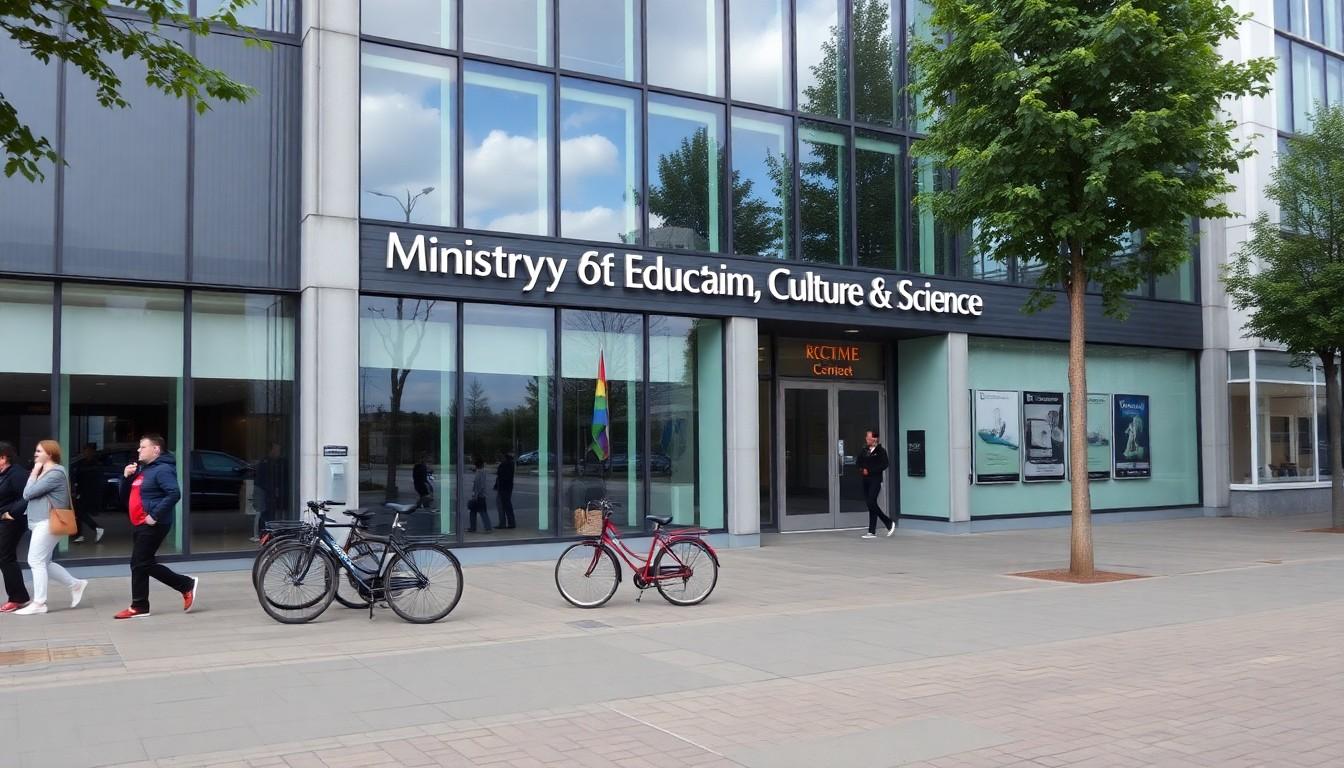
Dutch State Secretary for Education, Culture and Science Jurgen Tielen joined the campaign by wearing purple and visiting a school. Ahead of a cabinet meeting, Tielen said the rainbow flag represented freedom and equality for LGBTQ+ people, while also noting that the flag was flying at the education ministry.
Tielen has said she'd prefer initiatives such as Purple Friday eventually to become unnecessary. For now, however, she argues that schools and public institutions must keep defending basic democratic values rather than allowing political arguments to distract from them.
The rainbow flag and the Purple Friday flag aren't identical symbols, but they work in a similar visual language. Both make support public, which is precisely why they can feel encouraging to some and politically charged to others.
How schools can make the day useful
The strongest Purple Friday activities tend to be simple, specific and age-appropriate. Teachers might explore respectful language, discuss stereotypes, examine representation in books or media, or create a class agreement about treating people fairly.
Schools should also think beyond the day itself. Clear anti-bullying procedures, trusted staff contacts and inclusive policies offer more lasting support than a one-day display, however eye-catching the decorations may be.
For families, participation can be as straightforward as helping a child choose a purple jumper or asking what the school has planned. A relaxed conversation at home can make the subject feel normal rather than awkward, which is often half the battle.
The wider lesson is about belonging
Purple Friday's popularity reflects a broader shift in how schools talk about wellbeing. Belonging isn't just a soft extra; it can affect whether pupils feel comfortable speaking up, joining activities and concentrating on learning.
Critics may see themed days as symbolic, but symbols have a role in public life. They tell people what an institution is prepared to stand for, especially when discrimination or hostile language can make inclusion feel fragile.
The most meaningful test comes after the purple clothes are packed away. If the day leads to kinder language, better support and more confident conversations, its impact can stretch well beyond December.
A splash of purple won't solve every problem, but it can open the door to a safer school culture.
Source Reference Map
Story idea inspired by: [1]
Sources by paragraph:
- Paragraph 1: [2], [4]
- Paragraph 2: [3], [5]
- Paragraph 3: [6], [7]
- Paragraph 4: [2], [4]
- Paragraph 5: [3], [7]
- Paragraph 6: [5], [6]
- Paragraph 7: [2], [4]
- Paragraph 8: [3], [7]
- Paragraph 9: [2], [5]
- Paragraph 10: [4], [6]
- Paragraph 11: [2], [7]
- Paragraph 12: [3], [5]
- Paragraph 13: [4], [6]
- Paragraph 14: [2], [7]
- Paragraph 15: [3], [5]
- Paragraph 16: [4], [7]
- Paragraph 17: [2], [6]
- Paragraph 18: [3], [5]