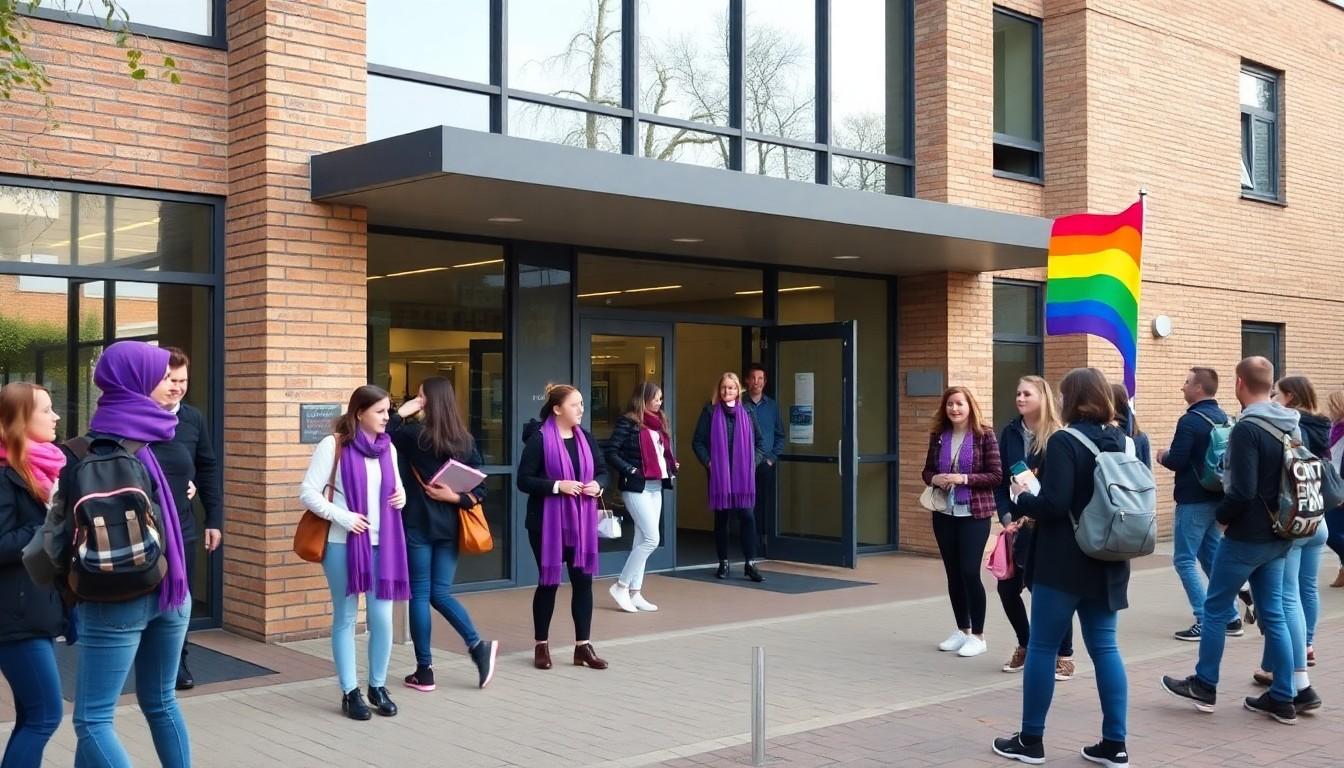
Students and teachers across the Netherlands are wearing purple for Purple Friday, a visible show of support for LGBTQIA+ people at a time when acceptance of homosexuality among adolescents has declined sharply. The annual school campaign offers solidarity, conversation and a reminder that feeling safe in class still matters.
Essential Takeaways
- Acceptance is slipping: Research from Utrecht University points to a marked decline in acceptance of homosexuality among Dutch adolescents.
- Purple sends a message: Students, teachers and staff wear purple to show support for LGBTQIA+ communities.
- Visibility matters: A colourful school-wide gesture can help challenge homophobia and make support easier to see.
- Everyday safety counts: Respectful language, inclusive teaching and trusted adults remain crucial for queer pupils.
Purple Friday turns solidarity into something visible
On Purple Friday, school corridors across the Netherlands take on a noticeably brighter hue. Jumpers, badges and accessories become small but meaningful signals that LGBTQIA+ students aren't standing alone.
The campaign is deliberately straightforward. Wearing purple doesn't require a speech or a public declaration, yet it can still change the atmosphere in a classroom. For a student wondering whether anyone would support them, that quiet show of solidarity may carry real weight.
Why is acceptance among teenagers falling?
The decline in acceptance among adolescents is unsettling precisely because it challenges the idea that younger generations are automatically more progressive. Utrecht University has reported a sharp fall in acceptance of homosexuality among teenagers, raising questions about social media, polarisation and the tone of public debate.
Schools don't exist separately from wider society. Comments heard online or in the news can quickly find their way into corridors and classrooms, where a joke may feel less harmless to the pupil sitting nearby. The result is often a more cautious environment, particularly for students who are questioning their identity or already face exclusion.
A school campaign with a practical purpose
Purple Friday is more than a dress code for one day. Educational organisations describe it as an opportunity to discuss sexual and gender diversity, challenge stereotypes and make inclusion part of school life rather than an annual afterthought.
That broader approach matters. A purple shirt can open a conversation, but consistent staff support, clear anti-bullying policies and teaching materials that reflect different families and identities do the longer-term work. The most effective schools tend to treat the day as a starting point, not a finish line.
What can schools and families do next?
Schools can begin with simple, concrete steps: make reporting routes clear, respond quickly to slurs and ensure pupils know which adults they can trust. Staff training also helps, especially when teachers aren't sure how to handle hostile comments or a student's questions about identity.
Families can support the same message at home by listening without rushing to judgement and by taking apparently minor incidents seriously. A teenager may not describe an experience as bullying straight away, so a calm, open question can be more useful than an interrogation.
Visibility is valuable, but consistency is stronger
Universities and schools across the Netherlands continue to mark LGBTQIA+ inclusion through Purple Friday, rainbow flags and related events. These gestures help create a shared public language of support, particularly for students who may otherwise feel isolated.
Still, the real test comes after the purple clothes are put away. As one school day fades into the next, pupils need the same respect in lessons, lunch queues and group chats. That consistency is what turns a campaign into a culture.
A visible show of support can make a difficult school day feel less lonely.
Source Reference Map
Story idea inspired by: [1]
Sources by paragraph: