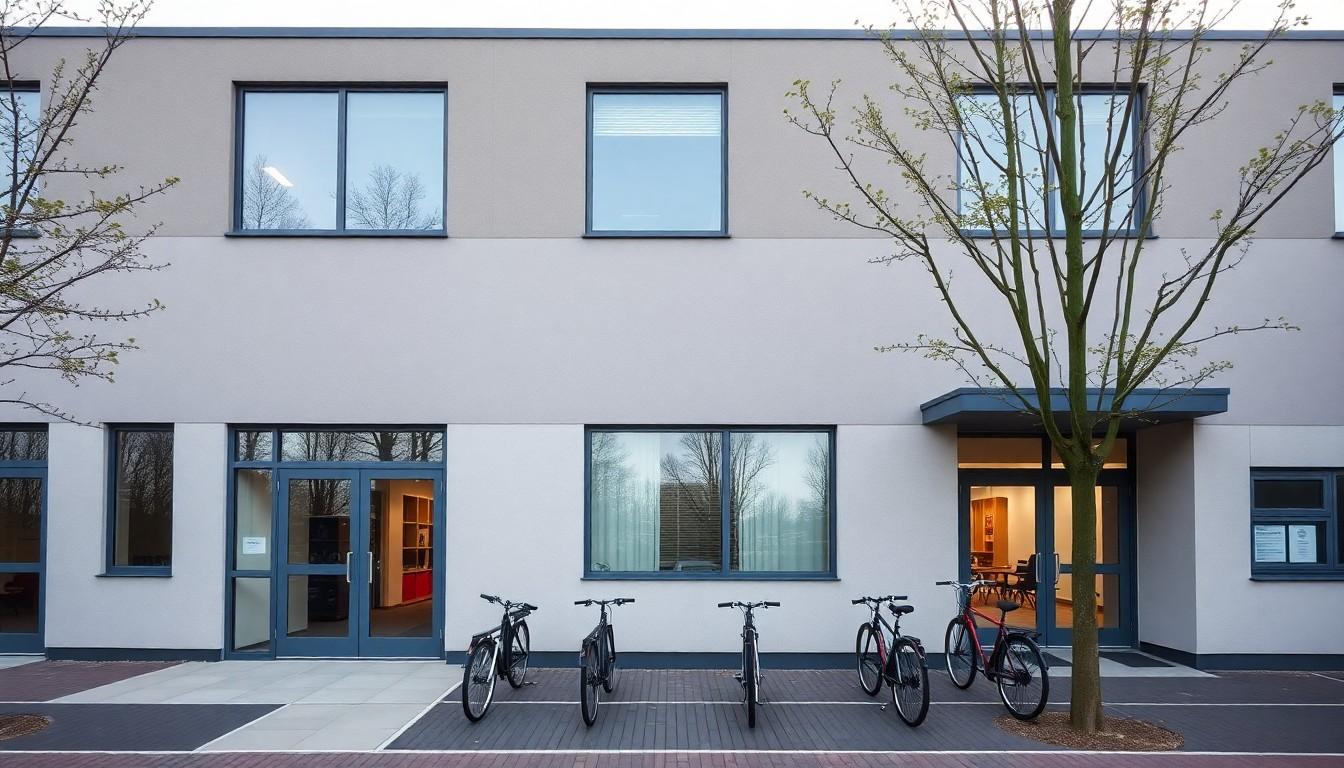
Students across the Netherlands are marking Purple Friday with lessons, clothing and conversations about LGBTQ+ acceptance. But as writer Joost Oomen reflects, coming out at school can still demand remarkable courage, especially when young people feel less safe and public support appears increasingly fragile.
Essential Takeaways
- Purple Friday matters: Schools use the annual event to discuss LGBTQ+ visibility and acceptance.
- Coming out isn't simple: A supportive reaction from friends may not remove the wider pressure to conform.
- School safety remains uneven: LGBTQ+ pupils can face hostility, disruption and exclusion.
- Small gestures count: Visible support can help make classrooms feel less relentlessly heterosexual.
- The conversation needs consistency: Inclusion works best when it's part of school life, not a once-a-year statement.
Purple Friday asks schools to be visibly welcoming
Purple Friday turns an ordinary school day into a public show of support. Pupils and staff may wear purple, organise activities or make room for conversations about LGBTQ+ lives and rights. According to AT5, many schools use the occasion to give homoacceptance extra attention, although the way they approach it varies.
That visibility matters because silence has a texture of its own. It can feel like a corridor where everyone is expected to move in the same direction, or a classroom where certain jokes pass unnoticed because nobody wants to be the person who interrupts them.
For some pupils, a purple jumper is a simple gesture. For others, it can be the first sign that school might contain people who understand what they're going through.
Coming out often happens in an atmosphere of pressure
Joost Oomen's reflection begins with a memory of a school friend who came out as gay in the early 2000s. The story is affectionate, funny and awkward in equal measure, but underneath it sits a harder question: how many other pupils were keeping quiet because they didn't feel able to speak?
A friendly response from classmates can help, but it isn't the same as a genuinely inclusive environment. Students may still hear casual slurs, endure assumptions about relationships or feel expected to join in with loudly heterosexual banter. Good intentions are useful, but they don't automatically dismantle the background noise.
That's why coming out can become more than a personal disclosure. As NPO Radio 1's commentary argues, it may feel almost political when a young person makes their identity visible in a setting that still treats heterosexuality as the default.
The mood has shifted, and not in the reassuring direction
It would be comforting to say that schools have simply become safer with time. The commentary points to a less comfortable reality, with declining acceptance among young people and LGBTQ+ pupils reporting insecurity. Reports of hostility around lessons, school activities and rainbow symbols underline how exposed inclusion can become.
AT5's coverage of Purple Friday shows that schools are still making an effort to focus attention on acceptance. Yet a special day can also reveal the limits of symbolism. A flag or themed lesson is valuable, but it can't carry the whole burden of creating safety.
The contrast is stark. A school may look colourful for one Friday, while a pupil still calculates whether holding hands, mentioning a crush or correcting a pronoun is worth the risk. That calculation shouldn't be part of growing up.
What can schools and classmates do differently?
Start with the ordinary moments. Challenge jokes that make LGBTQ+ people the punchline, avoid assuming every pupil has an opposite-sex partner and make sure teaching materials reflect more than one kind of family or relationship.
Staff also need practical backing, not just good intentions. Clear behaviour policies, trusted adults and consistent responses to harassment make it easier for pupils to ask for help. Schools should also make discussions about sexuality and gender part of wider pastoral and citizenship work, rather than treating Purple Friday as an isolated event.
For classmates, support doesn't require a grand speech. Sitting beside someone, refusing to laugh along or saying "that's not okay" can change the temperature of a room. It may feel small, but school life is built from these small signals.
A purple handkerchief makes the message personal
Oomen's closing image is deliberately modest: not purple clothing, but a clean purple handkerchief, held up as a symbol of openness and courage. It turns an everyday object into a quiet challenge to the idea that queer visibility should be hidden, postponed or treated as provocative.
There's humour in the image, but also tenderness. Everyone deserves a school that is equally awkward, noisy and embarrassing for everyone, rather than a place where some pupils must become brave simply to be honest.
Purple Friday can't solve that problem on its own. But it can keep the question in public view, which is where meaningful change usually begins.
A safer school is built through everyday acts of visibility, respect and courage.
Source Reference Map
Story idea inspired by: [1]
Sources by paragraph:
- Paragraph 1: [3], [4]
- Paragraph 2: [2], [5]
- Paragraph 3: [6], [7]
- Paragraph 4: [3], [4]
- Paragraph 5: [2], [6]
- Paragraph 6: [5], [7]
- Paragraph 7: [3], [6]
- Paragraph 8: [2], [4]
- Paragraph 9: [5], [7]
- Paragraph 10: [3], [6]
- Paragraph 11: [2], [4]
- Paragraph 12: [5], [7]
- Paragraph 13: [2], [6]
- Paragraph 14: [3], [4]
- Paragraph 15: [5], [7]
- Paragraph 16: [2], [4]