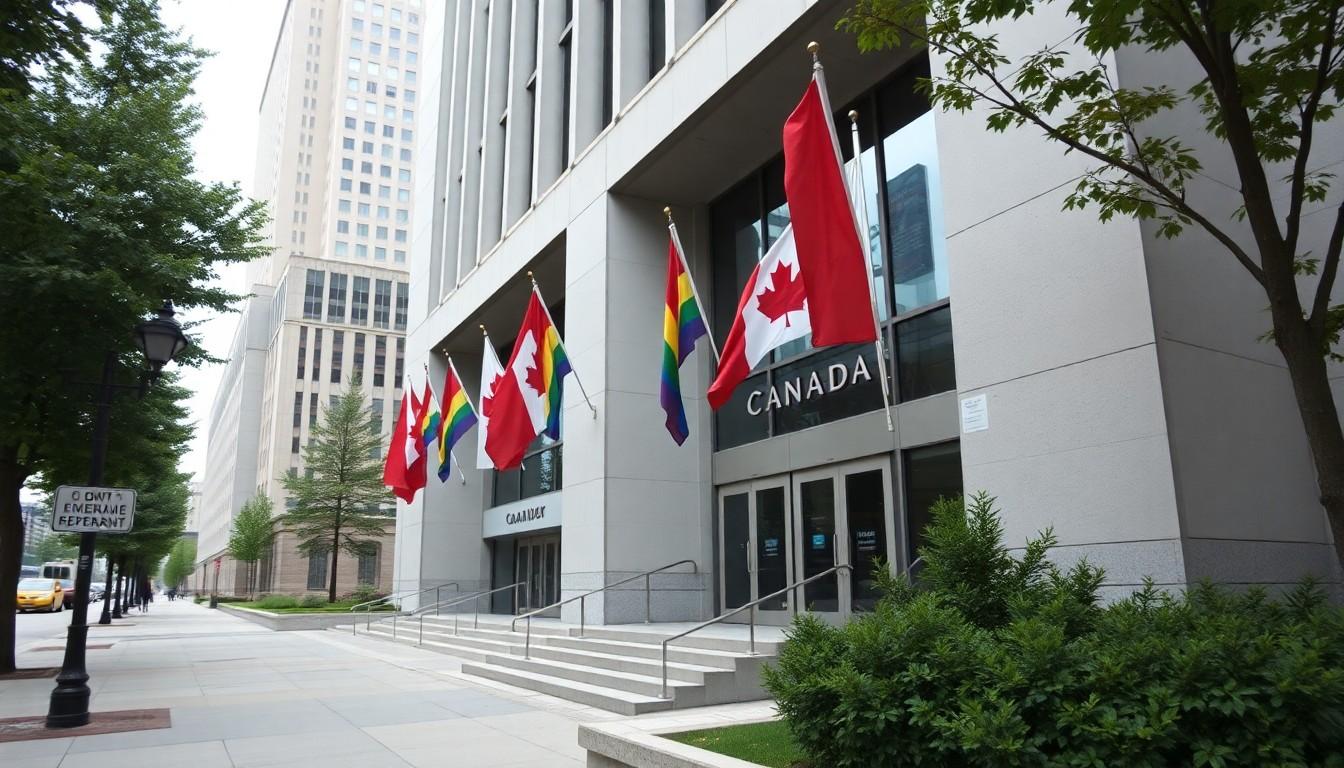
LGBTQ2S+ advocates are returning to Parliament Hill with a pressing message: renewing Canada’s federal 2SLGBTQI+ Action Plan matters, but so does fixing the fragile funding system behind it. As community groups face rising demand and shrinking donations, sustained support could make the difference between essential services continuing quietly or disappearing altogether.
Essential Takeaways
- Funding deadline: Support for the federal 2SLGBTQI+ Action Plan is due to lapse in the spring.
- Community pressure: Groups including LGBT YouthLine and Dignity Network Canada have urged Ottawa to renew and expand the plan.
- A federal limit: Healthcare, education and sports rules affecting trans young people largely fall under provincial jurisdiction.
- The bigger problem: Short-term grants can leave LGBTQ2S+ organisations scrambling to retain staff and maintain services.
- A lasting solution: Advocates want stable, longer-term funding rather than repeated emergency applications.
Parliament Hill hears a familiar plea
The most immediate concern for many LGBTQ2S+ organisations is simple: they need to know whether federal support will continue. During a recent lobby day, advocates pressed ministers and MPs to renew and strengthen the federal 2SLGBTQI+ Action Plan before its funding window closes.
LGBT YouthLine has been among the organisations involved in national advocacy, reflecting the practical side of the debate. This isn't only about policy language or commemorative announcements. It's about whether young people can still reach a trained person when they need support, advice or somewhere safe to speak. YouthLine's participation in a national day of action underlines how closely frontline services are tied to federal decisions.
The federal government's own Action Plan sets out a national framework intended to support 2SLGBTQI+ communities and improve inclusion across government. It has helped put resources behind community organisations, but a plan is only as useful as the money and political commitment that keep it moving.
Why a federal inquiry isn't the easiest route
Calls for Ottawa to investigate provincial restrictions affecting trans young people have attracted understandable attention. Families and advocates want public scrutiny, especially when policies touch healthcare, education and participation in sport.
The constitutional complication is that those areas generally sit with provinces. Ottawa can influence provincial services through certain funding arrangements, but it can't simply direct Alberta or Saskatchewan to change every policy it dislikes. That division of power makes a federal parliamentary study a difficult route, even when the underlying concerns are urgent.
There is also the question of parliamentary time. Committees are already juggling legislation, witness schedules and limited administrative resources. So while an inquiry might offer a valuable public platform, it isn't necessarily the fastest or most realistic way to change provincial policy.
Stable funding matters more than another announcement
For community groups, the immediate reality is less dramatic but no less important: rent, salaries, helplines and outreach programmes all need dependable income. A short grant can keep the lights on, but it makes long-term planning painfully difficult.
Dignity Network Canada describes a broad international network working towards dignity, equality and human rights. That wider perspective matters because Canadian LGBTQ2S+ advocacy isn't isolated from global developments. Organisations often need resources not only for local services, but also for international solidarity, research and rapid responses when rights come under pressure elsewhere.
A stop-start model also creates avoidable waste. Staff spend time preparing applications instead of serving clients, while organisations hesitate to expand programmes because they can't be sure funding will survive beyond the next cycle. For people relying on those services, that uncertainty can feel anything but administrative.
Barbara Findlay's legacy shows what's at stake
The debate also arrives as Canada's LGBTQ2S+ movement reflects on the life of Barbara Findlay, a prominent lawyer and advocate who died in Vancouver at 77 after a long illness. Her career stretched across major battles involving same-sex marriage, family recognition, trans rights and human rights protections.
Findlay's work is a reminder that legal progress rarely appears by magic. It comes from years of organising, litigation, testimony and support from community institutions. Reference accounts of her career describe a lawyer who helped connect the gay rights movement with the emerging fight for trans equality, including through landmark human rights work.
That history gives today's funding argument extra weight. Rights on paper need organisations capable of explaining them, defending them and making them real in everyday life. Without that infrastructure, even hard-won protections can become difficult to access.
What a stronger Action Plan could look like
Renewing the Action Plan would be a sensible first step, but advocates are asking for more than a simple extension. They want longer funding periods, clearer commitments and a model that helps organisations build reserves rather than repeatedly start from zero.
There is also a case for broadening the plan's international reach. Dignity Network Canada's work points to the value of cross-border partnerships, particularly as LGBTQ2S+ communities face political hostility in different parts of the world. A national strategy can still have an international outlook.
The practical test is whether the government treats these organisations as temporary projects or as essential civic infrastructure. If it's the former, the cycle of uncertainty will continue. If it's the latter, predictable funding could give advocates room to plan, train and respond before a crisis becomes impossible to ignore.
The most useful question now is not whether the government can produce another statement of support. It's whether it will build a funding system that lets the people doing the work stay in the room.
Renewing the plan is important, but making its support sustainable would be the real test.
Source Reference Map
Story idea inspired by: [1]
Sources by paragraph: