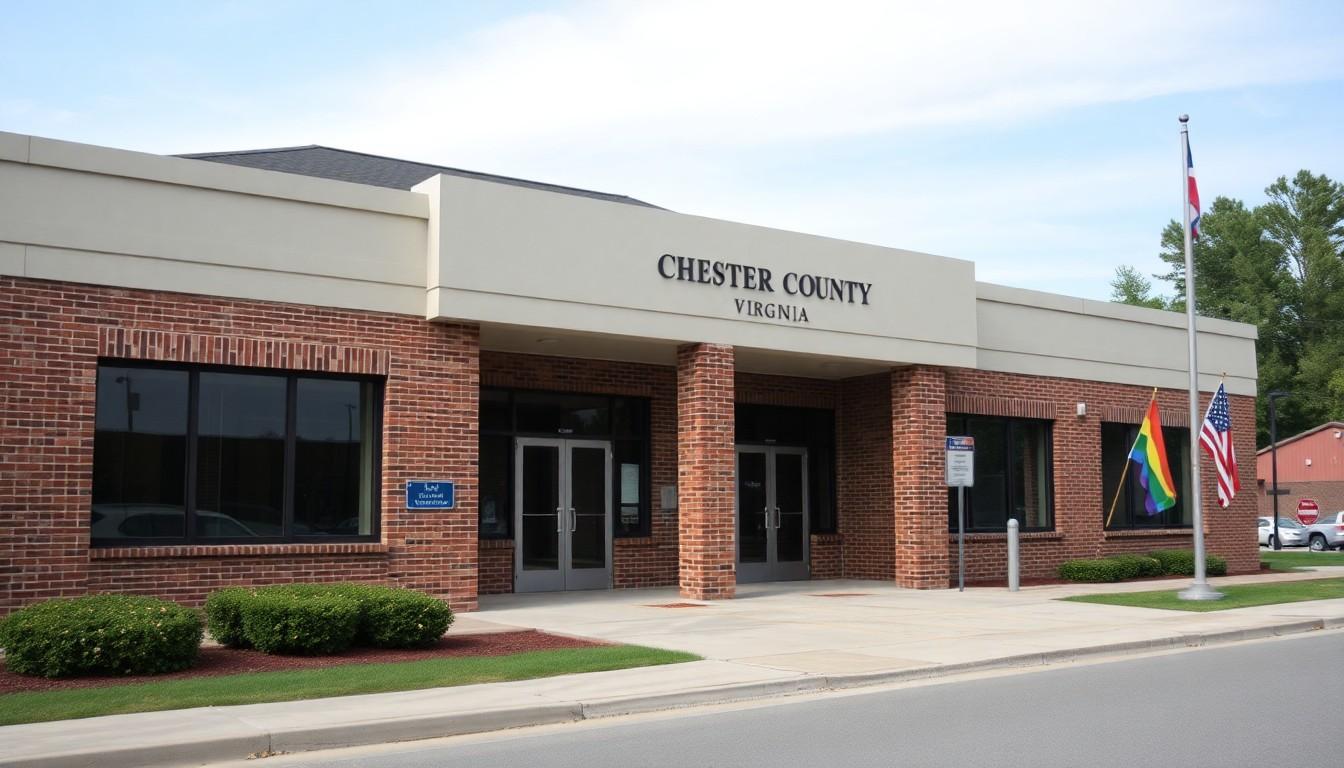
Virginia voters are being asked whether to remove the state’s dormant same-sex marriage ban and guarantee equal treatment for legally recognised marriages. The proposed constitutional amendment matters because federal protections could change, while families who once faced extra legal hurdles still remember how fragile recognition can feel.
Essential Takeaways
- The proposal: It would remove Virginia’s ban and affirm marriage between two adults regardless of sex, gender or race.
- Why now: The amendment is designed to provide a state-level safeguard if federal protections weaken.
- Family impact: Some same-sex parents previously faced additional adoption and recognition procedures.
- Current legal position: Marriage equality is already recognised nationally, following the Supreme Court’s 2015 ruling.
- A wider ballot: Virginia voters are also considering proposals involving voting rights and reproductive healthcare.
A dormant ban could soon disappear
Virginia’s constitutional ban on same-sex marriage dates from 2006, when voters approved it during a very different legal era. The US Supreme Court’s Obergefell v. Hodges decision made marriage equality lawful nationwide in 2015, leaving the state provision unenforceable but still written into the constitution.
The proposed amendment would tidy up that contradiction. It would remove the ban, state that two adults may marry irrespective of sex, gender or race, and require legally valid marriages to receive equal treatment under Virginia law. Legislative records from Keeping Law Simple outline the measures moving through both chambers, while WVTF reported on the campaign supporting constitutional protection.
For many people, that may sound like legal housekeeping. It isn't quite so simple. A rule that remains on the books can feel like an unlocked door marked “keep out”, particularly to couples who remember when marriage rights varied sharply by state.
Why legal recognition has felt personal
For Rachel Leyco and Jenn Jackson Leyco, the issue has never been an abstract argument. Before federal marriage equality, Leyco had to adopt the couple’s biological children because Virginia did not automatically recognise her parental status in the same way it recognised Jackson’s as the birth parent.
The family’s experience illustrates how marriage law can ripple into birth certificates, parental rights and family security. Their first ceremony in Virginia was not legally binding, so they later travelled to Vermont for a legal marriage. Even after the Supreme Court’s ruling, they took additional precautions before the birth of their second child because uncertainty had become part of the process.
WVTF’s coverage of the campaign reflects the broader effort to turn those lived experiences into a constitutional guarantee. The relevant Virginia measures also show that the proposal is not simply about ceremonies or wedding paperwork. It is about how the state treats families when life becomes difficult, expensive or unexpectedly bureaucratic.
What the amendment would actually change
The wording is broad but straightforward. It would erase the existing prohibition, protect the right of two adults to marry regardless of sex, gender or race, and establish equal legal treatment for all marriages that are valid under the law.
That would not create marriage equality from scratch. Same-sex couples can already marry in Virginia under federal constitutional precedent, and Congress passed the Respect for Marriage Act in 2022. Instead, the amendment would remove Virginia’s conflicting language and add a state constitutional promise.
Bill-tracking records for the House and Senate proposals show how the measure advanced through the legislature. Support has crossed party lines, although opposition groups have criticised the amendment and signalled that further legal challenges could be possible. In other words, voters are being asked to decide whether protection should remain dependent on national precedent or be written clearly into Virginia’s own constitution.
Could federal protections change?
The immediate legal position remains marriage equality. However, concern grew after Justice Clarence Thomas suggested in 2022 that the Supreme Court should reconsider Obergefell, the decision that established nationwide marriage rights.
The court has not overturned that ruling, and later attempts to reopen the issue have not succeeded. Still, the suggestion was a reminder that major civil-rights protections can feel less permanent than many families assumed. That is the central argument made by supporters of the Virginia amendment, including the Leyco family.
Critics argue the amendment is unnecessary because same-sex marriage is already protected. Supporters counter that constitutional wording matters, especially when political and judicial conditions can shift. It is a little like keeping a spare key: you hope never to need it, but you notice its absence when the lock starts to look unreliable.
How it fits with the wider ballot
The marriage proposal is one of several civil-rights amendments being put before Virginia voters. Other measures concern restoring voting rights after completion of felony sentences and protecting access to contraception, fertility treatment and abortion.
For families formed through assisted reproduction, the connection between marriage and reproductive rights is especially clear. Same-sex couples may rely on donor conception, fertility treatment or surrogacy, and any uncertainty around those routes can affect both parents and children.
Opposition has focused on both the marriage and reproductive proposals. The Family Foundation has campaigned against them and has indicated that it could consider a legal challenge to the marriage measure, depending partly on the outcome of a separate case. The practical question for voters is therefore not only what the amendment says, but whether they believe Virginia should make those protections explicit now.
A vote about dignity as much as law
Supporters often describe the amendment as a shield against a future change in national law. Yet the emotional force comes from something more familiar: wanting a spouse to be recognised at the hospital, on official records and after death without anyone stopping to ask whether the marriage counts.
The story behind the proposal is filled with ordinary family moments, school runs, sport and shared meals. That ordinariness is precisely the point. Marriage equality affects the unglamorous details of family life as much as the joyful ones, and parents should not have to explain why one of them needed an extra legal process to be treated as a parent.
Whether voters see the amendment as essential protection or unnecessary duplication, its message is clear. Virginia is being asked to decide whether marriage equality should remain a federal guarantee alone or become an unmistakable part of the state’s constitutional identity.
It's a small line of legal text with very real consequences for families who want certainty.
Source Reference Map
Story idea inspired by: [1]
Sources by paragraph:
- Paragraph 1: [2], [3]
- Paragraph 2: [4], [5]
- Paragraph 3: [6], [7]
- Paragraph 4: [2], [3]
- Paragraph 5: [4], [5]
- Paragraph 6: [6], [7]
- Paragraph 7: [2], [4]
- Paragraph 8: [3], [5]
- Paragraph 9: [6], [7]
- Paragraph 10: [2], [3]
- Paragraph 11: [4], [5]
- Paragraph 12: [6], [7]
- Paragraph 13: [2], [3]
- Paragraph 14: [4], [5]
- Paragraph 15: [6], [7]