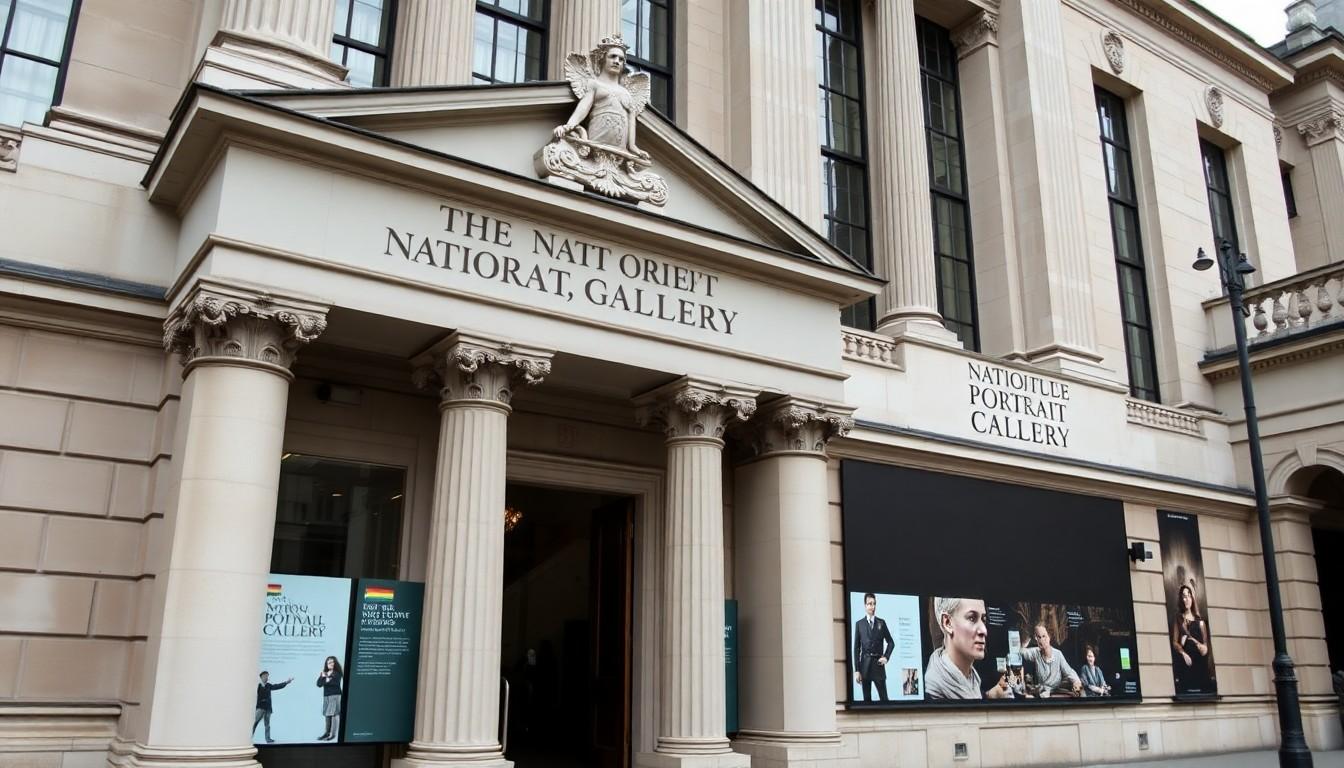
Visitors to London’s National Portrait Gallery can step into Tim Walker’s Fairyland: Love and Legends, a vivid collection of around 250 portraits celebrating queer activists, artists, performers and allies. Spanning generations, the exhibition connects historic campaigns with contemporary self-expression, making it both a visual spectacle and a moving record of lives too often left outside the frame.
Essential Takeaways
- A major new exhibition: Fairyland: Love and Legends runs at the National Portrait Gallery in London until 7 February 2027.
- A wide-ranging cast: Around 250 portraits feature activists, musicians, actors, designers and cultural figures.
- History with personal detail: Sitters bring meaningful objects, from cameras and conch shells to an old bookshop sign.
- A reclaimed title: The exhibition transforms a former homophobic slur into a phrase of identity, community and belonging.
- More than individual portraits: Group images, archival references and film bring collective queer histories into view.
A fantastical eye turns towards queer history
Tim Walker's photography is known for theatrical sets, dreamlike styling and a touch of delicious oddness. Here, though, the visual drama serves something larger: a five-year exploration of queer lives and histories, shown through portraits that move between intimacy and spectacle.
The exhibition brings together people connected to activism, fashion, music, film, literature and performance. According to Designboom, its subjects include Isaac Julien, Ian McKellen and Chappell Roan, alongside figures whose work helped shape queer cultural and political life across several generations.
That breadth is important. Fairyland isn't presented as a single, tidy story, but as a constellation of overlapping experiences. The result feels less like a roll call and more like a conversation across time.
Portraits give campaigners the grandeur they deserve
The exhibition begins with activists associated with the Gay Liberation Front, Stonewall and other movements of the 1970s and 1980s. Walker draws on the stately language of Tudor portraiture, placing people who were often marginalised into a visual tradition historically reserved for rulers and the powerful.
It's a clever shift in scale. A campaigner doesn't simply appear as a historical footnote; they become a figure of presence, poise and authority. The white backgrounds used for many portraits also recall the clean, direct approach of Richard Avedon, whom Walker assisted early in his career.
Personal objects add warmth to that formal setting. Jane Cholmeley appears with the original sign from Silver Moon Women's Bookshop, while Sunil Gupta holds his camera and Isaac Julien carries a conch shell linked to his film Looking for Langston. These aren't decorative props. They act as small, tangible doorways into places, friendships and creative lives, as Designboom's exhibition report notes.
The AIDS crisis is remembered through music and solidarity
One of the exhibition's most affecting sections addresses the HIV/AIDS crisis, bringing healthcare workers, nurses, musicians and activists into the same visual conversation. The portraits acknowledge the fear and discrimination of the period, but they also foreground determination, care and cultural resistance.
Musicians including Marc Almond, Holly Johnson and Jimmy Somerville represent the role music played during those years. Their songs offered energy and visibility when public discussion was frequently shaped by panic. Walker has described wanting to bring the force of disco into the hospital ward, a striking image of joy refusing to disappear.
The Rebel Dykes are given a collective presence through large-scale group portraits and film. Their political work ranged from nuclear disarmament and environmentalism to sex-positive feminism and HIV solidarity. In a show built largely around individual sitters, their shared image makes a strong point: communities can be subjects in their own right.
Fashion, drag and performance become tools for freedom
The second half shifts towards glamour, transformation and play. Designers, performers, actors and musicians appear in portraits that treat fashion and makeup not as surface decoration, but as ways of testing identity and imagining new possibilities.
Among the names featured are Jean Paul Gaultier, Michaela Stark, David Hoyle, Alan Carr, Sue Perkins, Ncuti Gatwa, Hunter Schafer, Fiona Shaw, Ben Whishaw, Björk, Lady Gaga, Frank Ocean and Chappell Roan. The range is deliberately broad, reflecting how queer expression moves between club culture, cinema, television, pop music and high fashion.
Walker's interest in fantasy becomes more openly mischievous here. The exhibition concludes with erotic scenes that rework fairy tales and nursery rhymes through a queer lens, bringing humour and sensuality into the same frame. It sounds playful, but the underlying idea is serious: imagination can be a route towards self-definition.
Why this exhibition feels timely
Fairyland: Love and Legends arrives at a moment when museums are increasingly asking who gets remembered, how they're represented and which stories have been treated as official history. Walker's answer is visual, emotional and unapologetically theatrical.
The exhibition's title is central to that argument. By reclaiming a word once used as an insult, it turns language into a site of belonging. Walker has said the project reflects his own growing confidence within queer culture and carries a message that difference can be a source of strength.
That may be the show's most generous quality. Beneath the elaborate styling, it offers recognition: a reminder that identity can be inherited, reinvented or performed, and that nobody has to navigate it alone.
Fairyland: Love and Legends is on view at the National Portrait Gallery in London until 7 February 2027.
A portrait can preserve a face, but this exhibition preserves a living, evolving community.
Source Reference Map
Story idea inspired by: [1]
Sources by paragraph:
- Paragraph 1: ,
- Paragraph 2: ,
- Paragraph 3: ,
- Paragraph 4: ,
- Paragraph 5: ,
- Paragraph 6: ,
- Paragraph 7: ,
- Paragraph 8: ,
- Paragraph 9: ,
- Paragraph 10: ,
- Paragraph 11: ,
- Paragraph 12: ,