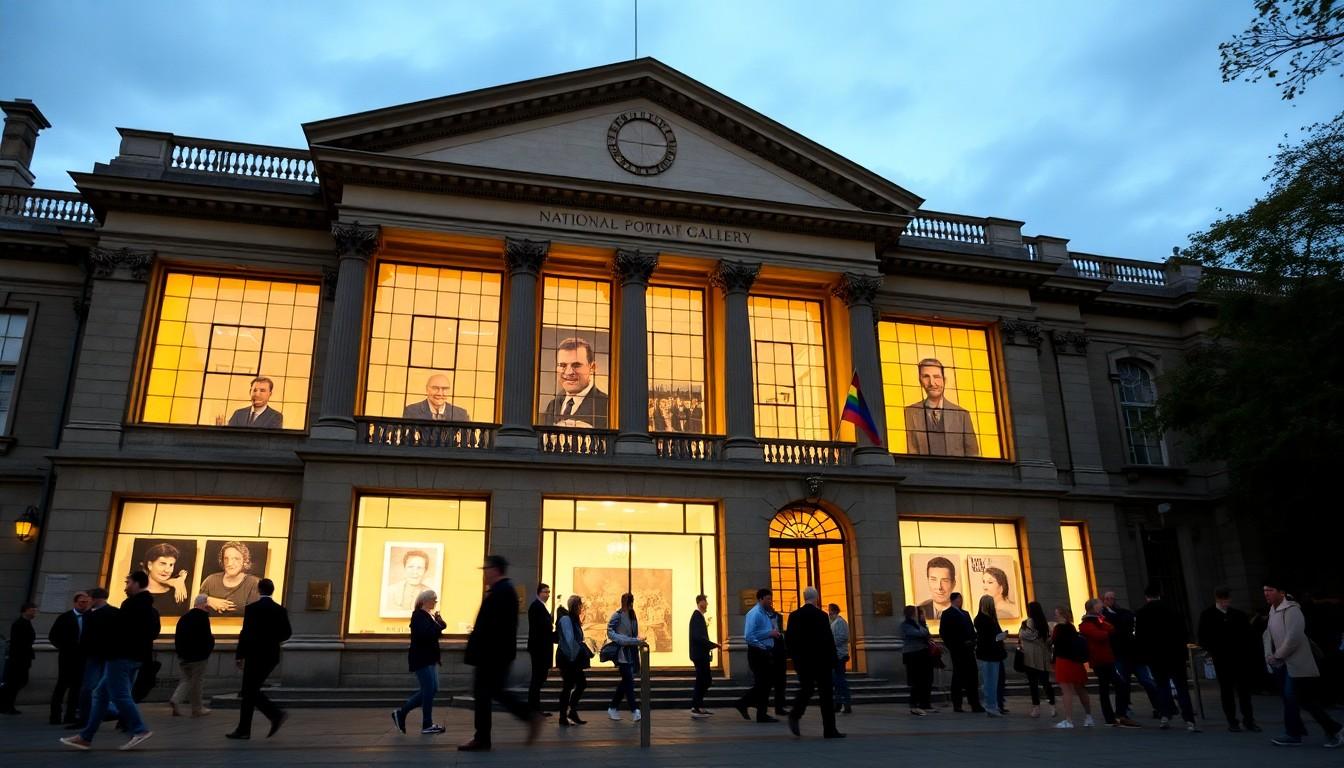
Visitors to London’s National Portrait Gallery can step into Tim Walker’s Fairyland: Love and Legends from 9 October, discovering 250 portraits shaped over five years. The exhibition brings together artists, writers, activists and performers, showing queer life across generations with theatrical flair, historical depth and plenty of visual magic.
Essential Takeaways
- A major new exhibition: Fairyland: Love and Legends opens at the National Portrait Gallery on 9 October.
- A broad cast of sitters: The portraits include Isaac Julien, Ian McKellen and Chappell Roan.
- Five years in the making: Walker created 250 specially commissioned portraits for the project.
- History meets fantasy: The work links queer activism, art and performance across generations.
- Portraits with personal objects: Sitters appear alongside meaningful items from their lives and work.
Tim Walker turns queer history into a visual fairytale
The strongest impression is scale. Two hundred and fifty portraits is an enormous undertaking, but Fairyland: Love and Legends isn't simply a parade of famous faces. It's a carefully assembled record of queer lives, communities and creative histories, presented with Walker's unmistakable sense of theatre.
The exhibition opens at London's National Portrait Gallery on 9 October, according to the gallery's announcement. Its subjects span artists, writers, activists and performers, creating a conversation between generations rather than placing each portrait in isolation.
That matters because queer history rarely moves in a straight line. The exhibition reaches from the Gay Liberation Front and the Stonewall uprising to the Rebel Dykes and today's artists, performers and cultural figures. The result should feel less like a conventional timeline and more like a lively gathering where different eras meet across the room.
From Stonewall to Chappell Roan, the generations connect
Walker brings together people whose experiences and public lives are markedly different. Isaac Julien and Ian McKellen sit alongside Chappell Roan, while activists and cultural figures add further texture to the story.
The National Portrait Gallery describes the project as a major photography exhibition, a framing that gives the work a particular weight. These aren't only images of celebrity or style. They also reflect the ways queer identity has been expressed through protest, performance, writing, cinema and shared spaces.
For visitors, that breadth may be one of the show's greatest pleasures. One portrait might point towards political struggle, while the next carries the energy of a stage, a film set or a crowded community gathering. It sounds like the sort of exhibition where the details reward a slower walk.
Why Walker looked back to Renaissance portraiture
For some of his older subjects, Walker drew on the formal language of sixteenth-century portraiture. His approach echoes the meticulous realism associated with Hans Holbein the Younger and Nicholas Hilliard, giving the images a composed, almost ceremonial quality.
There's a pleasing tension in that choice. Grand historical portraiture has traditionally been used to present monarchs, aristocrats and powerful men as figures worth remembering. Walker redirects that visual authority towards people whose lives and activism helped reshape society, often under far less comfortable circumstances.
The effect is both elegant and quietly confrontational. A carefully posed sitter can look almost regal, but the history behind the image keeps the portrait grounded in lived experience. As Art Fund and Time Out London highlight in their exhibition listings, the project sits at the meeting point of fashion, photography, identity and cultural history.
Personal objects give the portraits a pulse
The photographs aren't built only around faces. Several sitters appear with objects that carry their own stories, adding a tactile, almost talismanic quality to the pictures.
Jane Cholmeley is photographed with the original sign from Silver Moon Bookshop, the feminist bookshop she helped establish. Isaac Julien holds the conch shell used in his 1989 film Looking for Langston, turning a familiar prop into a link between past work and present portraiture.
Those details help prevent the exhibition from feeling too polished or distant. A sign, shell or other personal object can say something that a formal pose can't. It gives viewers a small route into the sitter's world, and perhaps makes the grandest images feel more human.
What visitors can expect from Fairyland
The National Portrait Gallery exhibition is likely to appeal to anyone interested in photography, fashion, queer history or contemporary culture. Walker's work has always had a soft spot for transformation and spectacle, and this project appears to place those qualities in dialogue with serious historical memory.
The exhibition is also part of a wider London conversation about portraiture and representation, with listings from Wallpaper and other arts publications placing it among the city's notable upcoming shows. A related National Portrait Gallery workshop is scheduled for November, offering a chance to engage with Walker's ideas beyond the gallery walls.
There may be no single way to read Fairyland. Some visitors will follow the political history, others the styling and theatrical construction, while many will simply be drawn into the emotional exchange between generations. That flexibility feels fitting: queer culture has never been one story, and Walker's exhibition doesn't pretend otherwise.
A portrait can preserve a face, but this exhibition aims to preserve connection.
Source Reference Map
Story idea inspired by: [1]
Sources by paragraph: