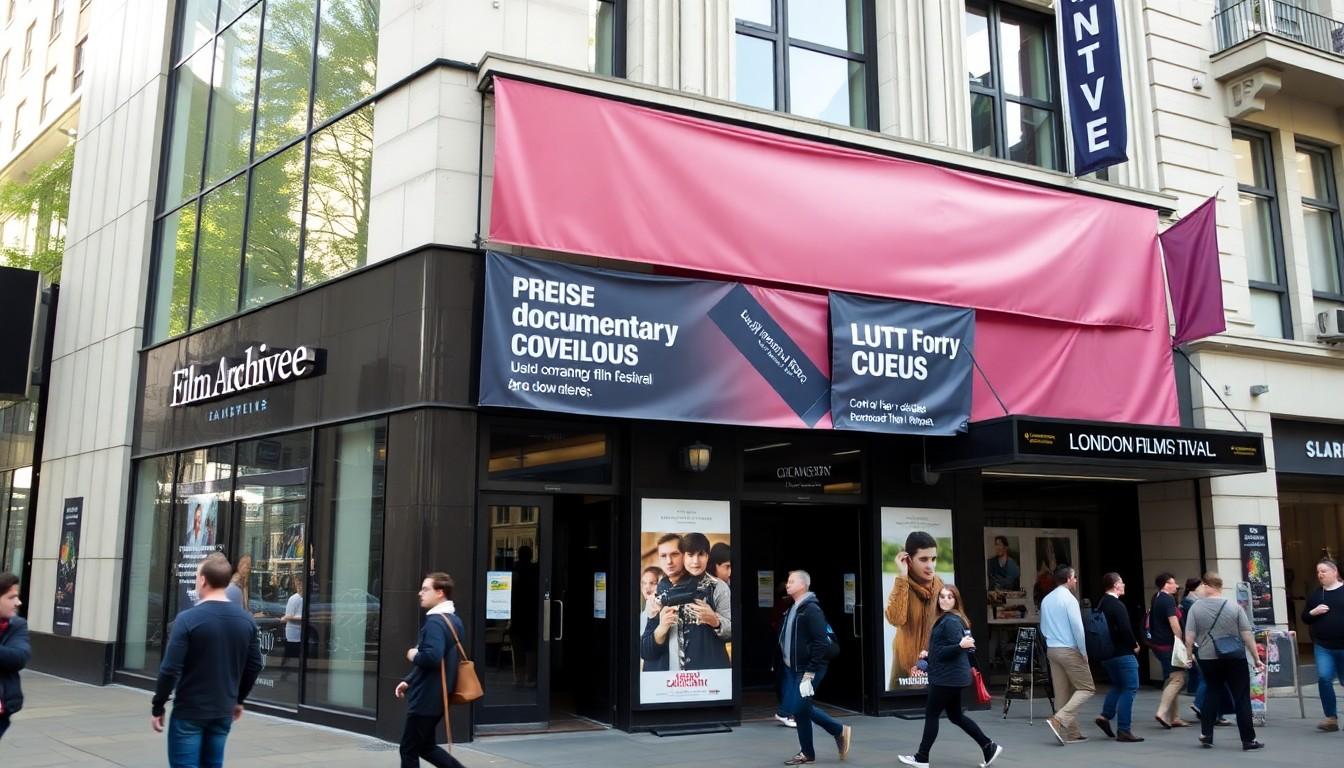
Festival audiences are discovering Queer Edward II, a new documentary built from long-unseen production footage of Derek Jarman’s landmark film. Arriving amid renewed debates around queer rights, political memory and artistic freedom, it offers an intimate look at the director’s methods, friendships and activism, while showing why his work still feels urgent decades later.
Essential Takeaways
- Rare behind-the-scenes material: The film draws on around 30 hours of footage recorded during Edward II’s production.
- A portrait of activism: Jarman’s filmmaking is presented alongside his opposition to anti-LGBTQ+ prejudice and government policy.
- Joy alongside anger: Rehearsals, friendships and creative mischief soften an account shaped by HIV/AIDS and political repression.
- A timely documentary: Its historical material carries clear echoes of present-day arguments over queer visibility and rights.
- More than a film companion: The documentary positions Edward II as part of Jarman’s wider cultural and political legacy.
Derek Jarman’s voice still cuts through
There’s a particular electricity in seeing an artist at work before the legend has fully settled around him. In Queer Edward II, Derek Jarman appears not simply as the celebrated director behind Edward II, but as a restless creative force, surrounded by collaborators and pushing against the limits of what cinema could say and show. FilmFlow TV lists the documentary as a feature focused on this overlooked production history. [2]
The material has warmth as well as bite. Behind the provocation are rehearsals, conversations and the easy disorder of people making something together, giving the film a human texture that polished retrospective interviews often lack. That closeness helps explain why Jarman’s influence reaches beyond the screen. His work remains tied to queer representation, protest and the insistence that art should not politely step aside when politics becomes hostile. [7]
Unearthed footage gives Edward II a new afterlife
The original Edward II was famous for its deliberately modern collision with Christopher Marlowe’s historical drama. Queer Edward II returns to that production through footage filmed by Seamus McGarvey, allowing viewers to watch the film’s ideas taking shape rather than merely hearing about them afterwards. The documentary’s listings and database records identify Edward II as its central subject, with the archive providing the foundation for the new film. [3]
That behind-the-scenes perspective also reveals the practical side of Jarman’s cinema. Creativity here isn’t presented as a smooth, expensive machine. It’s collaborative, improvised and occasionally chaotic, with performers and crew finding energy in constraint. For audiences who know Edward II chiefly as a provocative finished work, this offers a softer, more tactile route into its making. [4]
The laughter makes the history hit harder
A documentary about Jarman’s era could easily become solemn from the first frame. Instead, Queer Edward II appears to understand that humour was part of queer survival and political resistance. Moments of rehearsal and protest bring a mischievous spark, while the film’s more painful passages confront the devastation caused by HIV/AIDS and the hostility directed at gay men during the period. [5]
That tonal balance matters. The film doesn’t reduce its subjects to victims, nor does it turn activism into a neat heritage display. It leaves room for disagreement and complicated choices, suggesting that political movements are made by real people under pressure, not by perfectly edited icons. The result sounds less like a museum plaque and more like a conversation that’s still unfinished. [6]
Why this documentary feels especially timely
Jarman’s career unfolded during a period when queer people were fighting both public stigma and official discrimination. Queer Edward II draws a line between those battles and the present without pretending that history repeats in exactly the same way. Its argument is quieter but more durable: progress can retreat, and cultural memory needs active protection. [7]
That makes the documentary relevant beyond dedicated Jarman followers. Viewers interested in queer cinema, British film history or political documentaries should find plenty to discuss, particularly in the way the film connects artistic expression with public action. Rotten Tomatoes and other film databases place the documentary within a growing conversation about Jarman’s continuing screen legacy. [3]
A spirited introduction to a complicated legacy
The film’s greatest strength may be its sense of affection. It clearly admires Jarman, but it doesn’t need to flatten him into an uncomplicated hero. Instead, it uses archival evidence to show an artist who could be generous, funny, confrontational and politically uncompromising, sometimes all within the same creative day. [4]
For newcomers, Queer Edward II offers a vivid starting point before exploring Jarman’s wider filmography. For long-time admirers, it supplies the pleasure of returning to familiar ground and noticing new details: a gesture, a rehearsal aside, the atmosphere around a production that changed how queer stories could be staged. It’s a reminder that the most lasting film legacies aren’t silent monuments. They keep arguing with the present. [2]
Queer Edward II turns archival fragments into a lively, necessary conversation about art, protest and queer freedom.
Source Reference Map
Story idea inspired by: [1]
Sources by paragraph: