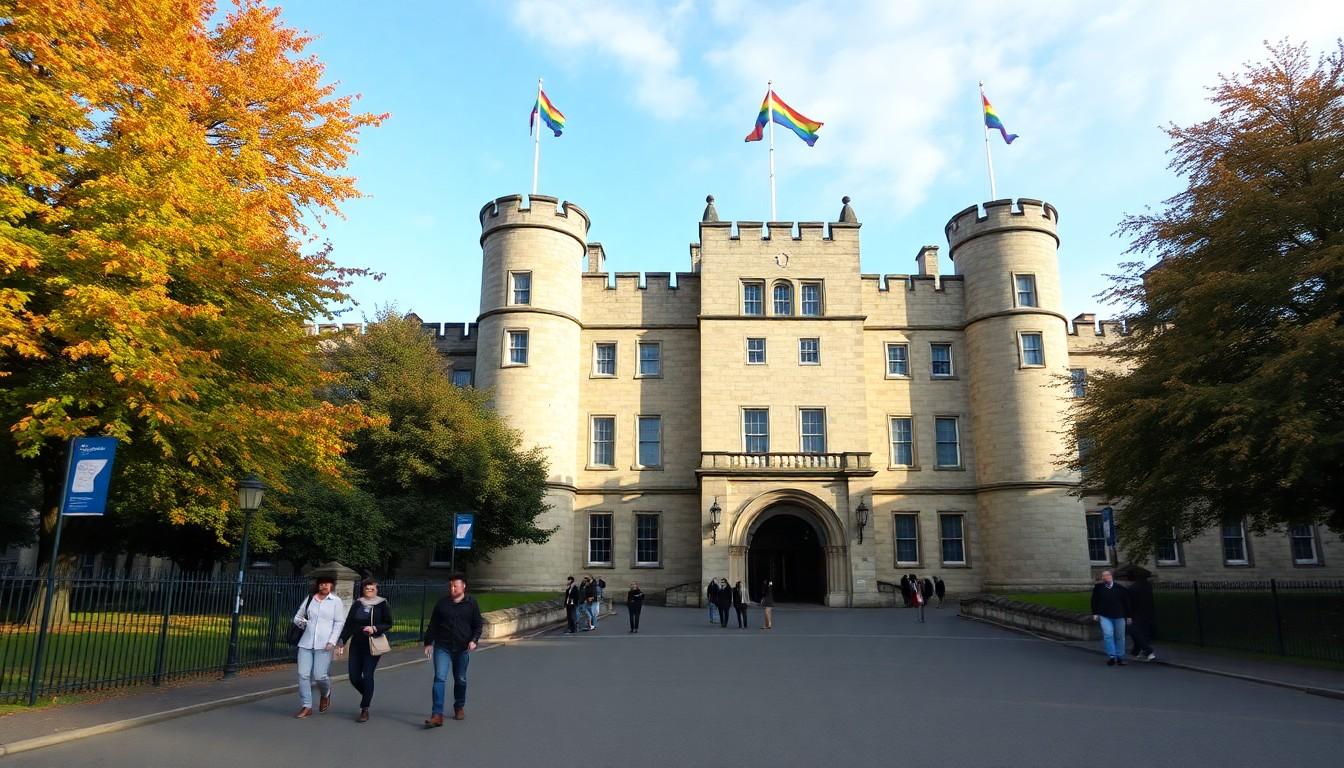
Political leaders and equality experts gathered at Dublin Castle to shape the next phase of LGBTQ+ rights in Ireland and across Europe. The high-level meeting focused on safety, digital abuse, inclusion and practical action, as policymakers face rising online misinformation and anti-LGBTQ+ narratives.
Essential Takeaways
- European focus: Delegates discussed how to strengthen LGBTQ+ equality across EU member states.
- Dublin setting: The conference was held at Dublin Castle during Ireland's EU Council presidency.
- Digital concerns: Online misinformation and abuse against young people were central issues.
- Long-term strategy: Government experts are helping deliver the EU's LGBTIQ equality strategy for 2026 to 2030.
- Action sought: Irish civil society groups called for a national plan to tackle hate.
Dublin puts LGBTQ+ safety at the centre
The strongest message from the Dublin conference was that LGBTQ+ equality can't be treated as a finished project. At Dublin Castle, political leaders, officials and advocacy groups discussed how to make everyday life safer and more inclusive for LGBTQ+ people across Europe.
The meeting formed part of Ireland's Presidency of the Council of the European Union. According to the Irish Government, it brought together representatives from EU countries, the European Commission, the Council of Europe, the EU Agency for Fundamental Rights and the United Nations, alongside civil society organisations.
That mix matters. Laws may be written nationally, but online abuse, misinformation and extremist movements rarely stop at a border.
Why the digital world is now a rights battleground
Online spaces featured prominently in the discussion, particularly because young LGBTQ+ people can face harassment, abuse and hostile misinformation through platforms they use every day. The Irish Government said new challenges are emerging in the digital environment, even as progress has been made in protecting LGBTQ+ rights.
For many people, this is where equality becomes tangible. A supportive school, workplace or health service can be undermined quickly when social media feeds are filled with threats or misleading claims. The screen may be small, but the impact can follow someone into their home, classroom or workplace.
Policymakers are therefore looking beyond legislation alone. They are also considering how governments, platforms, educators and community organisations can respond more quickly when harmful narratives gain momentum.
A new European strategy is taking shape
The conference also included a meeting of the Expert Group on LGBTIQ+ Equality. Government specialists nominated by EU member states are responsible for helping put the bloc's LGBTIQ equality strategy for 2026 to 2030 into practice.
That work is less visible than a headline speech, but it could prove more important over time. Turning broad commitments into consistent policies requires cooperation between countries, reliable monitoring and a clear understanding of where protection still falls short.
According to the Irish Government, the wider aim is to support safety, equality and inclusion throughout the life course. In other words, the conversation isn't limited to one age group or one moment of crisis. It covers how people live, learn, work, access services and participate in public life.
Irish groups want a national plan on hate
Irish civil society organisations used the gathering to press for a National Action Plan to Combat Hate. Their call comes as anti-LGBTQ+ narratives become more prominent in public debate, with campaigners warning that hostile rhetoric can create a climate in which abuse feels more acceptable.
A national plan would offer a structured way to address hate, rather than relying on isolated responses after incidents occur. It could bring together policing, education, technology, community support and public communications, giving people a clearer route to help.
The request also reflects a wider concern raised at LGBTQ+ events in Dublin, including the ILGA-Europe Annual Conference. The shared question is straightforward but demanding: how can institutions respond before fear and misinformation become normalised?
What happens after the speeches?
The Dublin meeting offered a useful test of political intent. Statements about respect and inclusion are welcome, but communities will ultimately judge progress by what changes on the ground, from online safety to access to support and protection from hate.
Minister for Children, Disability and Equality Norma Foley said Europe must continue working towards safety, equality and inclusion for LGBTIQ+ people throughout life. The next step is making that ambition practical, measurable and visible.
For LGBTQ+ people and their allies, that means watching what follows the conference: new policies, stronger coordination and a national response to hate that reaches beyond warm words.
Small policy details can make a very real difference to whether people feel safe enough to live openly.
Source Reference Map
Story idea inspired by: [1]
Sources by paragraph:
- Paragraph 1: [2], [3]
- Paragraph 2: [4], [5]
- Paragraph 3: [6], [2]
- Paragraph 4: [3], [4]
- Paragraph 5: [5], [6]
- Paragraph 6: [2], [3]
- Paragraph 7: [4], [5]
- Paragraph 8: [6], [2]
- Paragraph 9: [3], [4]
- Paragraph 10: [5], [6]
- Paragraph 11: [2], [3]
- Paragraph 12: [4], [5]
- Paragraph 13: [6], [2]
- Paragraph 14: [3], [4]
- Paragraph 15: [5], [6]
- Paragraph 16: [2], [3]
- Paragraph 17: [4], [5]
- Paragraph 18: [6], [2]
- Paragraph 19: [3], [4]
- Paragraph 20: [5], [6]