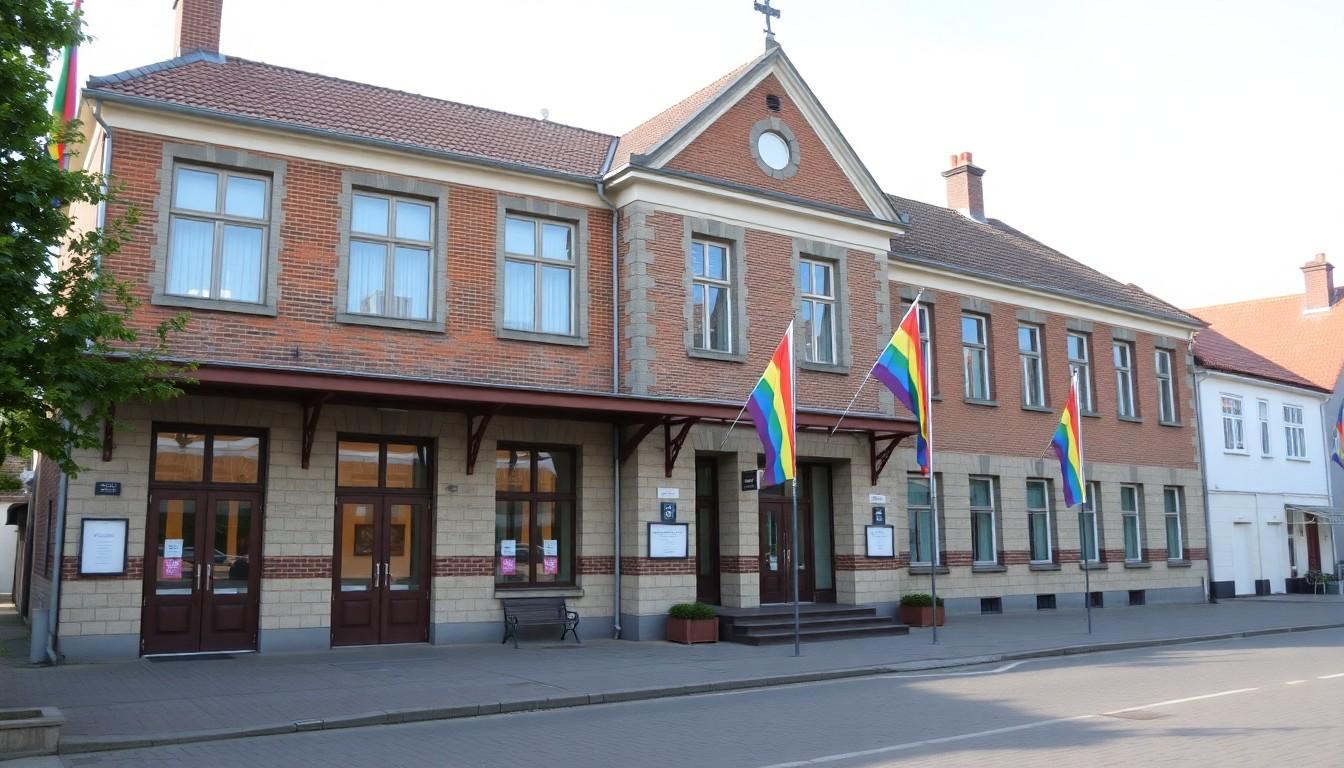
Residents across Elburg and neighbouring Oldebroek are watching a tense debate over LGBTQIA+ policy and the rainbow flag. Elburg mayor Harm-Jan van Schaik has responded with a short social media message about equal treatment, hoping to reassure people that everyone should feel welcome, whatever their faith, background or sexuality.
Essential Takeaways
- A message for everyone: Elburg's mayor says residents should be able to participate and feel at home.
- Regional tensions: A decision in neighbouring Oldebroek has triggered public criticism and counter-protests.
- Rainbow flags return: More than 300 flags are expected at a public action opposing the policy change.
- Equality is central: The mayor points to Article 1 of the Dutch Constitution, which bans discrimination.
- A wider concern: Research suggests some pupils feel less able to be open about their sexuality.
Elburg chooses a clear message of welcome
The strongest detail in Elburg's video is its simplicity. In roughly 90 seconds, Mayor Harm-Jan van Schaik speaks directly to residents about living together despite differences in belief, heritage and sexuality.
The message arrives at a sensitive moment in the region. According to NL Times, Oldebroek's governing coalition has ended the display of the rainbow flag at the town hall, while Qmeet reported that the new administration also wants to remove existing LGBTQIA+ policy measures. The contrast with Elburg's public statement is hard to miss.
Van Schaik's argument isn't that everyone must think alike. Rather, it's that public life has to make room for people who don't. That may sound basic, but when local politics becomes personal, a calm reminder can carry real weight.
Why Oldebroek's decision has caused a backlash
In Oldebroek, a council majority voted to scrap the municipality's LGBTQIA+ policy and stop flying the rainbow flag from the town hall. The move quickly became a flashpoint, turning what might once have been a routine policy question into a very visible argument about identity and belonging.
NL Times reported that residents responded with criticism, including a newspaper advertisement and a planned protest. Qmeet also described community mobilisation after the decision, with supporters of LGBTQIA+ inclusion organising to make their opposition visible.
The response shows why symbols still matter. A flag is inexpensive, easy to recognise and impossible to ignore, so removing one can feel to supporters like a statement about whose presence is valued. For opponents, however, it can represent a broader disagreement about what local government should endorse.
Hundreds of flags are set to fill the gap
The protest response is deliberately visual. More than 300 rainbow flags are expected to be raised in Oldebroek, creating a colourful counterpoint to the decision at the town hall.
Local reporting has also suggested that the rainbow flag hasn't disappeared from every part of community life. Huis aan Huis Oldebroek reported that it would still be seen elsewhere in the municipality, while News Minimalist noted that a rainbow flag was raised for Coming Out Day, though not at the town hall.
That distinction matters. The dispute isn't simply about whether a piece of fabric is present. It's about whether an official building should visibly signal protection and recognition for LGBTQIA+ residents. In a small community, that symbolism can feel surprisingly close to home.
Article 1 gives Elburg's video its backbone
Elburg's mayor anchors his message in Article 1 of the Dutch Constitution, which states that people in equal circumstances must be treated equally and that discrimination isn't permitted. The wording gives the video a legal and civic foundation rather than making it sound like a passing social media gesture.
A council spokesperson said the message wasn't intended as a judgement on another municipality. Instead, it was meant to explain what Elburg stands for: a place where people can be themselves, differences can exist and neighbours look out for one another.
That approach is quietly significant. Local authorities often communicate through planning updates, roadworks and policy notices. A direct statement about dignity and inclusion feels more personal, especially when regional arguments are spilling into comment sections and public demonstrations.
Why this matters beyond one Dutch municipality
The concerns behind Elburg's message stretch beyond the rainbow flag. The municipality also pointed to research from Utrecht University and the Trimbos Institute, which found worrying signs around bullying and pupils' ability to be open about their sexual orientation.
For families, schools and young people, that makes the debate more than a symbolic political dispute. A visible statement from a mayor won't solve bullying on its own, but it can help establish the standard residents expect from public institutions.
The next test will be whether the language of inclusion is matched by everyday action. Flags may attract attention, but fair treatment is ultimately measured in classrooms, council decisions and ordinary encounters between neighbours.
It's a small town's very public reminder that belonging is built by what communities choose to say, show and protect.
Source Reference Map
Story idea inspired by: [1]
Sources by paragraph: