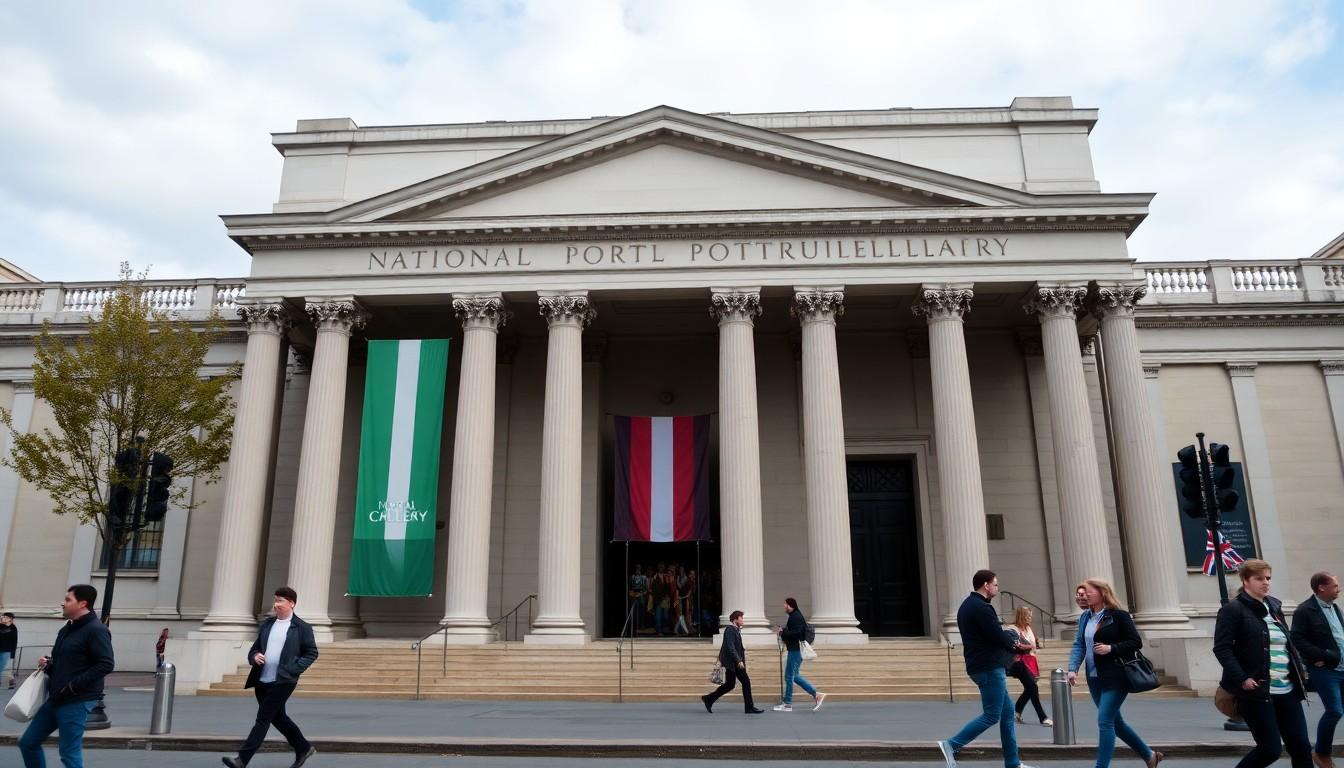
Visitors are heading across London from 12 to 18 October 2026 for Frieze, free gallery shows and LGBTQ+ exhibitions that bring queer histories, identity and community into focus. From Tim Walker’s spectacular portraits to intimate paintings and playful installations, here’s how to make sense of the city’s busiest art week.
Essential Takeaways
- Start with Tim Walker: The National Portrait Gallery’s major exhibition combines flamboyant portraiture with stories of solidarity during the HIV/AIDS crisis.
- Look beyond Frieze: Free and alternative events, including Minor Attractions, offer a more relaxed route through London’s art scene.
- Expect queer perspectives: Artists explore visibility, nightlife, gender, migration, sexuality and the loss of LGBTQ+ spaces.
- Plan by neighbourhood: Chelsea, Mayfair, the Strand, Regent’s Park and Dulwich all feature, so grouping visits will save time and shoe leather.
- Book popular shows early: Ticketed exhibitions and major fairs are likely to be busy, while several gallery presentations are free to enter.
London Art Week 2026 is bigger than one fair
The visual overload begins before visitors even reach Regent’s Park. London Art Week 2026 runs alongside Frieze London and Frieze Masters, turning the capital into a sprawling circuit of exhibitions, pop-up displays, talks and gallery presentations.
The most exciting thread is the breadth of LGBTQ+ work on offer. Queer artists aren’t confined to one themed programme; their ideas run through major museums, commercial galleries, alternative fairs and even public facilities. That makes the week feel less like a single event and more like a city-wide conversation.
According to Wallpaper, London’s autumn exhibition calendar is packed with ambitious photography, contemporary art and institutional shows, making advance planning especially useful. The smartest approach is to choose a few anchor exhibitions, then leave room for discoveries along the way.
Tim Walker’s Fairyland brings glamour and history together
The National Portrait Gallery’s Tim Walker exhibition is an obvious starting point, and not simply because it promises dazzling images. Tim Walker’s Fairyland: Love and Legends features around 250 portraits, including sitters such as Chappell Roan, Ian McKellen, Miriam Margolyes and Isaac Julien.
Walker is known for theatrical styling, dreamlike sets and a wonderfully unruly imagination. Here, that visual language sits beside a historical strand examining the HIV/AIDS crisis, including portraits of healthcare workers, activists and musicians connected with the period.
The National Portrait Gallery says the exhibition explores love, creativity and the people who shape cultural memory. The Art Fund and the gallery’s exhibition information both list the show as running from 9 October 2026 into January 2027, so it should remain a useful option beyond the main art-week rush.
For visitors who want one exhibition that feels both spectacular and emotionally grounded, this is the safe bet. It has the glossy surface of a fashion shoot, but there’s real historical weight underneath.
Queer lives take centre stage across London’s galleries
At the Courtauld, Salman Toor’s Someone Like You offers a quieter, more intimate experience. Toor’s paintings consider queer and immigrant lives, often balancing tenderness with the pressure of being seen. The result is work that feels personal without becoming closed-off.
In Chelsea, Alex Margo Arden’s Nothing Personal reworks material connected with Amy Winehouse, including auction records, images and documentation. Rather than treating celebrity objects as neutral keepsakes, the exhibition asks what happens when private lives are circulated, collected and consumed after death.
Mayfair offers a particularly strong cluster. Robin F. Williams examines our growing dependence on voice assistants through vivid, uneasy paintings, while Jordan Nassar combines stitching and mosaic-like surfaces with reflections on American and Palestinian identity. Meanwhile, Mouth Wide Open at The Health Society adds a more mischievous note, with artists using body parts, humour and suggestive forms to challenge the decorum of the traditional gallery.
These shows offer very different moods, from soft and reflective to sharply funny. That variety is part of the appeal: a good LGBTQ+ art route in London doesn’t have to look or sound one particular way.
Frieze London offers queer work with plenty of bite
Frieze London returns to Regent’s Park from 14 to 18 October, bringing hundreds of exhibitors and an international audience. It can be intimidating, especially if you’re expecting to see everything, but a handful of booths and projects are especially worth seeking out.
At Pippy Houldsworth Gallery, KV Duong uses latex to connect queer Chinese-Vietnamese identity with the history of rubber production in Vietnam. The material is sensual, tactile and slightly unsettling, which makes it an effective way to approach histories shaped by colonialism and desire.
Arcadia Missa’s presentation by Hannah Quinlan and Rosie Hastings examines public space, architecture, state infrastructure and sexual identity. Gray Wielebinski takes a more unexpected route, using scent in public toilets to explore risk, intimacy and desire. It’s the kind of intervention that may catch visitors off guard before they’ve even reached the next booth.
Other highlights include Laurie Smith’s paintings about the Gemini Club, a gay nightclub in Huddersfield that closed after police harassment, and new photographic work by Ajamu X. Hauser & Wirth brings together Nicole Eisenman and Michaela Yearwood-Dan, whose practices touch on queer culture, psychology, blackness, femininity, healing and satire.
Wallpaper’s wider guide to London exhibitions underlines just how competitive the city’s autumn programme has become. At Frieze, that means the best strategy isn’t speed. Pick a theme, follow the artists you’re curious about and resist the urge to treat the fair like a gallery treasure hunt.
Free and alternative fairs make art week more welcoming
Not every worthwhile stop requires a premium ticket. Minor Attractions, staged at The Newman Hotel, transforms hotel rooms into individual gallery spaces. The setting is less formal than a conventional fair, and that change of scale can make the experience feel more playful and approachable.
Harlesden High Street’s presentation includes a bathroom installation by Savannah Harris, with visitors able to enter a competition to win an artwork for a nominal sum. There’s also a talk with Simon Amstell and an opening event shaped by queer nightlife, giving the fair a social energy that white-walled spaces sometimes lack.
Fair Play, held at One Marylebone, is another new arrival. Artists are selected by a panel and can exhibit without the costly fees associated with many large fairs, creating a platform for emerging and mid-career voices. Gavin Dobson explores sexuality, fantasy and uncertainty, while James Dearlove looks at gay life in the city and the isolation of rural settings.
For a calmer day, Dulwich Picture Gallery’s Curtain Up connects historic paintings with contemporary work by artists including Rene Matić, Lulu Bennett and Sin Wai Kin. It considers performance, costume, gender identity and sexuality, while showing that queer readings of art history can be both playful and rigorously researched.
How to plan your LGBTQ+ art route
Start by separating ticketed exhibitions from free stops. The National Portrait Gallery, the Courtauld, Dulwich Picture Gallery and Frieze all need more deliberate planning, while the Chelsea and Mayfair galleries can be slotted around lunch, shopping or a wander between appointments.
Grouping venues by area will make the day more enjoyable. Chelsea works well for Arden, Mayfair combines several smaller shows, and Regent’s Park can be paired with Fair Play or a visit to nearby galleries. Dulwich deserves its own slower trip rather than being squeezed into an already crowded central London itinerary.
Check opening times and booking requirements before travelling, particularly for exhibitions running into 2027. The National Portrait Gallery’s official exhibition details, supported by the Art Fund and Time Out, confirm that Tim Walker’s Fairyland is a major seasonal show, so popular time slots may disappear first.
Most importantly, don’t measure the week by how many stands you manage to cross off. London Art Week is at its best when a strange image, a quiet painting or a brilliantly awkward installation makes you stop in your tracks. Leave space for that moment.
London’s best LGBTQ+ art shows in 2026 offer plenty to see, but the most memorable route is the one that leaves room for surprise.
Source Reference Map
Story idea inspired by: [1]
Sources by paragraph:
- Paragraph 1: [2], [3], [4]
- Paragraph 2: [4], [5]
- Paragraph 3: [7]
- Paragraph 4: [3], [4]
- Paragraph 5: [2], [3]
- Paragraph 6: [6]
- Paragraph 7: [7]
- Paragraph 8: [3], [4]
- Paragraph 9: [7]
- Paragraph 10: [2], [3]
- Paragraph 11: [6]
- Paragraph 12: [7]
- Paragraph 13: [3], [4]
- Paragraph 14: [2], [5]
- Paragraph 15: [6]
- Paragraph 16: [7]