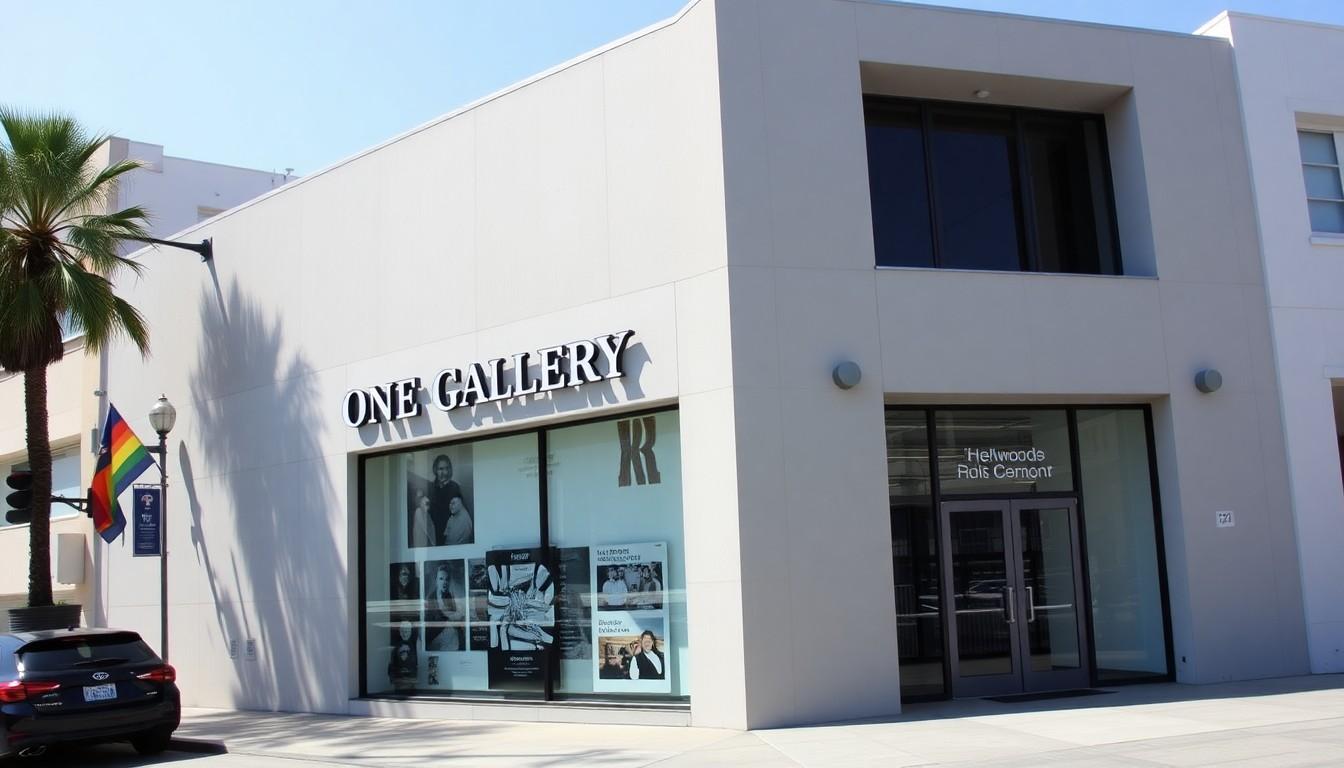
Visitors in West Hollywood can explore a vibrant gay rodeo history exhibition showcasing decades of LGBTQ+ competition, country dancing and community survival. Featuring buckles, posters, photographs, clothing and video, the ONE Gallery display offers a lively, personal look at a movement shaped by courage, friendship and a determination to make space in the arena.
Essential Takeaways
- A substantial archive: The Gay and Lesbian Rodeo Heritage Foundation cares for more than 3,000 items, although only a selection is on display.
- A colourful exhibition: Expect vintage rodeo buckles, programmes, posters, hats, shirts, photographs and video footage.
- A history of resistance: The collection records discrimination, including the cancellation of a planned 1988 finals rodeo in Nevada.
- A changing community: Gay rodeo once had more events, spectators and sponsors, but organisers are working to attract younger participants.
- More than sport: Dancing, friendship and shared identity remain central to the culture around the rodeo.
Gay rodeo history gets room to breathe
The most striking thing about the exhibition isn't just the number of objects. It's the sense of people behind them: contestants pulling on boots, dancers filling a floor and organisers building something welcoming in places that weren't always welcoming to them.
At the ONE Gallery, the material can be displayed across proper walls rather than balanced against temporary fencing or packed into a small event stand. That makes a difference. Banners can rise overhead, posters can be grouped by era and visitors can take in the movement's visual language at a glance, according to coverage by WeHo Times and the ONE Institute. [2], [3]
Roger Bergman, a gay rodeo participant since 1980 and president of the Gay and Lesbian Rodeo Heritage Foundation, helped bring the collection from Las Vegas to West Hollywood. His involvement gives the exhibition a particularly personal feel, because this isn't distant archive material. Much of it comes from a life lived inside the community. [1]
What you'll find inside the archive
The collection includes roughly 500 event buckles, alongside hundreds of posters and programmes. There are also contestant shirts, hats, hat pins, photographs and other small pieces that might seem modest individually but become powerful when viewed together.
Some objects carry an especially strong emotional charge. One display features bareback riding equipment connected with two women who shared a rigging and finished with the same score. Another tells the story of a competitor who uses a walker and was supported by fellow participants who helped provide equipment suited to the arena floor. [1], [7]
There are quieter memorials, too. The riderless horse ceremony began as a way to remember people lost to AIDS and has since expanded to honour those who have died from many causes. It turns a rodeo tradition into a moving act of collective remembrance. [5], [7]
From country bars to a wider LGBTQ+ community
Gay rodeo grew alongside country-western bars, dance groups and social clubs. In California, bars such as Oil Can Harry's, Rawhide and Floyd's helped provide the meeting places where people could dance, organise and discover the sport.
That network has thinned. Several venues have closed, changed hands or stopped operating as country-western spaces, while the older sponsorship model that once helped boost prize money has faded. Bergman told WeHo Times that the movement reached a peak in the 1990s, with about 22 rodeos and 25 member associations. [1]
Still, the culture hasn't disappeared. Line dancing now attracts people who don't necessarily consider themselves country fans, and events can include music beyond traditional western styles. That flexibility may be one of gay rodeo's biggest strengths: the boots are distinctive, but the invitation is broad.
Why the difficult stories matter
The exhibition doesn't present gay rodeo as a glossy tale of progress. It also records hostility and exclusion, including the 1988 attempt to stop an international finals rodeo near Fallon, Nevada.
According to Bergman's account, local opposition led to legal action shortly before the event, and officials prevented contestants from accessing the site and caring for their horses. The story is difficult to hear, but it explains why the archive matters beyond nostalgia. These records preserve what happened when queer people were told they didn't belong. [1], [4]
The later return of the World Gay Rodeo Finals to Reno offers a pointed contrast. What was once blocked became a public reminder that the community had endured. History can be satisfying when it comes with a pair of dusty boots and a very long memory.
How to explore the exhibition properly
Give yourself time to look beyond the headline objects. A buckle may catch your eye first, but the programmes, photographs and handwritten details often reveal how events were organised, who attended and what the social world around the arena looked like.
Video footage is also available, offering a more immediate sense of the action, atmosphere and personalities involved. For visitors unable to attend, the Gay Rodeo Heritage Foundation's digital resources include scanned programmes, posters, press coverage, photographs and recordings. Upcoming events are listed separately online. [1], [7]
The exhibition's talks add useful context, including sessions on the history of gay rodeo and the cancelled 1988 finals. For anyone new to the subject, those discussions could be the best way into the archive, connecting objects on the wall with the people and pressures behind them. [3], [4]
A living tradition, not a closed chapter
The display also raises a practical question for the future: how does gay rodeo bring in younger participants while keeping its history visible? Bergman says younger people are joining, but not at the levels seen during the movement's busiest years.
That makes the exhibition feel less like a final retrospective and more like a handover. It celebrates the people who built the community, while quietly asking who will carry the banners, organise the events and fill the dance floor next.
For visitors, the appeal is immediate. You don't need to know the rules of every rodeo event to understand the pleasure of seeing people create a place for themselves and then keep it alive.
History is at its most vivid when you can still hear the music and feel the arena dust.
Explore the archive, catch a talk and let the stories lead you further.
Source Reference Map
Story idea inspired by: [1]
Sources by paragraph:
- Paragraph 1: [2], [3]
- Paragraph 2: [1], [2]
- Paragraph 3: [1], [7]
- Paragraph 4: [1], [7]
- Paragraph 5: [5], [7]
- Paragraph 6: [1], [2]
- Paragraph 7: [1], [3]
- Paragraph 8: [1], [7]
- Paragraph 9: [1], [4]
- Paragraph 10: [1], [4]
- Paragraph 11: [1], [7]
- Paragraph 12: [3], [4]
- Paragraph 13: [1], [7]
- Paragraph 14: [1], [3]
- Paragraph 15: [1], [2]
- Paragraph 16: [1], [7]
- Paragraph 17: [1], [4]