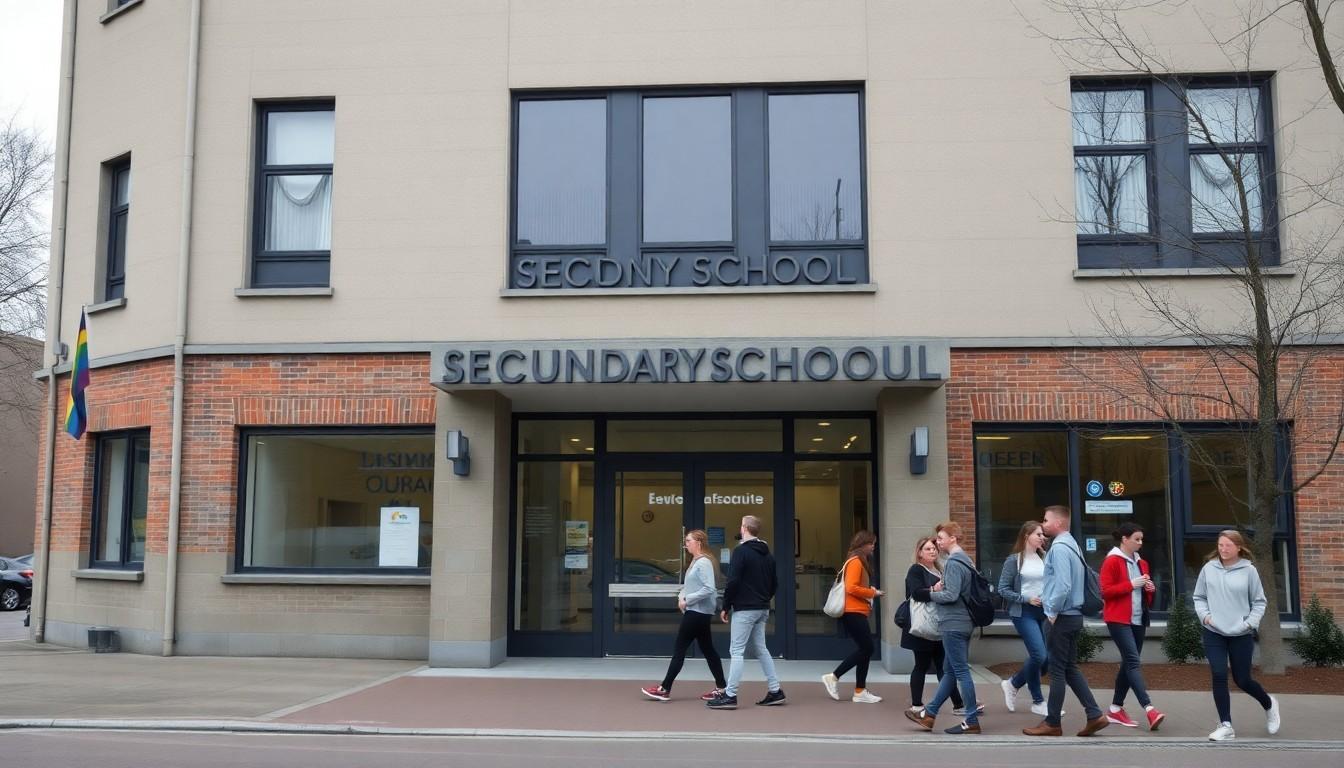
Schools across Amsterdam are marking Purple Friday with renewed urgency, as new research points to a sharp decline in Dutch teenagers’ acceptance of gay and lesbian classmates. The annual day of purple clothing, classroom discussion and student-led action is becoming less about celebration alone, and more about making schools visibly safer for LGBTQ+ young people.
Essential Takeaways
- Amsterdam participation remains strong: At least 249 local schools requested Purple Friday teaching materials.
- National involvement has reached a record: More than 3,000 schools are taking part across the Netherlands.
- Acceptance has fallen sharply: The proportion of teenagers who think gay or lesbian pupils can be open at school dropped from 60% to 45%.
- Schools are changing the tone: Festive activities are increasingly paired with lessons on discrimination, safety and respectful disagreement.
- Student leadership matters: Gender and Sexuality Alliances are helping young people organise discussions and support classmates.
Purple Friday takes on a more serious role
Purple Friday has traditionally brought a bright splash of colour to Dutch schools. Students and staff wear purple, classrooms display LGBTQ+ symbols and lessons explore identity, relationships and discrimination. But this year, the mood in many Amsterdam schools is more thoughtful than purely celebratory, according to Parool.
That shift follows research showing that teenagers feel less positive about homosexuality than they did several years ago. The change has given schools a difficult but important question: how do you create a supportive environment when even visible gestures of inclusion can attract resistance?
For many teachers and students, the answer is not to retreat. Instead, Purple Friday is being used as a starting point for calmer conversations, practical education and a clearer message that LGBTQ+ pupils should be able to feel safe at school. Research reported by Utrecht University and the Health Behaviour in School-aged Children study highlights why that message matters now.
Amsterdam schools are still showing up
At least 249 schools in Amsterdam requested Purple Friday lesson materials, including primary schools, secondary schools and vocational colleges. That is slightly below the previous year, but COC says the city has long had comparatively high participation, while schools elsewhere in the Netherlands are catching up, Parool reported.
Nationwide involvement has reached a record level, with 3,130 schools taking part. That figure includes schools that ordered official teaching packages, although COC notes that some schools participate without requesting materials. In other words, the formal count doesn't capture every purple jumper, classroom conversation or student-led activity.
That distinction is worth remembering. A school may mark the day with a small discussion rather than a large event, particularly if staff are worried about confrontation or lack the time to organise something elaborate. Inclusion doesn't always arrive with banners and wristbands; sometimes it begins with a teacher making space for an honest question.
Why the latest figures have unsettled teachers
The most striking finding is the fall in the number of secondary pupils who believe gay or lesbian students can be open about their sexual orientation at school. That measure declined from 60% in 2021 to 45% in 2025, according to research discussed by Utrecht University and the HBSC study.
The figures don't mean every school has suddenly become hostile. They do suggest that many young people sense a tougher social climate, whether through jokes, online commentary, peer pressure or direct incidents. Trimbos described the decline as a serious concern, while RTL reported warnings that schools need to respond rather than assume acceptance will look after itself.
For LGBTQ+ teenagers, the atmosphere can be felt in small moments. A rainbow flag being removed, a slur ignored in the corridor or a discussion shut down too quickly can all send a message. Conversely, seeing older students speak openly can offer the reassurance that someone else has made it through.
Student organisers are putting lived experience first
At Amsterdam's Metis Montessori Lyceum, students involved in the Gender and Sexuality Alliance meet regularly to discuss news, watch documentaries and plan activities. Their programme includes an online quiz covering both everyday knowledge and the global risks still faced by LGBTQ+ people, according to Parool.
That student involvement gives Purple Friday a more personal edge. Young organisers aren't only repeating messages prepared by adults; they're connecting the day to the experience of trying to understand yourself while navigating school life. One student described wanting to become the kind of visible older role model they had needed earlier.
At ROC van Amsterdam, organiser Lem also linked the day to personal experience after facing hostility over gender expression. Accounts like this explain why schools are combining cheerful symbols with more direct conversations about bullying and exclusion. Purple clothing may be easy to spot, but it is the conversation behind it that can make a lasting difference.
From celebration to safer conversation
Some schools are deliberately broadening the purpose of the day. At Montessori Lyceum Amsterdam, pupils received information booklets and wristbands, while lessons also addressed the research on declining acceptance. Principal Wendelien Hoedemaker told Parool that teenagers can slip into black-and-white thinking, making patient discussion especially valuable.
Amsterdams Lyceum plans to hold its event later, potentially during Pride month, with greater emphasis on dialogue. Principal Tom van Veen said the school is seeing a harder climate and wants students to have a safe place to ask questions and express uncertainty.
That approach matters because meaningful inclusion isn't built by demanding that every pupil already knows the perfect language. It comes from setting clear boundaries around harassment while allowing room for learning. The balance is delicate, but a school that can manage difficult conversations is better prepared to support pupils who feel isolated.
What Purple Friday means beyond the purple clothes
Purple Friday takes place on the second Friday of December and was launched in the Netherlands by COC in 2010, inspired by America's Spirit Day. It brings primary schools, secondary schools and vocational colleges together around support for LGBTQ+ pupils and opposition to discrimination, according to the University of Groningen.
The event's growing national reach is encouraging, but participation numbers aren't the whole story. The more telling test is what happens after the posters come down: whether staff challenge homophobic language, whether pupils know where to seek help and whether school policies are trusted when something goes wrong.
For families, the day can also be a useful prompt at home. Ask what the school is doing, listen without turning the conversation into an interrogation and make space for uncertainty. Sometimes the most supportive response is simply showing that a young person's identity isn't a problem to be solved.
Purple Friday is becoming less a single colourful event and more a visible promise that every pupil deserves safety, dignity and room to be themselves.
Source Reference Map
Story idea inspired by: [1]
Sources by paragraph:
- Paragraph 1: [2], [3]
- Paragraph 2: [4], [5]
- Paragraph 3: [6], [7]
- Paragraph 4: [2], [3]
- Paragraph 5: [4], [5]
- Paragraph 6: [6], [7]
- Paragraph 7: [2], [3]
- Paragraph 8: [5], [6]
- Paragraph 9: [2], [4]
- Paragraph 10: [3], [7]
- Paragraph 11: [2], [5]
- Paragraph 12: [6], [7]
- Paragraph 13: [2], [4]
- Paragraph 14: [3], [5]
- Paragraph 15: [4], [6]
- Paragraph 16: [2], [7]
- Paragraph 17: [3], [4]
- Paragraph 18: [5], [6]
- Paragraph 19: [2], [4]
- Paragraph 20: [3], [7]
- Paragraph 21: [4], [5]
- Paragraph 22: [2], [6]
- Paragraph 23: [3], [7]
- Paragraph 24: [4], [5]
- Paragraph 25: [2], [3]