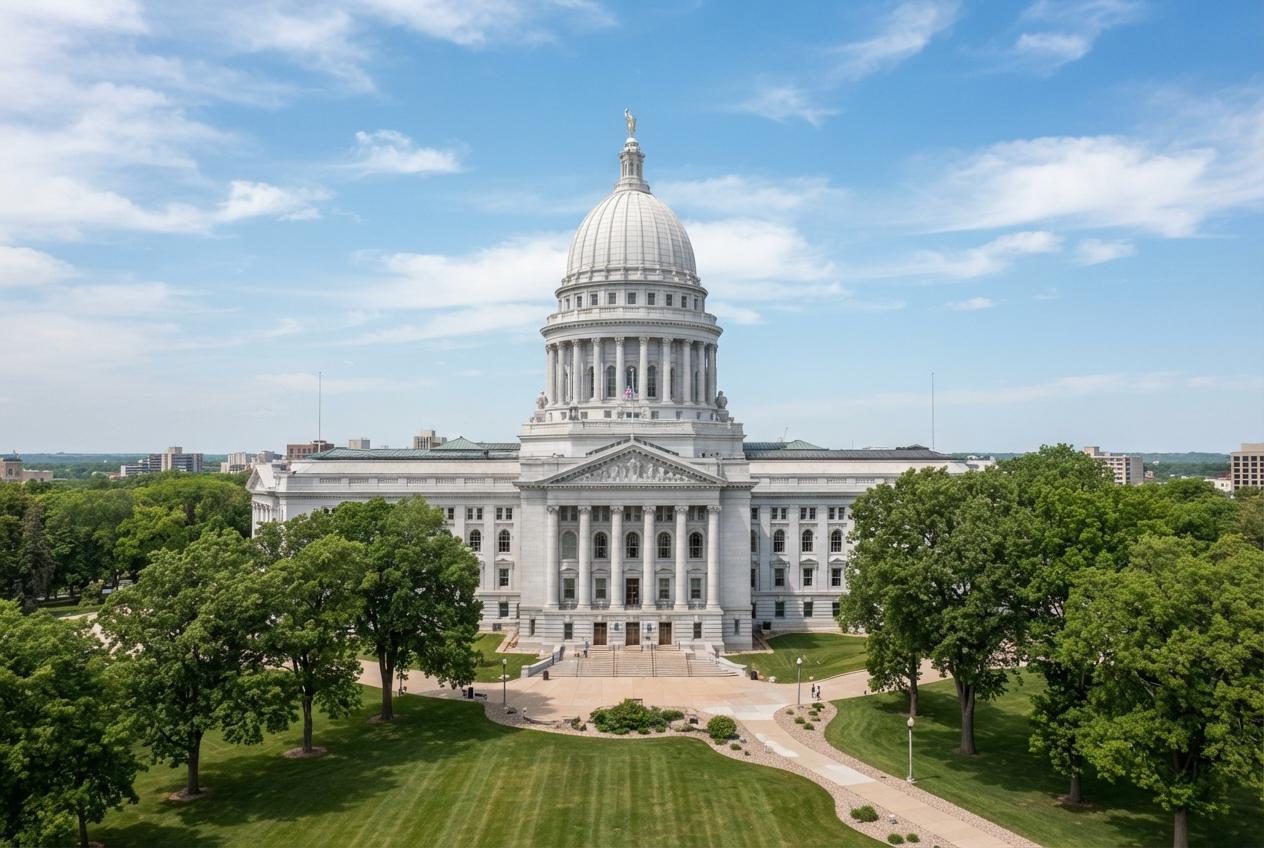
Voters weighing Wisconsin’s 2026 governor race are being offered a detailed look at the LGBTQ records of Democrat David Crowley and Republican Tom Tiffany. The comparison matters in a state where hundreds of thousands of LGBTQ people live, work and raise families, while campaign debates increasingly focus on equality, schools, healthcare and public safety.
Essential Takeaways
- Crowley’s record: The Milwaukee County executive has publicly backed Pride, opposed conversion therapy and pledged action on Wisconsin’s dormant marriage-equality ban.
- Tiffany’s voting history: His record includes opposition to the Equality Act, the Respect for Marriage Act and federal protections for transgender people.
- Schools remain central: Tiffany has supported restrictions affecting transgender pupils, while LGBTQ advocates warn of potential harm to young people.
- The stakes are local: Wisconsin is home to about 304,100 LGBTQ people, including many families raising children.
- The wider climate matters: GLAAD’s tracker has recorded dozens of anti-LGBTQ incidents in Wisconsin since 2022, including threats and attacks.
Two candidates, sharply different LGBTQ records
The emerging Wisconsin governor contest is already presenting voters with a striking policy divide. David Crowley, Milwaukee County’s executive, has repeatedly used public statements and local government action to show support for LGBTQ residents, according to Community Journal and Milwaukee Independent.
Crowley has marked Pride Month, spoken about violence affecting LGBTQ communities and supported Milwaukee County’s opposition to conversion therapy. He has also said he’d call a special legislative session to repeal Wisconsin’s dormant ban on marriage equality if elected governor.
That promise is particularly significant because the state’s law remains on the books, even though same-sex marriage is protected by the US Supreme Court. Crowley’s position turns a largely symbolic measure into a question about whether Wisconsin should remove a law that could become relevant if national legal protections weaken.
Crowley’s campaign returns to the governor’s race
Crowley’s candidacy gives Democrats a well-known Milwaukee-area figure with executive experience and a record of speaking directly about equality. The Los Angeles Times reported that he re-entered the Democratic primary after previously stepping away from the contest.
His public messaging has often linked LGBTQ rights with wider concerns, including reproductive healthcare, domestic violence and access to community services. That broader framing reflects how these issues overlap in real life, rather than sitting in separate political boxes.
Milwaukee Independent also reported on Crowley’s campaign launch and his bid for the state’s top job. For voters, the practical question is less about a single Pride statement and more about whether his county-level record would translate into statewide policy.
Tiffany’s record draws scrutiny on schools and marriage
Tom Tiffany’s record is considerably more closely associated with opposition to federal LGBTQ protections. GLAAD and Fair Wisconsin point to his votes against the Equality Act and the Respect for Marriage Act, as well as his support for measures restricting gender-related care and protections for transgender pupils.
Tiffany has also praised a US Supreme Court decision upholding restrictions on transgender students in school sports and said he would sign a similar Wisconsin ban. His public comments about Title IX and transgender women have further intensified concerns among LGBTQ advocates.
For families, these debates aren't abstract. Rules covering school sport, bathrooms, names, pronouns and anti-discrimination protections can shape whether young people feel safe at school. Research and medical organisations have consistently warned that exclusion and stigma can worsen risks for transgender and non-binary teenagers.
Why the election matters beyond LGBTQ policy
Wisconsin’s LGBTQ population makes these issues politically significant as well as personal. About 5.7% of adults in the state identify as LGBTQ, and nearly three in ten LGBTQ people are raising children, according to figures cited by GLAAD and the Movement Advancement Project.
The policy conversation also reaches healthcare, food assistance, reproductive rights, environmental protection and household costs. LGBTQ people experience disproportionate financial hardship and health inequalities, so decisions on public services can have an outsized effect on queer households.
Tiffany’s record on abortion, social programmes, environmental regulation and tariffs is therefore part of the same picture for many voters. A campaign focused narrowly on cultural arguments can obscure the everyday issues that determine whether families can afford care, energy, food and housing.
A tense political backdrop in Wisconsin
The race is unfolding against a troubling background of anti-LGBTQ incidents. GLAAD’s ALERT Desk has tracked 75 incidents in Wisconsin since June 2022, including violent assaults, bomb threats and an attempted arson attack involving a Pride flag.
That atmosphere adds weight to the candidates’ language. Supporters want clear reassurance that public institutions will protect LGBTQ residents, while opponents argue that questions about schools, parental authority and religious freedom should take priority.
The debate is unlikely to become quieter as the election approaches. But voters can cut through the noise by checking what each candidate has actually said, supported or voted for, rather than relying on campaign labels. In a close state, that record may matter more than a polished slogan.
The 2026 Wisconsin governor race is shaping up as a consequential test of equality, public services and political courage.
Source Reference Map
Story idea inspired by: [1]
Sources by paragraph:
- Paragraph 1: [2], [4]
- Paragraph 2: [3], [4]
- Paragraph 3: [5], [6]
- Paragraph 4: [2], [3]
- Paragraph 5: [4], [5]
- Paragraph 6: [6], [7]
- Paragraph 7: [2], [4]
- Paragraph 8: [3], [5]
- Paragraph 9: [2], [6]
- Paragraph 10: [4], [7]
- Paragraph 11: [3], [5]
- Paragraph 12: [2], [4]
- Paragraph 13: [3], [6]
- Paragraph 14: [4], [7]