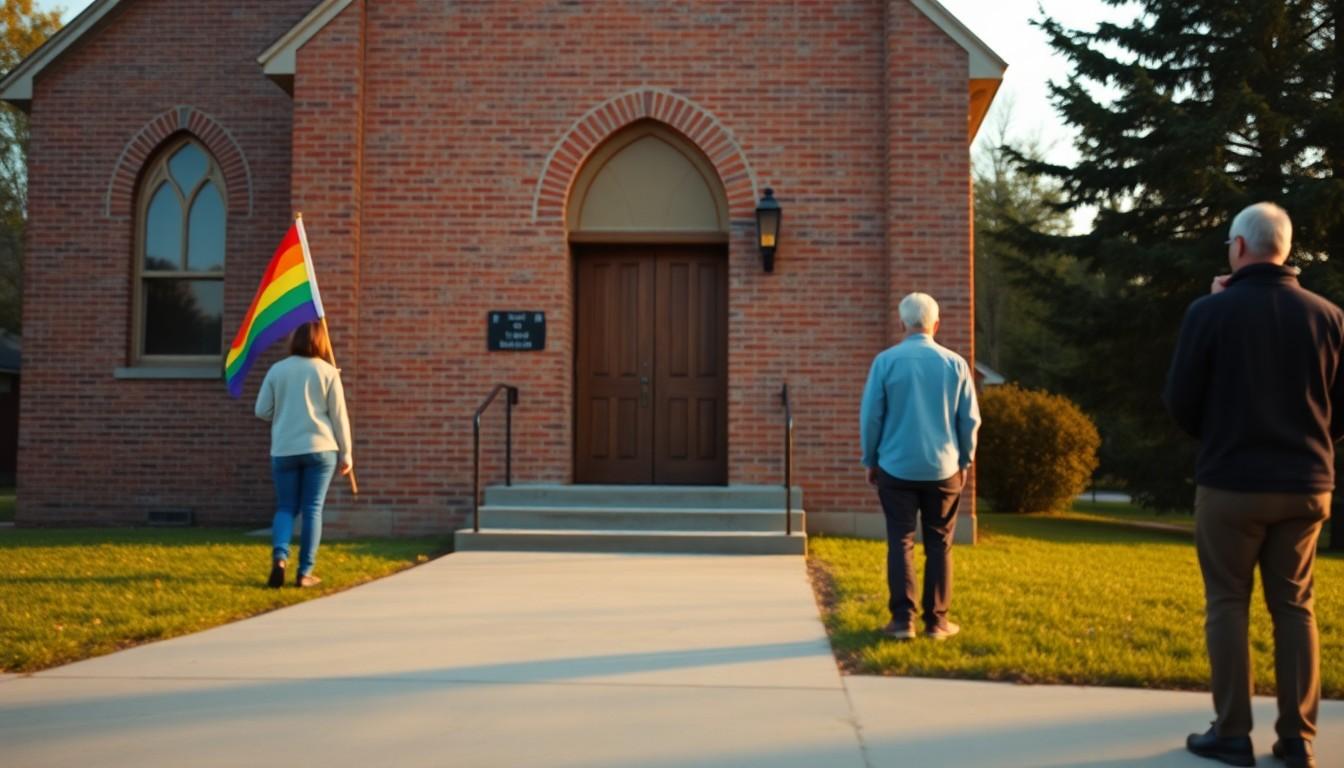
Young LGBTQ Christians in the Dutch Reformed world can face a lonely path before coming out, as conversations about sexuality often begin with doctrine rather than the person. A podcast discussion involving Christine Stam and Gerjanne van Lagen explores the emotional cost of that climate, while recent theological work is prompting fresh questions about biblical interpretation, pastoral care and who gets to define a life.
Essential Takeaways
- Coming out can feel risky: Young people may fear being treated as a problem needing repair.
- Words carry real weight: Terms such as sin, brokenness, calling and burden can land very differently.
- Support isn't always wanted: Some LGBTQ pupils may avoid disclosure because they don't need intervention.
- Theological debate is widening: Recent research highlights differences in how Protestants interpret biblical texts.
- Identity comes first: Pastoral conversations work better when people aren't reduced to their feelings or sexuality.
Coming out can feel like handing someone a problem
For LGBTQ Christians in a conservative religious setting, the hardest step may not be saying the words aloud. It can be deciding whether the people listening will see a whole person, or a theological issue that needs immediate attention.
Christine Stam, who serves on the board of the Christian organisation Hart van homo's, describes that hesitation in a podcast conversation with Gerjanne van Lagen. She says young teenagers may keep their sexuality private because disclosing it can feel like placing a difficult question on somebody else's desk. According to Reformatorisch Dagblad coverage of theologian Thomas Bakker's work, that wider pastoral question is now receiving renewed attention. [2], [4]
That silence can be profoundly isolating. A teenager may be surrounded by family, classmates and church members, yet still feel unable to share one of the most important parts of their inner life. It's a reminder that a community can be friendly in general while remaining frighteningly uncertain about one particular subject.
The debate is about more than one biblical reading
Within conservative Protestant circles, many people agree that the Bible doesn't affirm sexual relationships between people of the same sex. The disagreement begins with what that conclusion means in modern life, and how much room there is for different readings of the relevant passages.
Bakker's doctoral research focuses on homosexuality and hermeneutics, the way people interpret biblical texts. A summary from Vrije Universiteit Amsterdam explains that differences of opinion are strongly connected to the principles readers use when approaching Scripture, rather than simply to whether they take the Bible seriously. [5]
That distinction matters. It shifts the conversation away from the easy claim that one side follows the Bible while the other doesn't. Instead, it asks how history, language, context and theological assumptions shape what readers believe a passage says today.
Why a single word can change the whole conversation
Stam and Van Lagen point to the emotional force of labels such as sin and brokenness. One suggests something to reject or overcome; the other may suggest a painful condition to accept. Neither word will feel neutral to everyone, especially to someone who has spent years wondering whether their existence is welcome.
Research and commentary surrounding Bakker's dissertation show how central that language has become in current Protestant discussion. Reformatorisch Dagblad reported that the debate is not only about conclusions, but also about how churches explain and apply their interpretation. [3], [4]
The podcast conversation offers another possibility: describing same-sex attraction as a calling, while still leaving a person space to discern their own response before God. That wording won't satisfy everyone, but it recognises an important boundary. A minister, teacher or family member can offer a perspective; they can't map out another person's entire spiritual life.
Schools and churches need listening before intervention
A particularly telling example concerns a former pupil at a Reformed school who reportedly had no openly negative experiences, but still chose not to disclose that he was gay. His concern wasn't necessarily direct hostility. It was the possibility that adults would gather around him, assume he needed help and describe his life in language he hadn't chosen.
For schools, that's a useful warning. A support system can become intrusive when it starts with diagnosis rather than curiosity. The first response should often be simple: listen, ask what the young person wants and avoid turning a personal disclosure into a public case study.
Bakker's wider work also stresses that a person is more than their feelings. That message, discussed in Reformatorisch Dagblad's reporting, can be valuable when applied carefully: it should broaden someone's identity, not erase the part they've bravely shared. [7]
A more thoughtful future is possible
The growing attention to hermeneutics suggests that Protestant communities are beginning to examine not only what they believe, but how they arrived there. Bookselling information about Bakker's study presents it as a contribution to that reflection, while university commentary frames the disagreement as a matter of biblical interpretation as well as pastoral practice. [5], [6]
That doesn't mean a quick consensus is around the corner. Nor does it remove the tension between churches that hold traditional sexual ethics and LGBTQ Christians who want full recognition of their relationships. But a more honest conversation could make room for disagreement without making young people carry the entire burden alone.
A church doesn't have to abandon its convictions to speak with kindness. It does, however, need to notice when its language is making a vulnerable person feel like a problem before they've even had the chance to be heard.
It's a small shift in emphasis, but seeing the person before the debate could change everything.
Source Reference Map
Story idea inspired by: [1]
Sources by paragraph: