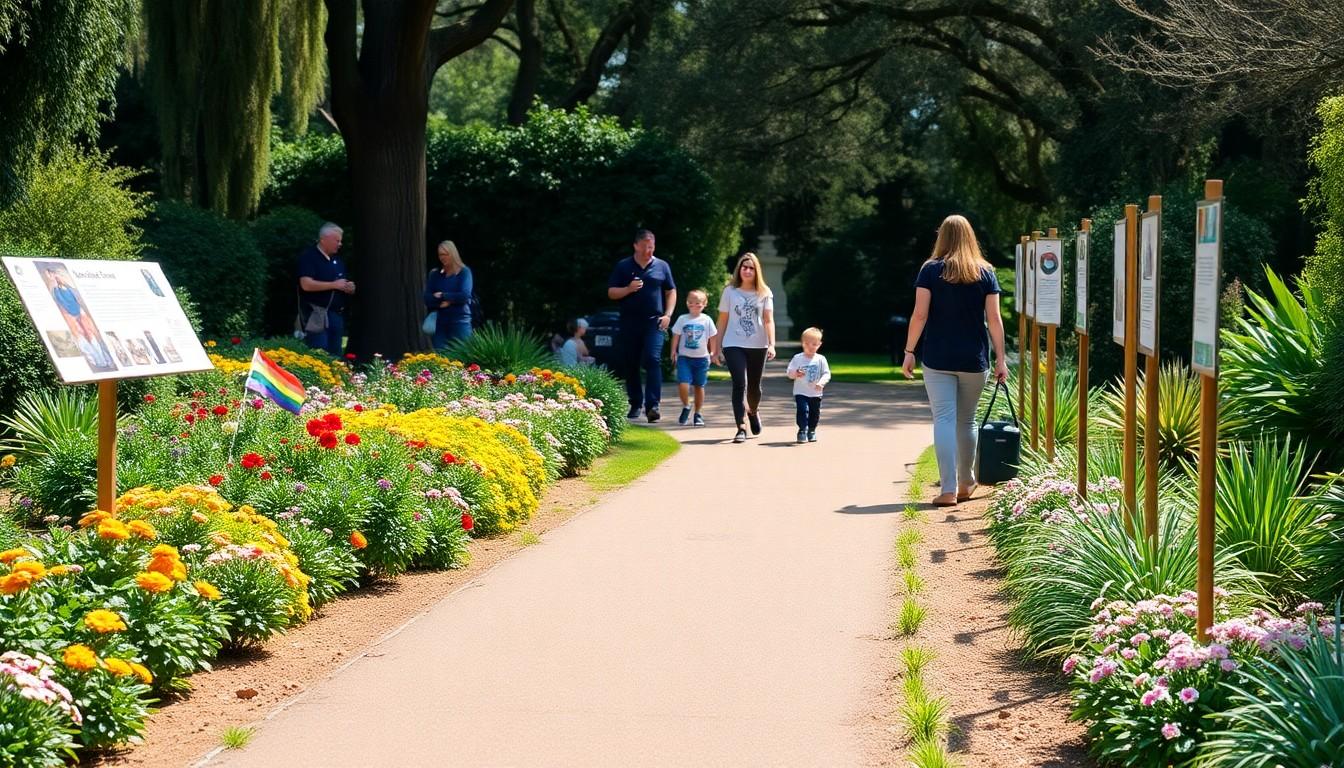
Families visiting Sydney’s Royal Botanic Garden are being invited to follow a colourful children’s trail inspired by Courtney Act’s picture book, while renewed political criticism puts a spotlight on inclusion, public spaces and the enduring power of culture-war arguments. The activity matters because it turns a gentle garden outing into a conversation about difference, creativity and belonging.
Essential Takeaways
- The trail is family-focused: Confetti and the Rainbow Garden includes seven stops, plant-inspired characters and stamp collecting.
- Courtney Act is central to the project: The activity draws on her children’s book about a wattle discovering a diverse garden.
- The criticism is political: Family First national director Lyle Shelton has called for Courtney’s ambassadorship and the activity to end.
- The garden setting adds texture: Sydney’s botanic gardens already offer wildflower displays, seasonal colour and hands-on learning.
- The wider debate is familiar: Drag, rainbow symbols and children’s programming remain recurring flashpoints in Australian culture-war politics.
A rainbow trail turns a garden visit into a story
The appeal of Confetti and the Rainbow Garden is easy to understand. Children move through the Royal Botanic Garden Sydney, stopping at seven locations, meeting characters inspired by Australian plants and collecting stamps before earning a sticker. It sounds less like a political statement than a pleasant morning outdoors, with a little adventure folded into the walk.
The story behind it is equally straightforward. Courtney Act’s book follows a wattle discovering a garden where difference is part of the landscape, not something to fear. According to the Botanic Gardens, the activity is designed to encourage families to explore the garden while thinking about diversity and belonging. That combination of fresh air, bright illustrations and a small reward is rather more inviting than most public debates.
Why is Lyle Shelton objecting?
Lyle Shelton has demanded that Courtney Act be removed as a Botanic Gardens ambassador and that the children’s activity be cancelled. Media reports said he also urged NSW Premier Chris Minns to intervene, describing the project as part of what he called harmful gender-fluid ideology.
His objection also reaches beyond the trail itself, pointing to Courtney’s links with Equality Australia and the organisation’s support for gender-affirming healthcare. In other words, a family activity involving plants, stamps and a picture book has been pulled into a much larger argument about identity and public visibility.
That pattern will feel familiar to anyone who followed earlier disputes over drag storytime, rainbow flags or LGBTQIA+ representation. Courtney has previously appeared at children’s literary and cultural events, including drag storytime programming, where the focus has been on reading, imagination and performance rather than political campaigning.
The garden setting is doing some quiet work
There’s something especially effective about placing this kind of story in a botanic garden. A garden is already a living lesson in variation: different colours, shapes, textures and growing habits sharing the same space. The Royal Botanic Garden Sydney’s wildflower areas, for instance, give visitors a vivid reminder that natural beauty rarely comes in one standard form.
That doesn’t mean a plant trail needs to carry the weight of a national argument. It simply means the setting supports the book’s message without making it feel forced. Children can notice petals, leaves and insects first, then absorb the broader idea that difference can be interesting rather than threatening.
For parents, the practical attraction is clear too. A structured trail gives younger visitors something to look for, while the garden provides room to wander when attention starts to drift. Comfortable shoes, water and a phone camera for the stamp stops are probably more useful preparations than bracing for a culture war.
The controversy says more about politics than playtime
The latest criticism reflects a broader habit of treating LGBTQIA+ visibility as a crisis whenever it appears in an ordinary public setting. A book, a performer or a rainbow motif becomes a convenient symbol, and children are introduced as the reason it must be removed.
Yet the details of this activity are notably modest. There’s no complicated lesson plan or confrontational staging. There’s a garden, a story, plant characters and a route designed to help families look more closely at their surroundings. As Working Management observed in its discussion of Courtney Act’s book, visibility can offer an antidote to the anger that often surrounds queer representation.
That’s why these disputes can feel so disproportionate. The louder the argument becomes, the clearer it is that the underlying activity is simply making room for a wider range of families and stories.
What visitors should know before they go
Families considering the experience should check the Botanic Gardens’ official event information for dates, availability and any booking details. The trail is best approached as a gentle outdoor activity rather than a formal performance, so expectations should stay practical: allow time for walking, pauses and curious children who want to inspect every flower.
It’s also worth remembering that the garden itself is the main attraction. The trail adds a playful layer, but visitors can enjoy the plant collections, seasonal displays and open spaces even if they don’t complete every stop. That flexibility is part of the charm.
For supporters, the simplest response may be to attend, read the book and let the activity speak for itself. Public spaces become more welcoming through ordinary use, one family outing at a time.
A small garden trail can still make a meaningful statement: difference belongs in the landscape.
Source Reference Map
Story idea inspired by: [1]
Sources by paragraph:
- Paragraph 1: [2], [3]
- Paragraph 2: [2], [6]
- Paragraph 3: [3], [5]
- Paragraph 4: [3], [5]
- Paragraph 5: [7], [2]
- Paragraph 6: [7], [6]
- Paragraph 7: [3], [5]
- Paragraph 8: [6], [2]
- Paragraph 9: [2], [7]
- Paragraph 10: [2], [3]
- Paragraph 11: [2], [5]
- Paragraph 12: [7], [2]
- Paragraph 13: [2], [6]
- Paragraph 14: [2], [3]
- Paragraph 15: [2], [7]
- Paragraph 16: [2], [6]
- Paragraph 17: [2], [7]