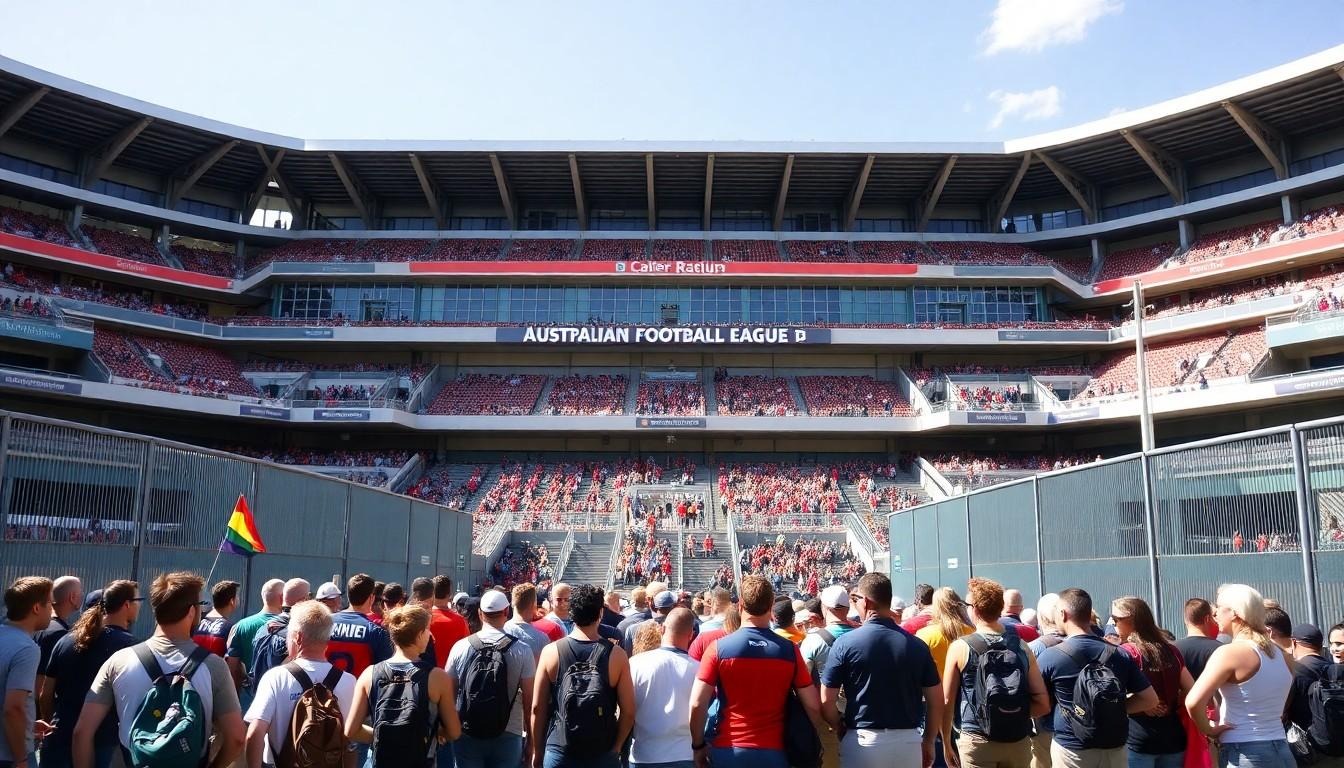
Fans are finding a stronger sense of belonging during AFLW Pride Round, as Gold Coast Suns defender Katie Lynch calls for its message to reach every corner of Australian football. With visibility, creativity and community at its centre, the annual celebration is becoming more than a colourful fixture on the calendar.
Essential Takeaways
- A yearly lift: Pride Round brings noticeable energy and enthusiasm to the AFLW season.
- A wider welcome: Katie Lynch wants the initiative extended across men's football, club staff and supporters.
- Creative expression: Gold Coast's 2026 guernsey uses tattoo-inspired artwork and playful personal details.
- Visibility matters: Pride Round can help LGBTQ+ fans feel represented and more comfortable attending matches.
- A difficult backdrop: The celebration comes as Australian football continues confronting homophobic language.
Pride Round gives the AFLW a different kind of energy
There’s a particular warmth around an AFLW Pride Round match. The guernseys are vivid, the atmosphere feels lighter and the crowd often includes people who might not otherwise make the trip to a game.
That change is exactly what Katie Lynch notices. Speaking to ABC Sport, the Gold Coast Suns player said the round arrives at an important point in the season, offering enthusiasm and celebration before the competition moves towards its finals stretch. The feeling isn’t simply decorative, either. For many players and supporters, it connects directly to identity and belonging.
Pride Round has been held across the AFLW since 2021, giving the competition a regular platform to recognise LGBTQ+ contributions and discuss inclusion. AFLW coverage has increasingly shown how clubs are using the occasion to tell personal, community-focused stories rather than relying on a one-size-fits-all message.
The Suns’ guernsey turns inclusion into something personal
Gold Coast’s 2026 Pride guernsey was designed by Lynch and teammate Lily Mithen, with help from tattoo artist Mady Peters. Its patchwork look, inspired by tattoos and stickers, gives the design a relaxed, handmade quality. There’s even a cheeky tattoo reference on the back, suggesting the creative process involved plenty of laughter.
That personal touch matters because Peters isn’t an established football insider. Lynch described her friend as someone who doesn’t know a drop punt from a handball, yet who now has a meaningful connection to the AFLW through the Pride movement. It’s a neat reminder that inclusion works best when it invites new people in, rather than speaking only to those already sitting in the stands.
Across the competition, clubs have been using Pride guernseys to reflect their own players, communities and histories. The AFL’s coverage of the 2026 designs highlights a broader shift towards authenticity, with teams treating the jumpers as storytelling pieces as much as match-day merchandise.
Why visibility can change who feels welcome
Lynch says the round attracts her own friends, even when they’re only occasional football followers. That’s a useful insight: people don’t always need to become dedicated fans before they feel entitled to attend. Sometimes they simply need a clear signal that they’re welcome.
For LGBTQ+ supporters, visibility can make the difference between watching from a distance and joining the crowd. A Pride match offers an obvious point of connection, but it also sends a broader message about who the sport is for. AFLW players have spoken about showing up openly and creating space for genuine self-expression, themes echoed in recent player-focused AFLW coverage.
That influence cuts both ways. The AFL has taken action against homophobic language, while several listed players and coaches have faced sanctions in recent seasons. As Lynch argues, the sport has the reach to shape supporters’ experiences, so the challenge is to turn that reach into something consistently positive.
Should Pride Round extend across the whole code?
Lynch believes the next step is to bring a dedicated Pride Round to men's football and involve every part of the game, from club employees to fans. Her argument is straightforward: if inclusion is valuable in the AFLW, it shouldn’t stop at one competition.
There’s also a practical reason for widening the initiative. The AFL has a huge audience, and prominent players can influence what behaviour is accepted in stadiums, on social media and at grassroots level. A visible, properly supported campaign across the entire code could help reinforce that homophobia has no place in Australian football.
The key will be consistency. One themed fortnight can raise awareness, but everyday conduct is what builds trust. Education, clear standards and visible representation need to continue well after the last Pride guernsey has been packed away.
A growing celebration with work still to do
Pride Round’s momentum is clear. It has become a major celebration in the AFLW calendar, and players such as Lynch and Aliesha Newman are helping shape its meaning through design, advocacy and personal example. Newman’s role in creating the official match ball adds another layer to a round increasingly driven by contributions from within the football community.
Still, celebration shouldn’t obscure the work ahead. Supporters need to feel safe not just during a Pride fixture, but whenever they enter a club, join a local team or watch a match online. The strongest legacy of the round may be the quiet, lasting change it encourages away from the spotlight.
For Lynch, that impact can be difficult to measure because much of it happens beyond the players’ view. But if an occasional fan walks into a stadium and thinks, "I belong here," the message has already travelled a long way.
Pride Round is at its best when the welcome lasts beyond the final siren.
Source Reference Map
Story idea inspired by: [1]
Sources by paragraph:
- Paragraph 1: [2], [3]
- Paragraph 2: [2], [4]
- Paragraph 3: [3], [7]
- Paragraph 4: [2], [6]
- Paragraph 5: [4], [7]
- Paragraph 6: [2], [3]
- Paragraph 7: [2], [5]
- Paragraph 8: [2], [4]
- Paragraph 9: [2], [3]
- Paragraph 10: [5], [7]
- Paragraph 11: [2], [6]
- Paragraph 12: [2], [3]
- Paragraph 13: [2], [4]
- Paragraph 14: [2], [7]
- Paragraph 15: [2], [5]
- Paragraph 16: [2], [6]
- Paragraph 17: [2], [3]