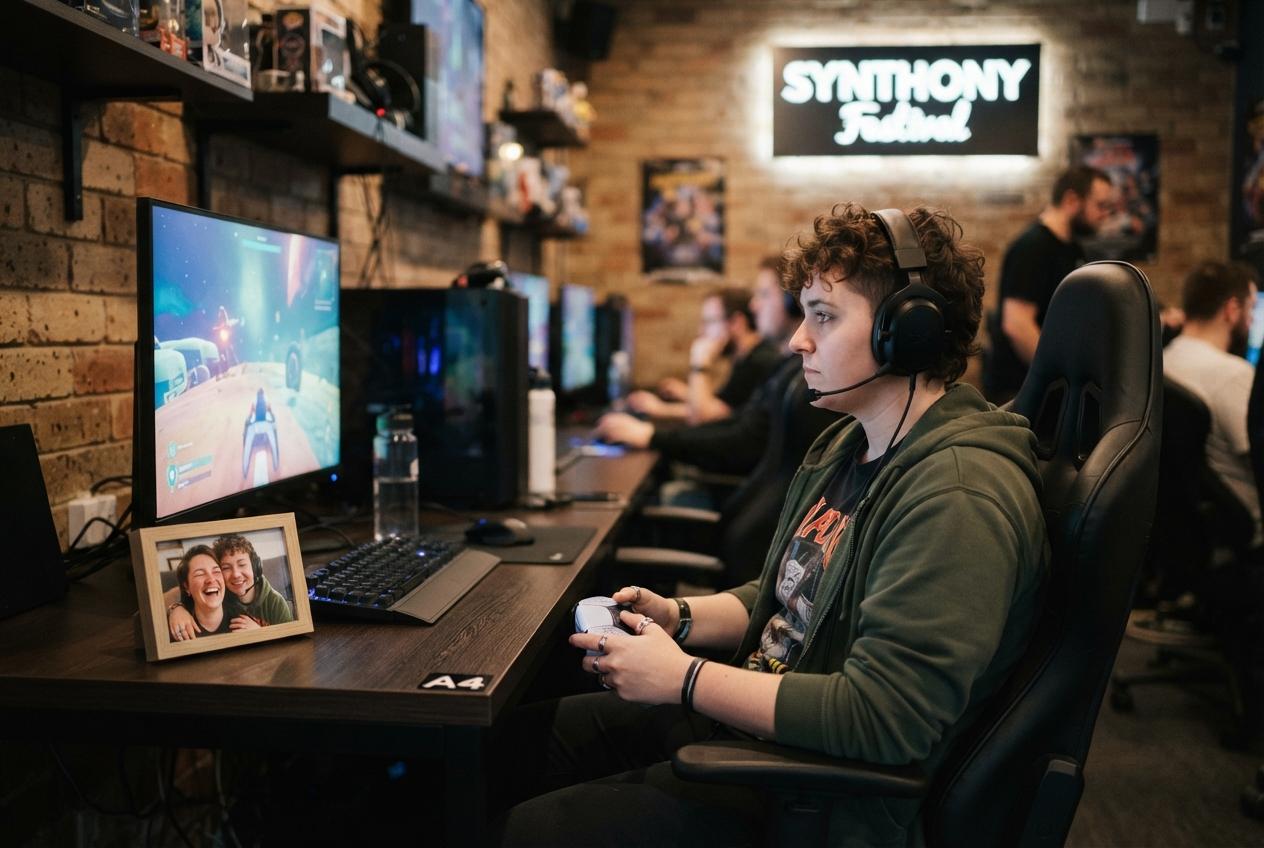
Ladyhawke has spent decades exploring virtual worlds, but her gaming advice is refreshingly grounded: choose stories with care, avoid toxic online spaces when they stop being fun, and look beyond a female lead before assuming a game gets representation right.
Essential Takeaways
- Campaigns can offer breathing room: Story modes let players enjoy rich worlds without the hostility of open multiplayer chat.
- Representation needs thought: Queer characters feel more convincing when their stories are shaped by lived experience.
- A woman protagonist isn't everything: A female lead can still be written through a narrow male perspective.
- Queer players are a major audience: Research and industry commentary point to a gaming community that's more diverse than old stereotypes suggest.
- Choose the right escape: The best game is one that leaves you absorbed, not exhausted by abuse.
Ladyhawke has a simple answer to gaming trolls
For Ladyhawke, gaming should be an escape, not another place to brace for abuse. The musician, whose real name is Pip Brown, has played since childhood and says she now prefers campaigns when online multiplayer becomes too hostile. According to research and commentary collected by Gamers With Glasses, toxic masculinity remains a serious problem in gaming spaces, particularly for women and queer players.
Her view of Call of Duty is bluntly practical. The campaign can deliver the action and spectacle, while public multiplayer may bring a very different experience, especially for women using voice chat. Studies and reporting on sexism in gaming communities, including work discussed by the University of Waterloo's Games Institute, have documented how quickly women can become targets in competitive spaces.
That doesn't mean queer players should avoid games they love. It means they're entitled to decide which part of the experience deserves their time. Sometimes the smartest move is to mute the lobby and get on with the story.
The best queer games make characters feel human
Ladyhawke points to The Last of Us as a turning point, praising the emotional weight of its characters and the care behind its storytelling. She also recommends Life Is Strange and Lost Records: Bloom & Rage, games where queer identity isn't simply a decorative detail but part of a much broader emotional world. The Guardian's coverage of queer games similarly highlights how representation can deepen a game's themes when it's treated as storytelling rather than a box-ticking exercise.
That distinction matters. A character can be technically queer and still feel thin, awkwardly written or disconnected from real life. GamesRadar has argued that representation is improving, but remains uneven, with creators still learning how to make LGBTQ+ characters feel fully realised rather than symbolic.
Players notice the difference almost immediately. A believable character has contradictions, humour, bad decisions and quiet moments, not just a label attached to a plot point. Your instincts are often better than any marketing line.
Why a female lead doesn't automatically change a game
Ladyhawke is looking forward to GTA VI, a series she's enjoyed since growing up, but she remains wary of what a new female protagonist will actually mean. A woman at the centre of a game is significant, yet the surrounding world, camera language and assumptions can still feel shaped by a predominantly male viewpoint.
That concern echoes wider criticism of the industry's approach to women in games. A panel discussed by the University of Waterloo's Games Institute examined how women can be framed as objects within gaming culture, while reporting on online communities has repeatedly shown that visibility doesn't always translate into respect or safety.
So, when a game announces its first playable woman, it's worth asking a few extra questions. Does she have agency? Are her relationships developed? Does the world respond to her as a person, rather than as a novelty? The answer is more revealing than the character's gender alone.
Queer gamers are reshaping the audience
The old image of the typical gamer has aged badly. Research from the University of Sydney describes gaming audiences as increasingly queer and diverse, reflecting a reality many players have recognised for years. That shift is visible in the games people play, the communities they build and the stories they now expect to see.
The Guardian's overview of queer games also shows how LGBTQ+ players have helped create a richer gaming culture, from celebrated narrative adventures to smaller independent releases. Meanwhile, GamesRadar's assessment suggests progress is real, even if it remains frustratingly inconsistent.
That creates pressure in a useful direction. Players aren't just asking for more queer characters; they're asking for better writing, safer communities and stories that don't treat identity as a plot twist. It makes the medium feel more grown-up, even when the games themselves involve zombies, crime sprees or absurdly powerful weapons.
A practical guide to choosing your next game
If you're looking for queer representation, start with the kind of experience you actually want. Narrative adventures are often a good fit for character-led storytelling, while single-player campaigns can provide the action without the unpredictable mood of an open voice lobby. The Guardian and GamesRadar both point towards the value of games where LGBTQ+ characters have meaningful roles in the story.
It also helps to check how representation is handled before buying. Look for reviews that discuss character depth, relationships and the wider creative team, rather than relying on a trailer's single dramatic moment. The University of Sydney's research on gaming audiences is a useful reminder that players bring varied experiences to the same game, so no one checklist will suit everyone.
And if a community feels hostile, leave. Gamers With Glasses and the University of Waterloo's discussion of misogyny both underline why boundaries matter. Gaming is supposed to give you somewhere to go for a few hours; it doesn't get to charge an emotional toll at the door.
A thoughtful story, a decent mute button and the freedom to walk away can make all the difference.
Explore games that respect both your time and your identity.
Source Reference Map
Story idea inspired by: [1]
Sources by paragraph:
- Paragraph 1: [2], [5]
- Paragraph 2: [5], [7]
- Paragraph 3: [1], [6]
- Paragraph 4: [1], [2]
- Paragraph 5: [4]
- Paragraph 6: [1], [4]
- Paragraph 7: [1], [7]
- Paragraph 8: [6], [7]
- Paragraph 9: [3]
- Paragraph 10: [2], [4]
- Paragraph 11: [4]
- Paragraph 12: [2], [3]
- Paragraph 13: [2], [4]
- Paragraph 14: [5], [7]
- Paragraph 15: [1], [2]
- Paragraph 16: [3]
- Paragraph 17: [5], [7]