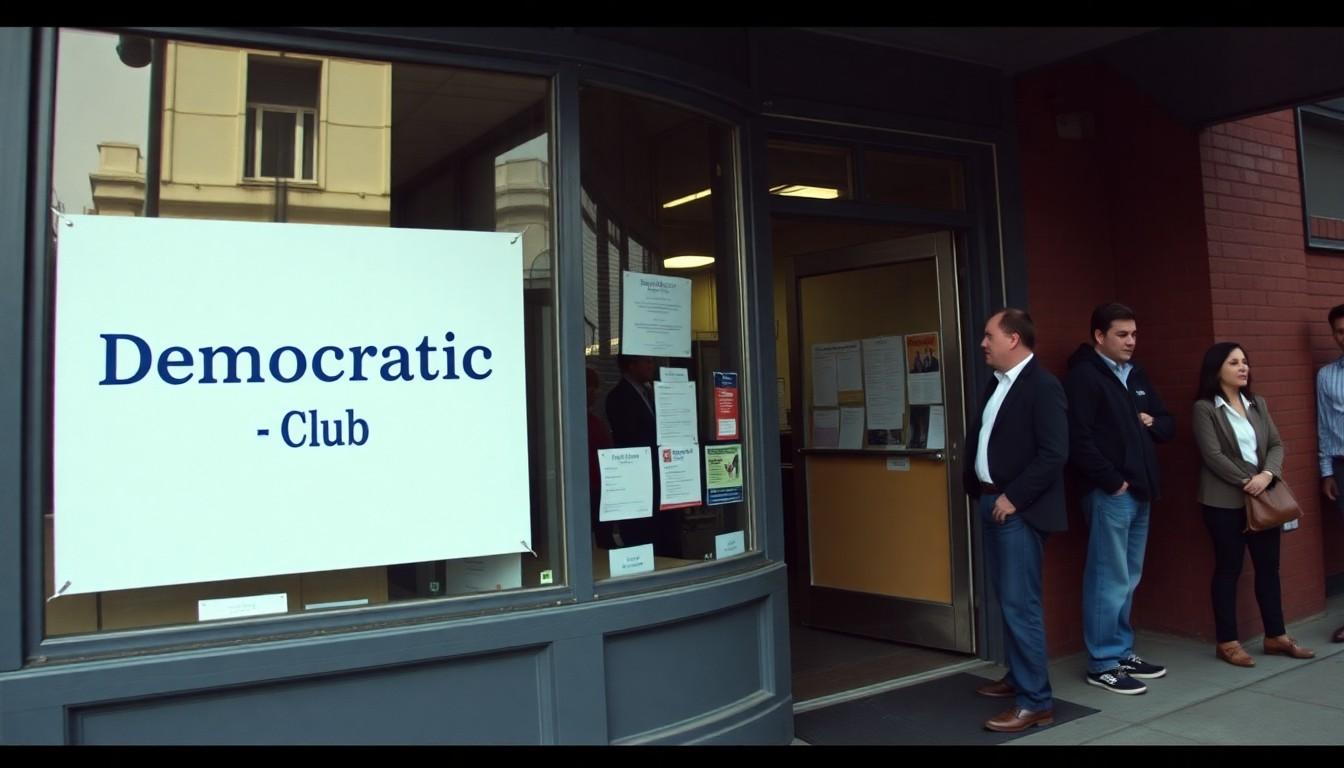
San Francisco’s Alice B. Toklas LGBTQ Democratic Club has grown from a discreet 1971 organising project into a major political force, helping turn community activism into endorsements, policy campaigns and public leadership. Its history offers a vivid lesson in how local LGBTQ+ organising can reshape government.
Essential Takeaways
- Founded in 1971: The club was created when openly LGBTQ+ political organising carried serious personal and professional risks.
- A national breakthrough: Jim Foster addressed the 1972 Democratic National Convention, putting gay rights before a major party audience.
- Local votes became political leverage: The club’s candidate slates and volunteer networks showed San Francisco politicians that LGBTQ+ voters could influence elections.
- Policy remained central: Its platform covers issues including equality, housing, public health, economic justice and democratic participation.
- Still active today: The organisation continues to recruit members, endorse candidates and connect grassroots concerns with public office.
From discreet beginnings to a recognised political force
The club’s most striking achievement is how ordinary its method now sounds: organise voters, support candidates and push for policy. In the early 1970s, however, that approach was anything but routine. Open LGBTQ+ political power was new, risky and often treated by established parties as an inconvenience rather than a democratic constituency.
According to the club’s historical record, founders including Phyllis Lyon, Del Martin, James “Jim” Foster and Beth Elliott helped establish the organisation in December 1971. Its discreet name mattered, offering members a degree of protection while creating a durable public presence. Wikipedia identifies it as the first registered LGBTQ+ Democratic organisation in the United States, a distinction that gives the club’s origin story real national weight. ([2])
There’s something quietly radical about that first step. Before the banners, breakfast events and formal policy platforms, there had to be a room where people could meet, plan and decide that political visibility was worth the risk.
The moment LGBTQ+ rights reached the national stage
Just a year after its formation, Foster took the club’s message far beyond San Francisco. At the 1972 Democratic National Convention, he became the first openly gay delegate to address a major party presidential convention, calling for a gay liberation plank in the Democratic platform. The proposal was rejected at the time, but the speech forced party leaders to hear an argument they could no longer comfortably ignore. ([2])
That was an important shift in political language. LGBTQ+ rights were being presented not as a private concern or a specialist demand, but as a civil rights issue requiring a response from mainstream institutions.
The club’s current work reflects that same blend of principle and practical campaigning. Its membership programme invites people to take part in organising, while its public platform sets out priorities that can be carried into elections and government. In other words, the organisation still treats politics as something people build together, not something that simply arrives on a ballot paper. ([3], [4])
Why local endorsements became so powerful
National recognition can be symbolic, but City Hall is where political influence becomes tangible. During the 1970s, the club developed organised candidate slates, volunteer phone banks and door-to-door campaigns. That infrastructure helped demonstrate that LGBTQ+ voters were not an abstract audience. They were a motivated electoral bloc with the ability to reward allies and challenge opponents.
The approach also created a bridge between community concerns and municipal decision-making. Supporting candidates was only part of the strategy; the larger goal was to make LGBTQ+ priorities unavoidable in local government. The club’s continuing emphasis on endorsements and civic participation shows that this organising model remains at the heart of its identity. ([2], [5])
For voters, that offers a useful reminder. Political influence rarely comes from one dramatic speech alone. It grows through repeated conversations, volunteer shifts, membership lists and the less glamorous work of turning shared concerns into turnout.
Crisis made organising even more urgent
The late 1970s and 1980s tested the club in ways that went far beyond election campaigning. Members opposed Proposition 6, the proposed California measure that would have barred openly gay teachers from public schools. The assassination of Harvey Milk and Mayor George Moscone brought further shock, while the HIV/AIDS epidemic created an urgent public health and civil rights emergency.
In that environment, political organising became a form of community defence. Advocacy moved towards healthcare funding, compassionate public policy and protection from discrimination. The wider history of the club records those campaigns as part of a long transition from visibility to institutional power, rather than as isolated moments of protest. ([2])
That history still informs the organisation’s public-facing work. Its platform links LGBTQ+ equality with broader questions such as healthcare, housing, economic security and democratic participation, reflecting how closely these issues are connected in everyday life. ([4])
A pipeline from activism into public office
Over time, the club became more than a body that recommends candidates. It helped create a route into public service. Former leaders and members have gone on to hold elected and appointed positions, including roles associated with figures such as Scott Wiener, Carole Migden, Mark Leno, Theresa Sparks and Jo Daly. ([2])
That pipeline matters because representation is not only about who wins an individual election. It’s also about who understands the community’s history, which issues reach the policy agenda and whether people who once organised outside government can shape decisions inside it.
Today, the club presents itself as an active organisation for members, supporters and volunteers, while events such as the Alice Pride Breakfast keep its civic role visible. Coverage by the San Francisco Bay Times and listings from San Francisco’s Democratic Party show how the club remains woven into the city’s wider political and community calendar. ([5], [6], [7])
The lesson is reassuringly practical: movements endure when they build institutions strong enough to outlast a single campaign. Fifty years on, the club’s influence feels less like a historical footnote and more like a working blueprint.
It's a small local organisation with a remarkably large political footprint.
Source Reference Map
Story idea inspired by: [1]
Sources by paragraph: