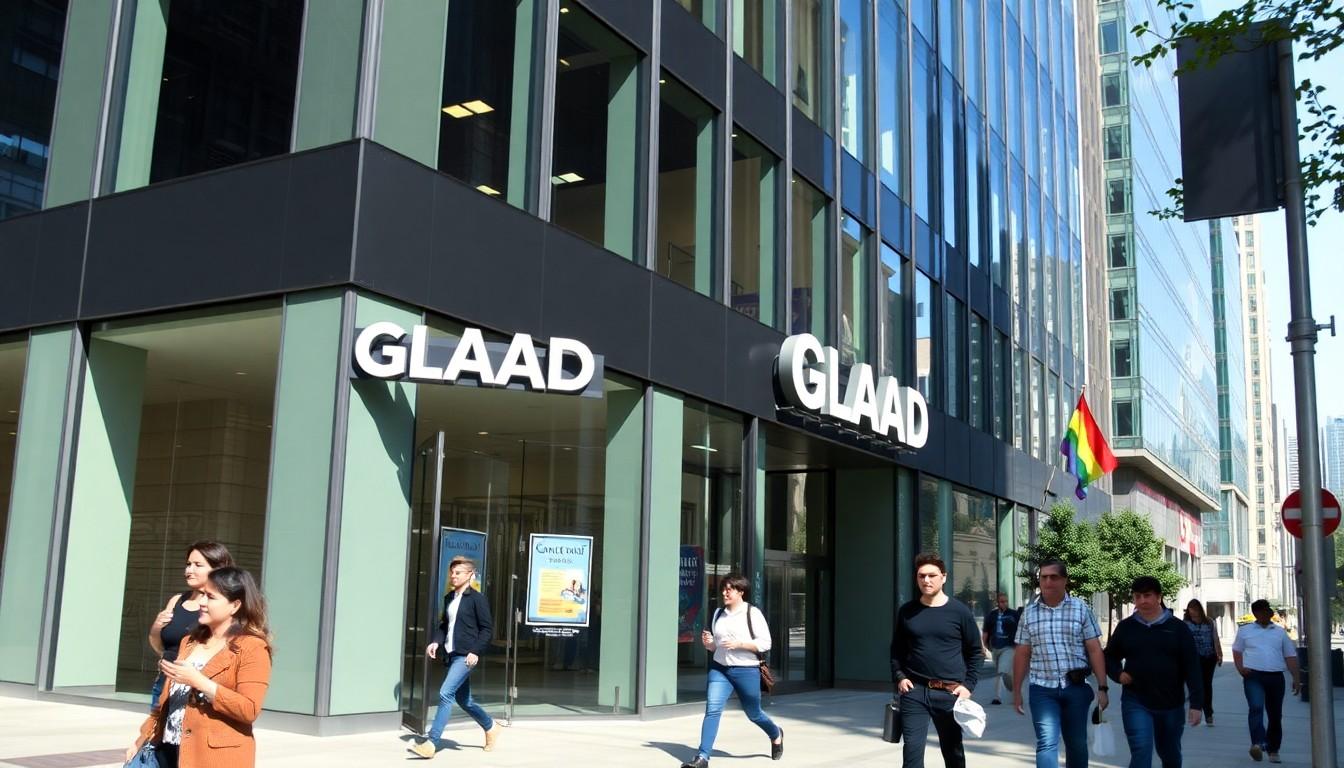
Viewers are turning to GLAAD Hangouts for thoughtful LGBTQ conversations that feel closer than a traditional celebrity interview. Broadcast through Instagram Live, the series brings artists, influencers and community leaders into homes around the world, helping audiences connect with culture, representation and acceptance in a more immediate way.
Essential Takeaways
- Built for connection: GLAAD Hangouts began during the shift to online life in 2020.
- Instagram-first format: Live conversations make the series feel informal, timely and accessible.
- Broad range of guests: Participants include celebrities, creators and LGBTQ community leaders.
- Representation matters: Research links greater LGBTQ visibility in media and advertising with wider acceptance.
- A human scale: The format trades red carpets for direct, conversational encounters.
GLAAD Hangouts bring the interview home
The appeal of GLAAD Hangouts is easy to understand. Instead of a noisy red carpet, viewers get a face-to-face conversation unfolding on a familiar screen, with the warmth and occasional awkwardness of a live chat.
GLAAD launched the series when lockdowns moved much of public life indoors. According to GLAAD, the format allowed its celebrity interviews to continue while reaching supporters internationally through Instagram Live.
That shift turned a practical response into a lasting piece of digital programming. The series now sits neatly between a formal panel and a relaxed social-media conversation, which is probably why it feels so watchable.
Why live conversations still matter
Online audiences have no shortage of content, but plenty of it disappears in a fast scroll. GLAAD Hangouts gives viewers a reason to pause, particularly when the discussion connects entertainment with real questions about identity, culture and belonging.
That wider context matters. Research reported by the Financial Times and other industry outlets has repeatedly examined how LGBTQ representation can influence public attitudes, with visibility offering a route towards familiarity and understanding.
The format also gives guests room to speak beyond a soundbite. A live conversation can reveal personality, uncertainty and enthusiasm in a way that a polished press quote rarely does.
Representation is more than a screen moment
GLAAD's work sits within a broader conversation about who gets seen, heard and treated as part of everyday culture. Reporting from TheWrap has highlighted the importance of LGBTQ representation in film and television, while Teen Vogue has covered research into attitudes towards LGBTQ people in America.
Those findings help explain why an Instagram interview can carry more weight than it first appears. Representation isn't only about counting characters or appearances; it's also about showing LGBTQ people as artists, leaders, friends and experts with stories that don't begin and end with identity.
Advertising plays a role, too. A GLAAD and Procter & Gamble study explored the relationship between exposure to LGBTQ representation in media and advertising and greater acceptance, reinforcing the idea that familiar, positive visibility can shape how audiences understand one another.
A useful guide for viewers and partners
For viewers, the best way to approach GLAAD Hangouts is as an evolving conversation rather than a conventional programme with a fixed format. Follow GLAAD's social channels for upcoming sessions, and remember that live broadcasts can vary in timing, guest availability and audience interaction.
Brands and media organisations can take a practical lesson from the series. Representation works best when it's consistent, specific and connected to real people, rather than appearing as a once-a-year gesture with little substance behind it.
That principle feels increasingly important as digital platforms become more crowded. Recent reporting from Axios has examined how artificial intelligence could affect LGBTQ visibility online, making human-led, accountable storytelling feel all the more valuable.
The next chapter is likely to stay digital
GLAAD Hangouts began as an answer to an extraordinary moment, but its continuing relevance reflects a more permanent change in how audiences meet public figures. Instagram Live may be casual, yet it can create a direct bridge between organisations, guests and supporters.
GLAAD's wider visibility work also points towards the same goal: making LGBTQ lives and perspectives harder to overlook. Time's reporting on GLAAD's acceptance research and the organisation's Visibility Project both underline how representation connects with broader social attitudes.
There is something quietly powerful about that. A phone screen isn't a substitute for community, but it can be an open door, especially for viewers looking for recognition, context or a conversation that feels genuinely human.
Explore upcoming GLAAD conversations and make space for voices that deserve to be heard.
Source Reference Map
Story idea inspired by: [1]
Sources by paragraph: