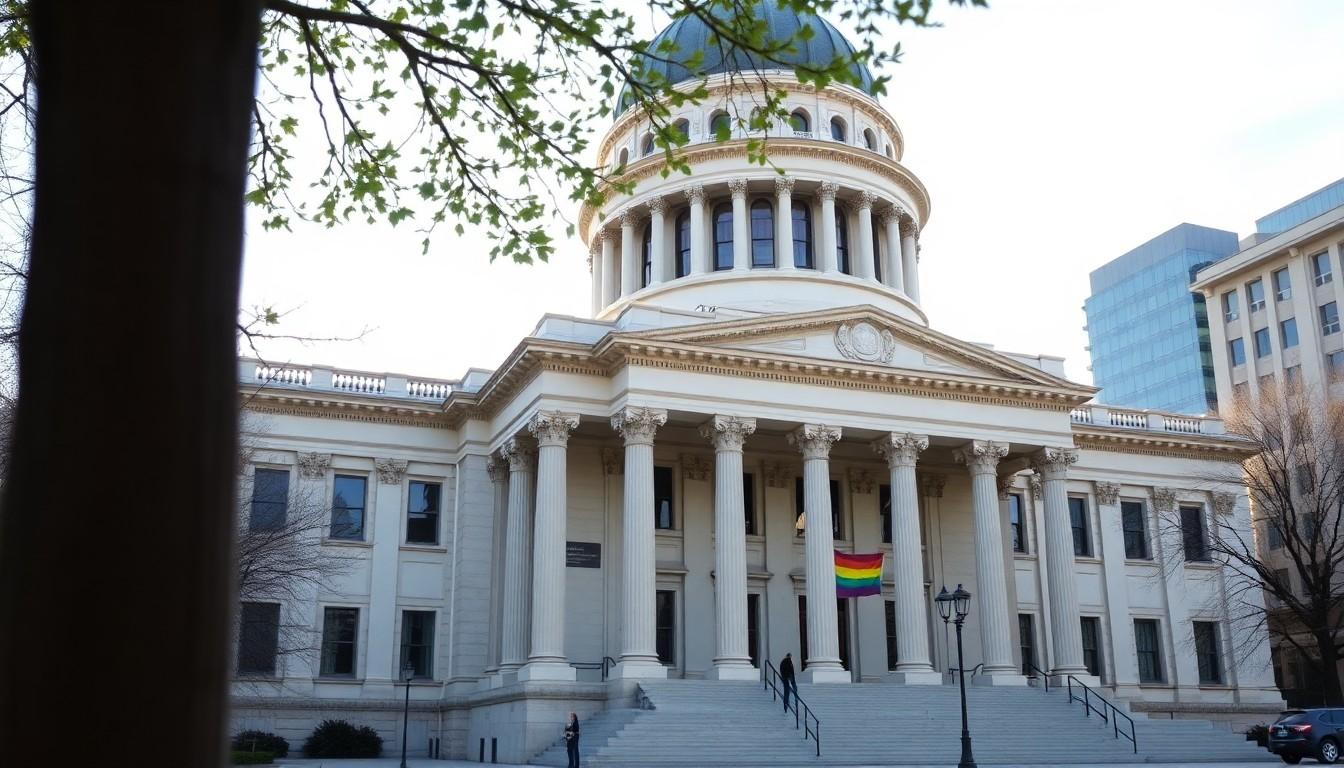
Voters in Colorado are being asked to revisit a familiar question: should the rights of a small, vulnerable group be decided at the ballot box? Propositions 134 and 135 target transgender young people, echoing the strategy behind Amendment 2 in 1992, when Colorado became nationally known as the “Hate State”.
Essential Takeaways
- A familiar political tactic: Both campaigns put LGBTQ+ rights directly to voters rather than leaving the issue solely to lawmakers.
- Two measures, different targets: Proposition 134 concerns transgender participation in school sports, while Proposition 135 addresses gender-affirming medical care for minors.
- A painful precedent: Amendment 2 passed in 1992 but was later blocked and overturned by the US Supreme Court.
- Practical concerns remain: Critics say the proposals could leave schools, doctors and families facing unclear rules and enforcement questions.
- The wider stakes are national: Colorado’s vote could influence how other states approach transgender rights and ballot-led campaigns.
Colorado’s old “Hate State” label never quite disappeared
The sharpest detail in this story isn’t a slogan or a campaign advert. It’s the memory of people watching election returns in 1992, expecting Amendment 2 to fail, only to see support build as rural votes arrived. For many LGBTQ+ Coloradans, the result felt intensely personal rather than merely political.
Amendment 2 prevented local governments from protecting gay and lesbian people from discrimination. It passed despite polling that suggested defeat, then became a national flashpoint. Wikipedia’s account of the amendment records how the measure was ultimately struck down by the Supreme Court in Romer v Evans, a ruling that found no legitimate justification for singling out gay people in this way.
The backlash was costly as well as humiliating. Celebrities supported boycotts, and Colorado lost tourism and entertainment business while the state’s reputation took a battering. The nickname “Hate State” became shorthand for a political moment the state spent years trying to outgrow.
Why Propositions 134 and 135 feel so familiar
The current proposals involve a different community, but opponents see the same basic playbook. Propositions 134 and 135 qualified for the ballot after organisers gathered enough signatures, moving disputes over transgender rights from the legislature into a statewide popular vote.
Proposition 134 would restrict transgender students’ participation in school sports. Its wording sets out definitions of “man” and “woman” based on reproductive biology, but, according to the available summary of Colorado Proposition 134, leaves important enforcement questions for schools and sporting organisations to resolve.
That’s where the apparently simple campaign language becomes rather less simple in real life. Who checks eligibility, what evidence is required and how disputes are handled are not minor details. They’re the kind of practical questions that can turn a headline-friendly proposal into a daily administrative headache.
The medical-care debate is broader than surgery
Proposition 135 focuses on gender-affirming care for minors, including surgery. Yet the wording may reach beyond operations, with the proposal referring broadly to treatments that alter a child’s biological sex, according to the summary of Colorado Proposition 135.
That distinction matters because public debate often focuses on surgery, even though such procedures are uncommon among young people. A measure written more broadly could affect access to other forms of care, including medication, depending on how courts, doctors and regulators interpret it.
For families, the uncertainty may be as significant as the restriction itself. A teenager already navigating school, healthcare and family conversations could also face changing rules from one state to the next. It’s a fragile situation made even more unsettling when campaign language suggests a straightforward solution to a complicated medical and personal question.
Colorado’s constitutional history raises the stakes
Colorado has a long record of putting major social disputes directly into its constitution. Amendment 2 became an example of how a measure backed by a temporary majority can collide with individual rights and judicial review.
The state constitution also contains provisions shaped by earlier ballot fights, including Article II, Section 30b and Article X, Section 20. Those provisions reflect Colorado’s broader tradition of using direct democracy to settle questions that might otherwise be handled through legislation or local government.
Supporters of the new proposals argue that voters deserve the final say. Critics counter that fundamental rights shouldn’t depend on a popularity contest, particularly when the people affected make up a small and politically vulnerable minority. That disagreement sits at the heart of the election.
A local vote with national consequences
The proposals arrive as transgender people and their families face a growing patchwork of rules across the United States. Some families have moved to states such as Colorado seeking access to care or stronger legal protections, while others now find those protections under pressure.
The political symbolism is also hard to miss. Supporters have described passing the measures as a major conservative breakthrough in a traditionally Democratic state. Opponents, meanwhile, see the vote as a test of whether Colorado really moved beyond the politics that produced Amendment 2.
Whatever happens, the result will be watched well beyond the state line. Colorado’s earlier court battle helped shape later LGBTQ+ rights decisions; a new ballot fight could similarly become a marker of where American politics goes next.
It’s a small group’s rights, but a much bigger test of democracy.
Source Reference Map
Story idea inspired by: [1]
Sources by paragraph: