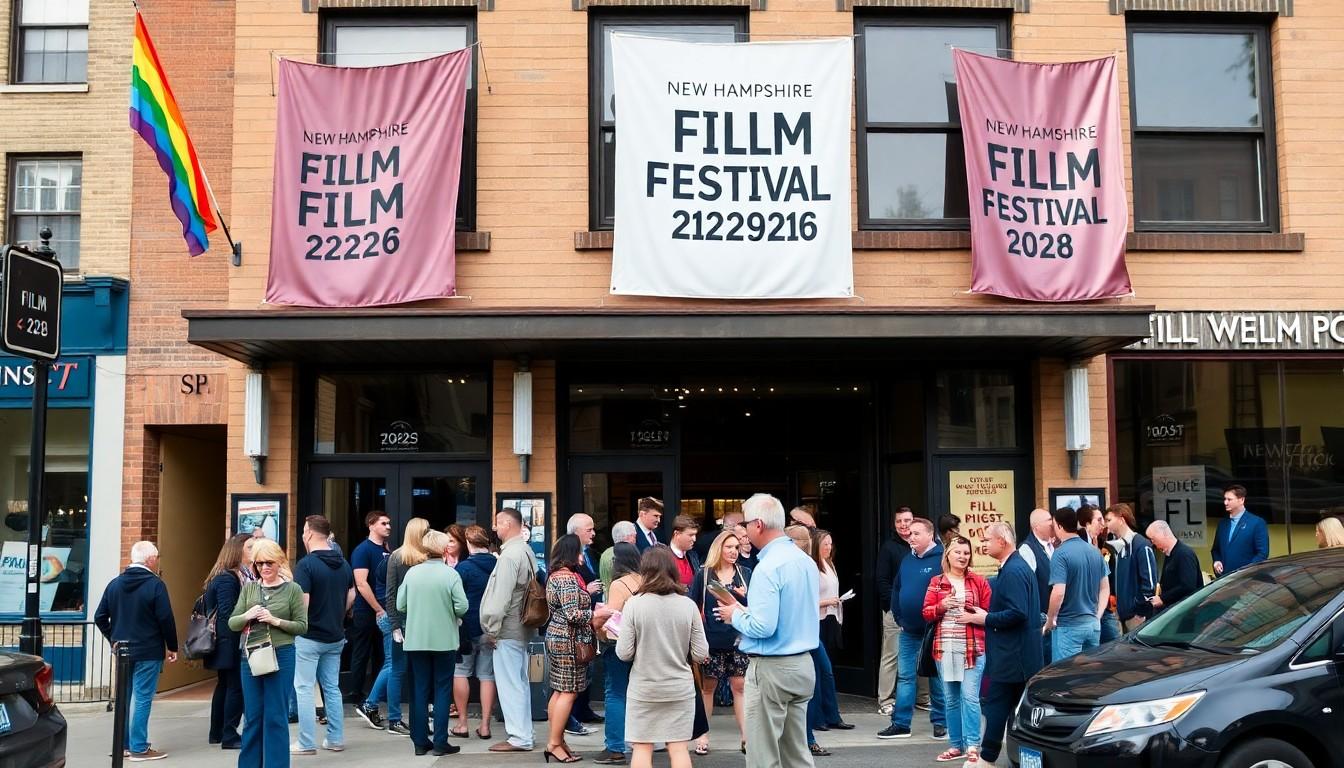
Film fans are heading to Portsmouth for the 2026 New Hampshire Film Festival, where a strong LGBTQ+ programme brings intimate stories of family, memory, desire and identity to the big screen. From a tender New Hampshire documentary to a body-image drama and a rare romance centred on older women, this year’s selection looks both personal and refreshingly adventurous.
Essential Takeaways
- Dates and setting: The 24th New Hampshire Film Festival runs from 15 to 18 October 2026 at Portsmouth’s historic Music Hall.
- A standout documentary: Adam’s Apple follows a transgender teenager and his mother as they navigate transition, family life and growing up.
- Rare queer representation: Out of the Woods focuses on an older woman confronting memory loss and long-buried feelings for a female friend.
- A personal debut: Test explores masculinity, faith, performance-enhancing drugs and queer desire through a competitive bodybuilder’s story.
- More than features: The festival also offers shorts, filmmaker discussions and the presentation of the 2026 Van McLeod Award.
Portsmouth is getting a thoughtful queer film showcase
The New Hampshire Film Festival has built a reputation for pairing established cinema with riskier independent work, and this year’s LGBTQ+ titles fit that tradition neatly. The festival takes over Portsmouth from 15 to 18 October, with screenings at the Music Hall and a wider programme of features, documentaries and shorts.
The setting adds to the appeal. Portsmouth’s compact seacoast atmosphere makes it easy to turn a screening into a full day out, whether that means coffee before a documentary or a post-film conversation over dinner. Visit New Hampshire lists the festival among the state’s autumn events, making it a timely destination for film lovers looking beyond the usual multiplex fare.
Adam’s Apple brings a family story into close focus
The most intimate title in the line-up may be Adam’s Apple, a documentary about Adam, a transgender teenager, and his mother, visual artist and filmmaker Amy Jenkins. The film combines family archive footage with material shot on Adam’s phone, creating a homemade visual texture that feels immediate rather than overly polished.
The documentary’s strength lies in its shared perspective. Adam and Jenkins make the film together, so the story isn’t simply about a parent observing a child’s transition. It’s also about both of them adjusting, remembering and learning when to hold on and when to let go. The New Hampshire Film Festival’s listing presents the film as a portrait of identity, family bonds and adulthood, while Provincetown Film Festival has also highlighted its personal, emotionally direct approach.
For viewers interested in trans cinema, this is the sort of film that can feel both specific and widely recognisable. The details belong to one family, but the larger questions about love, independence and change will land with anyone who’s watched a child grow into their own life.
Out of the Woods gives older queer women the spotlight
Queer stories about older women remain frustratingly scarce, which makes Out of the Woods an especially welcome addition. Sal Bardo’s debut feature stars Frances Fisher as Max, a woman experiencing memory loss whose past is stirred up when Diana, played by Mimi Kennedy, re-enters her life.
The central dilemma is emotionally thorny rather than neatly romantic. Max must reckon with feelings for the woman she’s loved while considering the life she has built with her husband. That tension gives the film a strong dramatic pulse, but its real promise is the space it creates for queer desire, ageing and regret to exist together.
The casting adds extra weight. Bruce Davison plays Max’s husband, bringing a long history of LGBTQ+ screen work, including his acclaimed role in Longtime Companion. The film’s world premiere at Toronto’s Inside Out festival also places it firmly within a wider conversation about queer independent cinema.
Test tackles masculinity, faith and the pressure to perform
Test shifts the mood towards a more physically charged coming-of-age story. Brock Yurich plays Eddie Owens, a competitive bodybuilder from a conservative Ohio town who sees competition as a possible route out of a restrictive home and community.
As Eddie grows close to his coach, the film moves beyond a straightforward escape narrative. It examines the pressure to look strong, act traditionally masculine and maintain control, even as performance-enhancing drugs and emotional secrecy begin to take their toll. Matthew Morrison appears as a local pastor, while Tammy Blanchard plays Eddie’s religious conservative mother.
The screenplay is autobiographical, which gives the film an added sense of urgency. Yurich has described the project as a decade-long effort, and that long gestation seems fitting for a story about the cost of suppressing a vital part of yourself. Sam McConnell, making his feature directing debut, also arrives with documentary experience focused on LGBTQ+ identity and disability.
Shorts, discussions and a wider festival experience
The feature films may be the headline draw, but the festival’s shorts programme is an important part of its identity. The New Hampshire Film Festival became an Academy-qualifying festival for short films from its 20th annual edition, giving filmmakers a meaningful route towards wider industry recognition.
Post-screening discussions with visiting filmmakers should add another layer for audiences. Independent films often benefit from context, especially when their stories deal with transition, memory, faith or representation. Hearing directly from the people who made them can turn a good screening into a memorable one.
The festival will also honour Amy Greene with the 2026 Van McLeod Award. Greene, a New Hampshire resident, has worked as a stunt coordinator, stunt performer and producer on projects including The Holdovers, Sound of Metal, Knives Out and A24’s The Drama. That recognition broadens the festival’s focus beyond on-screen storytelling, celebrating the craft and behind-the-scenes work that make ambitious films possible.
Why this programme matters now
Taken together, the queer titles offer more than a themed strand. They show independent cinema exploring lives that mainstream film still too often simplifies: trans family life, later-in-life queer longing, masculine insecurity and the messy business of becoming visible.
There’s also a welcome variety of tone. Adam’s Apple sounds tender and reflective, Out of the Woods promises a mature emotional drama, and Test brings physical intensity and social pressure into the frame. That range is exactly what makes a festival programme feel alive rather than dutiful.
For audiences in New England, the timing is ideal: a long autumn weekend, a handsome coastal town and films that invite conversation after the credits. Sometimes the best festival experience is the one that leaves you thinking about a character well after you’ve left the theatre.
Explore the line-up and choose the stories that speak to you.
Source Reference Map
Story idea inspired by: [1]
Sources by paragraph: