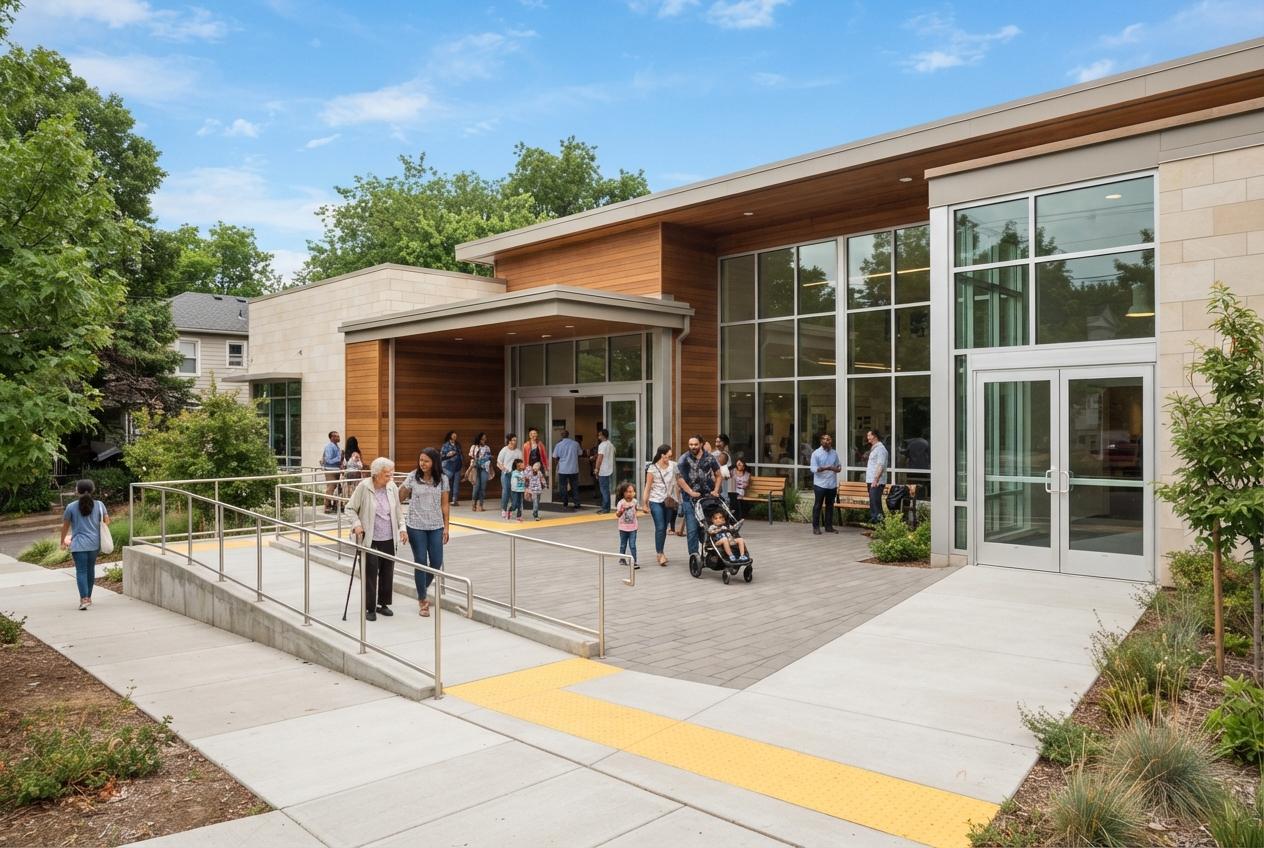
Faith communities are rethinking what welcome really means for disabled LGBTQ+ people, from quieter worship areas and accessible buildings to inclusive language and shared leadership. A new resource from Disability Belongs offers practical guidance for congregations, educators and volunteers seeking to remove overlapping barriers and create spaces where people can participate safely, fully and authentically.
Essential Takeaways
- Inclusion must overlap: Addressing disability or LGBTQ+ identity separately can still leave people at the intersection unsupported.
- Access goes beyond ramps: Sensory-friendly spaces, captioning, clear signage, accessible bathrooms and flexible participation all matter.
- Ask, don't assume: Access needs, names, pronouns and preferred language vary from person to person.
- Representation is essential: Disabled LGBTQ+ people should help shape policies, programmes and leadership decisions.
- Policies need teeth: Public non-discrimination rules should include complaint procedures, accountability and regular reviews.
A welcome sign isn't enough
A faith community can look welcoming from the pavement and still be difficult, painful or impossible to enter in practice. A flight of steps, booming music, incense, crowded seating or a service built around standing and speaking can quietly tell someone that the space wasn't designed with them in mind.
For disabled LGBTQ+ people, those barriers can overlap. A congregation may offer wheelchair access but use language that excludes queer people, or celebrate LGBTQ+ inclusion while overlooking captioning, sensory needs or accessible toilets. Disability Belongs' resource argues that this intersection needs specific attention rather than being treated as an afterthought.
That matters because the numbers are significant. According to the Center for American Progress survey conducted with NORC at the University of Chicago, 48% of LGBTQI+ people in the United States identify as disabled, while the figure rises to 70% among transgender respondents. These figures make a strong case for faith communities to plan inclusion with real people, rather than assumptions, in mind.
Why disability and LGBTQ+ identity can't be separated
People don't experience identity in tidy compartments. Disability, sexuality and gender identity can shape how someone feels about safety, disclosure, worship, relationships and leadership, often at the same time.
Research indexed by PubMed has also explored the links between disability, support needs and LGBTQ+ identity, reinforcing the value of an intersectional approach. Meanwhile, OneBodyOneFaith has highlighted unmet needs among LGBTQ+ people in faith settings, a reminder that belonging can be complicated even before physical or communication barriers enter the picture.
There can also be pressure to choose one part of the self over another. Someone might find an LGBTQ+ group physically inaccessible, or encounter a disability organisation that assumes everyone is straight and cisgender. The result is exhausting vigilance: Is it safe to mention my partner? Can I ask for a break? Will people believe what I need?
What accessible worship looks like in practice
Physical access is the starting point, not the finish line. Congregations should consider step-free routes, wide doorways, reachable stages, accessible toilets, suitable seating and clear paths. The practical details matter, especially when a building is historic and its layout has been accepted for years simply because nobody challenged it.
Sensory access deserves equal attention. Quieter seating, reduced lighting, advance warnings about flashing lights or loud music, and a calm room can make the difference between joining an event and leaving before it begins. The Reformed Church in America lists accessibility as part of congregational life, reflecting a wider shift towards treating participation as a shared responsibility.
Communication is just as important. Live captions, sign-language interpretation, hearing assistance, large-print materials, plain-language information and screen-reader-friendly digital documents help people follow what is happening without having to ask repeatedly. Livestreams and recordings can also support people who are unwell, immunocompromised, fatigued or unable to travel.
Language, privacy and participation all count
Respect often begins with small choices. Use someone's chosen name and pronouns, follow their preference for person-first or identity-first language, and correct mistakes briefly rather than turning an error into a public performance. Most importantly, don't demand a diagnosis, explanation or personal history before offering support.
Faith leaders should also avoid language that treats disability or LGBTQ+ identity as something shameful, tragic or in need of correction. Think Equitable's work on faith and disability similarly points towards a model based on dignity and participation rather than pity. A person isn't inspirational merely because they attended a service, and asking someone to disclose private information isn't a reasonable price for belonging.
Participation should be flexible, too. People may worship through listening, silence, movement, art, prayer, technology or simply being present. Seated alternatives, written prayers, extra transition time and remote options can preserve the meaning of a ritual while making room for different bodies, minds and energy levels.
From good intentions to lasting change
The strongest recommendation is perhaps the simplest: involve disabled LGBTQ+ people in decisions that affect them. That means paying consultants fairly, inviting people into committees and leadership, and making sure their feedback changes budgets, buildings, services and policies.
A written non-discrimination policy is useful, but it shouldn't be decorative. Congregations need clear reporting routes, confidential processes, accessible feedback tools and regular reviews. HandicapMD's discussion of disability inclusion in congregational life likewise underscores the importance of practical participation rather than symbolic gestures.
This work also benefits from a proper budget. Interpreters, captioning, access improvements, alternative formats and training all cost money, but so does exclusion. As Disability Belongs makes clear, accessibility is an ongoing commitment, not a once-a-year checklist. The most convincing sign of progress is not a slogan on a website; it's whether people can take part, lead and feel safe without having to fight for every adjustment.
Small, consistent changes can turn a faith space from merely open to genuinely belonging.
Source Reference Map
Story idea inspired by: [1]
Sources by paragraph:
- Paragraph 1: [2], [4]
- Paragraph 2: [3], [6]
- Paragraph 3: [5], [7]
- Paragraph 4: [2], [4]
- Paragraph 5: [3], [6]
- Paragraph 6: [5], [7]
- Paragraph 7: [2], [4]
- Paragraph 8: [3], [5]
- Paragraph 9: [6], [7]
- Paragraph 10: [2], [4]
- Paragraph 11: [3], [5]
- Paragraph 12: [6], [7]
- Paragraph 13: [2], [4]
- Paragraph 14: [3], [5]
- Paragraph 15: [6], [7]
- Paragraph 16: [2], [4]
- Paragraph 17: [3], [5]
- Paragraph 18: [6], [7]
- Paragraph 19: [2], [4]
- Paragraph 20: [3], [5]