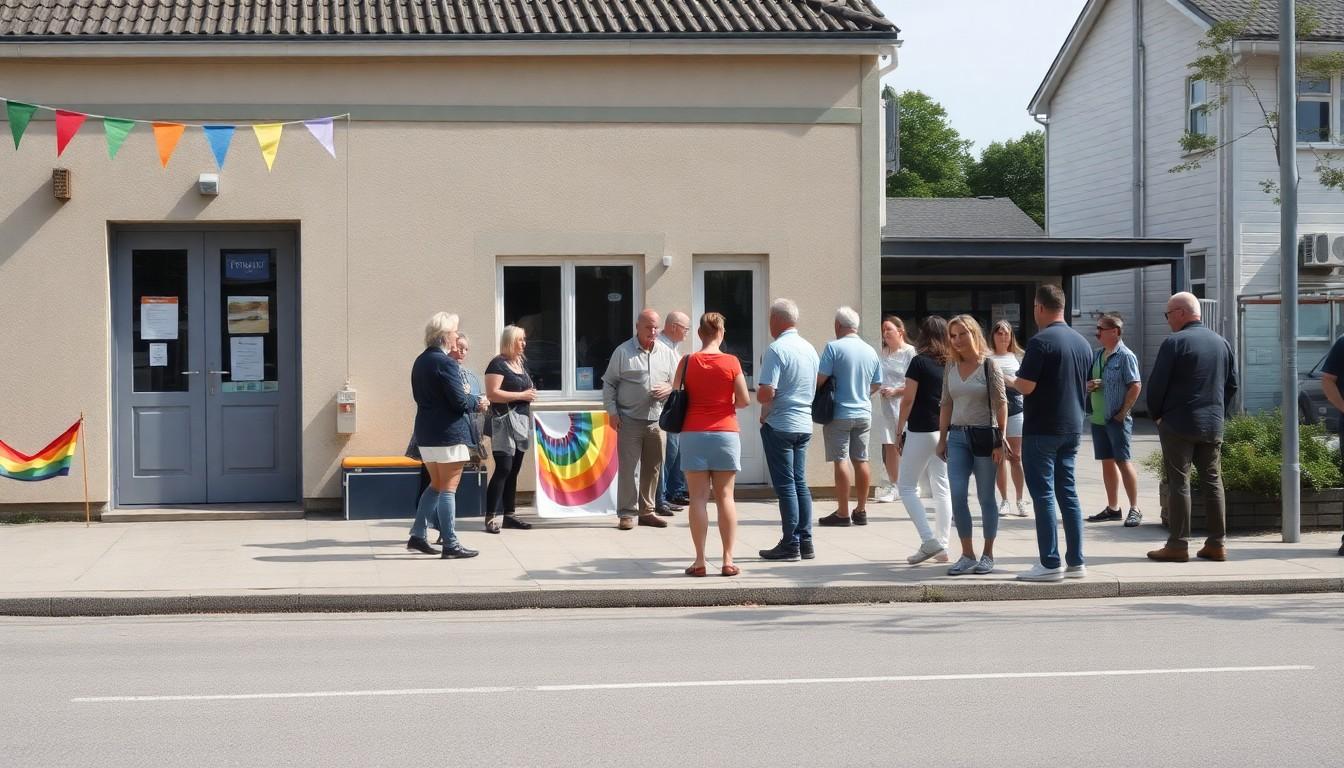
Organisers have confirmed that Åland Pride 2027 will go ahead, despite the closure of Regnbågsfyren. A new working group, led administratively by ABF Åland with support from Nipå, is now seeking funding and partners for a full Pride week and parade in late August.
Essential takeaways
- Pride is returning: Åland Pride week is planned for week 34 of 2027.
- Parade date set: The parade is scheduled for 28 August.
- New structure: ABF Åland will act as the administrative lead, while Nipå provides resources.
- Funding comes next: Organisers are approaching authorities, businesses and the public for support.
- The need remains: Organisers say discrimination, harassment and insecurity still affect LGBTQ+ people, particularly in small communities.
Åland Pride 2027 will go ahead
The clearest message is also the most welcome: Åland Pride 2027 is happening. The planned celebration will include a Pride week during week 34, followed by a parade on 28 August, according to Ålandstidningen.
That announcement arrives after a period of uncertainty. Regnbågsfyren, the association previously responsible for organising Pride on Åland, was dissolved and placed into liquidation following an extraordinary meeting in September. For a community event built around visibility and belonging, the possibility of a quiet summer would have felt particularly stark.
Instead, a new group has stepped forward. According to Nya Åland, interest in keeping the event alive has been strong, with several organisations offering to help.
A new team is taking shape
ABF Åland will serve as the event's administrative main organisation and lead the working group. Nipå, Åland's arts and culture organisation, will contribute resources, creating a fresh organisational framework for the festival.
The arrangement reflects a practical reality: large public events need more than enthusiasm. They require insurance, budgeting, permits, communications and a reliable system for handling donations and sponsorships. ABF's role should give the project a stable base while the wider group develops the programme.
Earlier reporting from Ålandstidningen and Nya Åland described ABF's interest in taking responsibility for the Pride parade after Regnbågsfyren's difficulties became clear. That groundwork now appears to have turned into a confirmed plan.
The next challenge is paying for it
The organisers are now seeking financial support from public authorities, companies and private individuals. The goal is to fund both the wider Pride week and a parade with a programme that feels varied, welcoming and substantial.
That could mean a mix of sponsorship, grants, donations and volunteer effort. For local businesses, supporting Pride can be a visible way to back inclusion, while public funding helps ensure the event isn't dependent solely on commercial goodwill.
There is also a human side to the fundraising. Community festivals can look effortless from the street, with colourful flags, music and smiling crowds, but the work behind them is usually painstaking and often unpaid. As the organisers build the 2027 event, each contribution will help turn a hopeful announcement into something people can actually gather around.
Why Pride matters in a small community
Mia Hanström, ABF Åland's operations manager, said in the announcement that discrimination, harassment and insecurity still occur. She also highlighted the particular vulnerability of transgender people and the way small communities can intensify isolation.
The point is important. On an island, limited networks and fewer safe meeting places can make it harder to find support, while anonymity is often difficult to maintain. A public Pride event therefore serves as more than a parade: it can offer a rare, visible meeting point for people who may otherwise feel alone.
Åland Pride's own platform presents the event as a space for visibility, solidarity and celebration. Those aims remain relevant even when the organising model changes.
What happens between now and August?
The immediate priorities are fundraising, volunteer recruitment and programme planning. Supporters can watch for future calls from ABF Åland and the working group, while businesses and organisations interested in contributing can make contact as the structure develops.
A successful Pride week will depend on breadth as much as spectacle. The parade may be the most visible moment, but talks, cultural events, social gatherings and quieter community spaces can make the celebration more useful to people with different needs.
For Åland, the change in organisers is a significant transition, but not necessarily a loss of momentum. If the early interest translates into practical support, Pride 2027 could become both a celebration and a reassuring sign that the community is willing to carry the tradition forward.
Åland Pride 2027 has a date, a team and a purpose - now it needs the support to bring the whole week to life.
Source Reference Map
Story idea inspired by: [1]
Sources by paragraph:
- Paragraph 1: [2], [3]
- Paragraph 2: [4], [5]
- Paragraph 3: [6], [7]
- Paragraph 4: [2], [4]
- Paragraph 5: [3], [5]
- Paragraph 6: [2], [7]
- Paragraph 7: [6], [7]
- Paragraph 8: [2], [3]
- Paragraph 9: [4], [5]
- Paragraph 10: [2], [3]
- Paragraph 11: [6], [7]
- Paragraph 12: [2], [4]
- Paragraph 13: [3], [7]
- Paragraph 14: [2], [3]