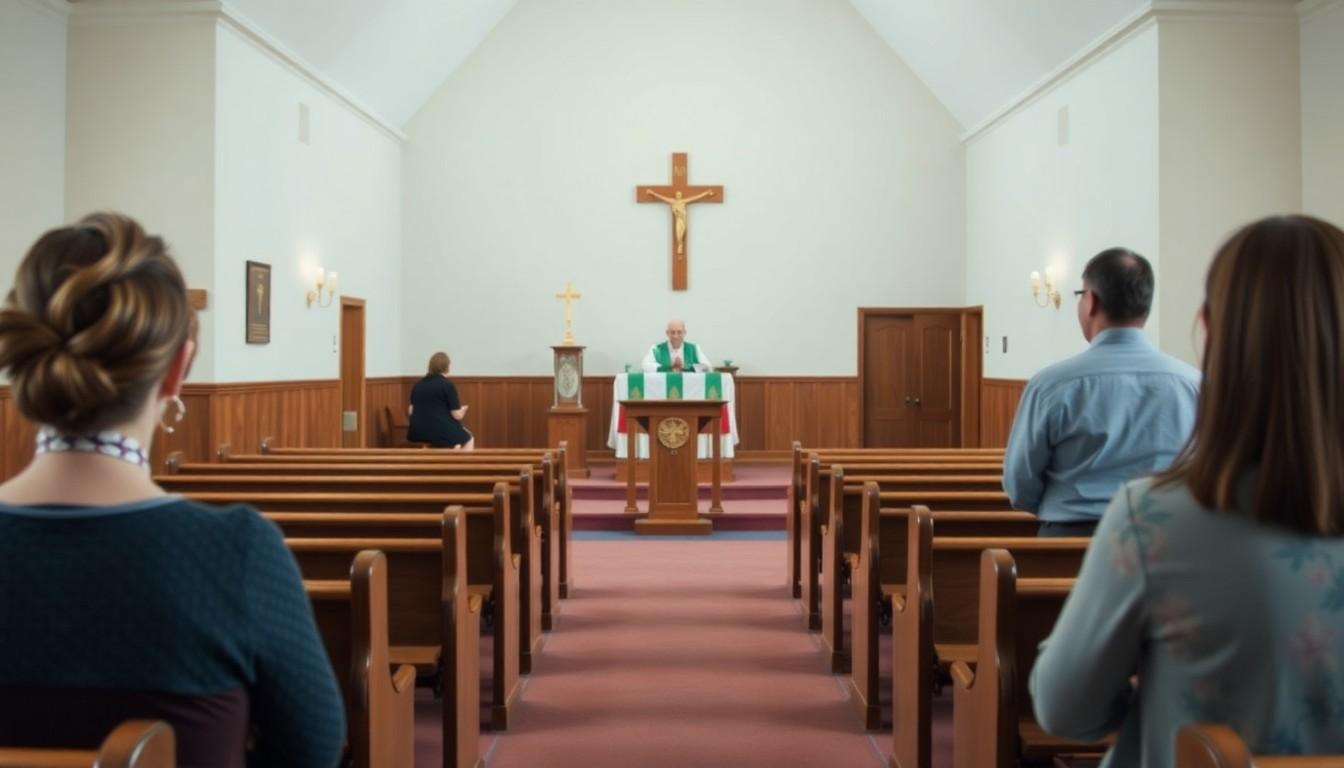
LGBTQ Catholics and their allies are revisiting the Vatican’s 1986 pastoral letter as its 40th anniversary approaches. The document reshaped parish ministry, excluded some established groups and left a complicated legacy: tighter control and lasting harm, but also new grassroots efforts to welcome queer Catholics into ordinary church life.
Essential Takeaways
- A landmark document: Issued by the Vatican’s doctrinal office in 1986, the letter addressed pastoral care for people with same-sex attraction.
- A lasting nickname: It became known as the “Halloween Letter” after news of its contents emerged on 31 October.
- Ministry changed sharply: Catholic LGBTQ groups faced exclusion from some parishes, while new parish-based initiatives appeared elsewhere.
- Local experience varies: Welcoming communities exist, but their stability can depend heavily on diocesan policy and parish leadership.
- The debate continues: The letter remains a reference point in arguments over Catholic teaching, pastoral care and LGBTQ inclusion.
A document that changed the parish conversation
The 1986 letter was not a minor piece of church administration. Published by the Congregation for the Doctrine of the Faith, it set a stricter tone for how bishops and pastoral workers should approach homosexuality, and its language quickly reached far beyond Vatican offices.
The document is now commonly called the Halloween Letter because its public arrival was tied to reports on 31 October, despite its official date earlier that month. That timing gave it an unusually memorable label, but the consequences were serious rather than theatrical. According to the Vatican text, pastoral care was to remain connected to official church teaching, with strong warnings against approaches seen as approving homosexual relationships. [2], [4]
For LGBTQ Catholics, the result was often felt in very practical ways: which groups could meet on church property, who could lead a ministry and whether parish life offered space for people to speak honestly about their families and identities. The Vatican’s own published versions in English, French and Spanish show how widely the document was made available. [2], [4], [5]
The backlash also pushed ministry closer to parish life
Before the letter, much LGBTQ Catholic organising in the United States had taken place through specialist groups that operated with a degree of independence from parish structures. The new restrictions disrupted that model, but they also forced individual Catholic communities to decide whether inclusion belonged in everyday parish life rather than in separate organisations.
That shift produced a mixed picture. Some ministries were pushed out or weakened, while other parishes began creating their own support networks, prayer groups and educational programmes. It was an awkward, painful kind of redistribution: central authority narrowed the available space, yet local communities sometimes found ways to build something more integrated.
Historical summaries of the letter describe its focus as pastoral care, but they also show why the text became so contentious. Its language was read not simply as guidance for clergy, but as a framework that could influence parish policy and public attitudes towards gay and lesbian Catholics. [3], [6]
In other words, the document helped turn a question about pastoral practice into a test of belonging. That is a heavy burden for any Sunday congregation to carry.
Why the language still matters
The letter’s influence has endured partly because official texts rarely stay on the page. They are quoted in sermons, diocesan guidance, pastoral disputes and arguments about who can serve openly in church life. A document written four decades ago can still affect whether a parish feels warm and ordinary, or watchful and conditional.
The Vatican text distinguishes between a person’s dignity and its teaching on homosexual acts, a distinction that has shaped Catholic discussion ever since. Critics argue that this framework can sound compassionate in theory while producing exclusion in practice, particularly when it is used to restrict ministry or silence LGBTQ voices. The official wording remains available through the Vatican archive, making it easy for supporters and opponents alike to return to the source. [2], [3]
That tension is especially visible in parish life. A church may welcome LGBTQ people as worshippers and volunteers while avoiding open discussion of same-sex relationships, gender identity or family life. The result can feel less like full belonging and more like an unspoken agreement not to ask difficult questions.
For many Catholics, that gap between formal policy and lived faith is the heart of the matter. People often judge a parish not by a statement on a website, but by whether they can mention their partner, bring their family to Mass or ask for pastoral support without bracing for a cold response.
Finding an affirming Catholic parish takes local detective work
There is no single, reliable experience of LGBTQ Catholic life. One parish may have a visible welcome, thoughtful clergy and a long-running ministry, while another in the same region may offer little more than silence. Leadership changes can alter that atmosphere quickly, so a community that feels secure one year may become more cautious after a new priest or bishop arrives.
For anyone looking for a more inclusive parish, a little preparation helps. Check whether the church names LGBTQ ministry directly, look for recent parish notices rather than old webpages, and contact the office with a practical question about welcome, pastoral support or family participation. The tone of the reply often tells you as much as the official wording.
It is also worth asking whether inclusion is visible beyond a rainbow symbol. Does the parish offer listening groups, pastoral accompaniment or public events? Are LGBTQ Catholics treated as contributors to parish life, rather than simply people receiving special support? Those details reveal whether welcome is part of the community’s culture or just a carefully chosen phrase.
The Vatican’s guidance was addressed to bishops, but its impact is ultimately experienced at ground level. Parishioners are the ones who decide whether a newcomer is greeted, remembered and invited back. [2], [7]
Forty years on, the argument is far from settled
The anniversary has prompted renewed attention to what the letter changed, what local Catholics built despite it and what remains unresolved. Supporters of more inclusive ministry point to parish communities that have become more open over time. Critics, meanwhile, argue that progress remains fragile while the 1986 document continues to be treated as authoritative.
The wider Catholic conversation has also moved on. Pastoral language, civil rights debates and public understanding of sexuality have all changed since the 1980s, even as official teaching continues to frame the issue in terms established by documents from that era. The contrast explains why the letter can feel both historically distant and immediately relevant.
There is a human cost when people have to edit their lives before entering church. A parish should be a place where faith can be shared honestly, not a room where some families quietly remove the details that make them real.
The most hopeful development may be the persistence of local communities. Despite years of uncertainty, LGBTQ Catholics and their allies have continued to organise, worship and ask the church to listen. That steady pressure has kept the question alive, and it has made parish life the place where change is most clearly measured.
The 1986 letter still casts a long shadow, but it no longer tells the whole story.
It’s a complicated legacy, and local parish life remains where its future will be decided.
Source Reference Map
Story idea inspired by: [1]
Sources by paragraph:
- Paragraph 1: [2], [3]
- Paragraph 2: [2], [4]
- Paragraph 3: [4], [5]
- Paragraph 4: [6], [7]
- Paragraph 5: [2], [3]
- Paragraph 6: [2], [6]
- Paragraph 7: [3], [7]
- Paragraph 8: [2], [4]
- Paragraph 9: [6], [7]
- Paragraph 10: [2], [3]
- Paragraph 11: [2], [7]
- Paragraph 12: [3], [6]
- Paragraph 13: [2], [4]
- Paragraph 14: [5], [7]
- Paragraph 15: [2], [3]
- Paragraph 16: [6], [7]
- Paragraph 17: [2], [4]
- Paragraph 18: [3], [7]
- Paragraph 19: [2], [6]
- Paragraph 20: [2], [3]
- Paragraph 21: [4], [7]
- Paragraph 22: [2], [6]
- Paragraph 23: [3], [7]
- Paragraph 24: [2], [4]
- Paragraph 25: [6], [7]