Queer journalists and readers are facing a tense political moment, with public disputes exposing a deeper question: what is LGBTQ+ media for? Across publications, archives and community conversations, the answer remains strikingly consistent - to tell the truth, challenge power and make people feel less alone.
Essential Takeaways
- Tensions are rising: Public disagreements between LGBTQ+ outlets and journalists are reflecting a wider sense of fear and pressure.
- Infighting has a cost: Internal attacks can distract from political threats and weaken trust among readers.
- Queer media has deep roots: Newspapers, magazines, zines and pamphlets were often produced despite financial, legal and personal risks.
- Accountability still matters: Unity doesn't mean avoiding criticism; it means directing it carefully and constructively.
- Readers need more than headlines: Community media offers news, context, identity and a sense of belonging.
Queer media is under pressure from every direction
The latest arguments across LGBTQ+ journalism feel less like isolated editorial spats and more like symptoms of a community running on very little emotional fuel. With elections approaching and rights under sustained political pressure, even familiar disagreements can become explosive.
That doesn't make criticism unnecessary. In fact, queer media needs robust scrutiny, especially when decisions affect vulnerable communities or shape public understanding. But when outlets turn their sharpest language on one another, readers can be left wondering whether the fight has swallowed the mission.
Research into marginalised communities has long examined how external hostility can produce internal conflict. The pattern is painful but recognisable: anger that cannot safely reach powerful opponents may spill sideways, towards people who are closer, more visible and easier to confront.
The argument isn't just about journalism
Recent disputes have touched on familiar questions: where reporting ends and platforming begins, which stories deserve attention, and how journalists should cover political institutions during protests or boycotts. Those are serious editorial questions, not mere online drama.
Yet the arguments also reveal how much pressure queer publications are carrying. They are expected to report quickly, defend their choices, represent a diverse readership and resist hostile narratives, often while working with limited resources. That's a lot to ask of any newsroom, never mind one serving a community frequently targeted by political campaigns.
The Washington Blade has previously described LGBTQ+ media as part of the movement itself, rather than a detached observer standing safely outside it. That history helps explain why editorial disagreements can feel personal. These outlets aren't simply competing for clicks; they're negotiating the responsibilities of documenting a community in danger.
A long tradition of telling our own stories
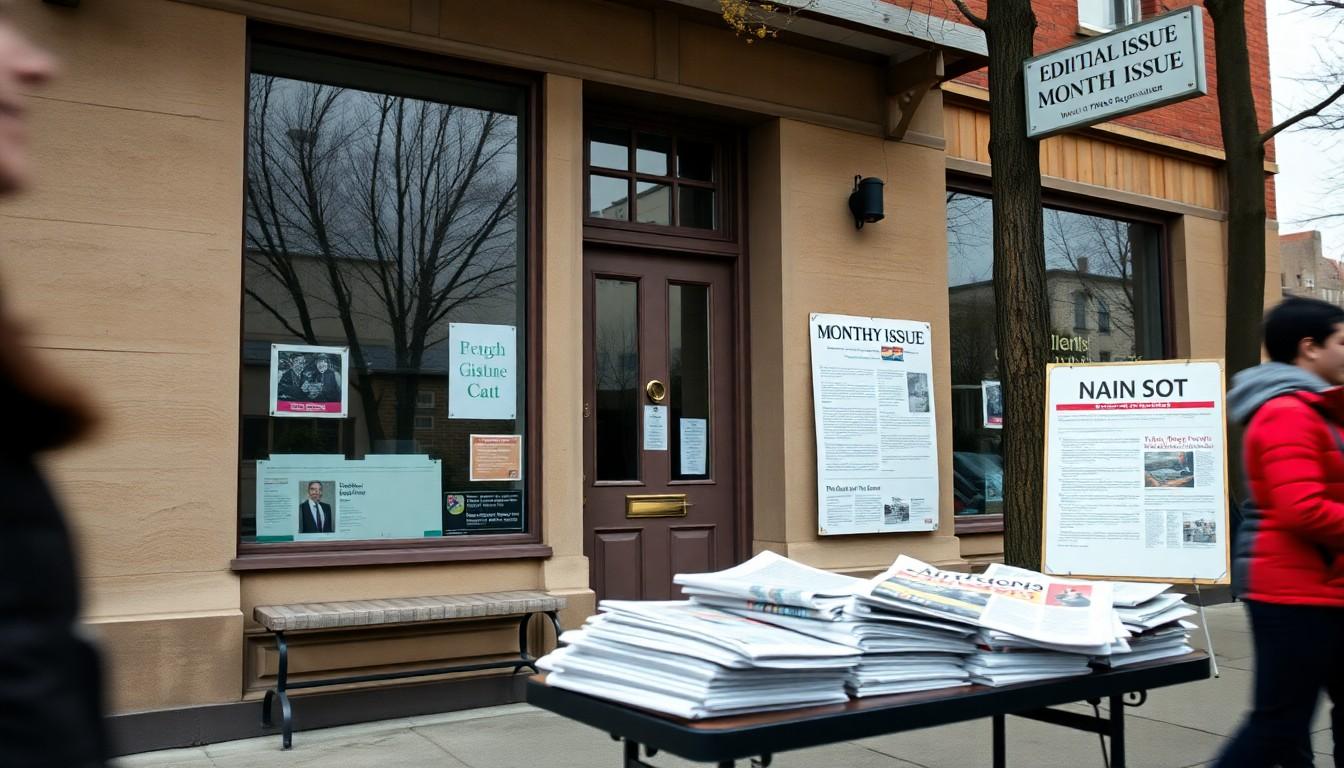
Long before social media made publishing immediate, queer people built their own information networks through newsletters, local papers, community magazines and handmade zines. These publications helped readers find services, understand political developments and discover that their experiences weren't happening in isolation.
The work was often precarious. Editors and distributors faced stigma, financial strain and, in some periods, serious legal or personal danger. Still, they kept printing and sharing material because mainstream coverage was frequently hostile, dismissive or simply absent.
That legacy gives today's digital outlets both a platform and a responsibility. A modern LGBTQ+ newsroom can reach thousands of readers in minutes, but its most important role may still be the oldest one: creating a public space where queer lives are described with dignity and complexity.
How to disagree without losing the plot
Accountability works best when it is specific. Readers and journalists can ask what was reported, what was omitted, who was affected and whether the framing was fair. Those questions are more useful than treating every editorial disagreement as proof that an entire publication has abandoned its principles.
It also helps to separate criticism of a decision from attacks on the people making it. That sounds obvious, but in a tense media environment, the distinction can disappear quickly. A disagreement about coverage should not become an invitation to question someone's identity, motives or right to participate in queer journalism.
For readers, a little media literacy goes a long way. Compare coverage, look for primary documents and notice whether a story gives context or simply rewards outrage. The loudest takedown isn't always the most illuminating one - sometimes it just has the best headline.
The future depends on more than being right
The October 2026 issue of LGBTQ Nation, focused on the evolution of queer media, places today's arguments in a much longer story. It looks back at the publications that survived against the odds and at the journalists who helped build the information ecosystem later generations inherited.
That history is more than a tribute. It's a useful reminder that queer media exists to serve readers, preserve memory, challenge power and widen the range of stories that can be told. It can campaign, investigate and criticise, but it shouldn't lose sight of the people who rely on it.
No outlet will get every decision right, and unity shouldn't demand silence. Still, there is a difference between principled disagreement and a cycle of public punishment that leaves the whole community weaker. The people who built queer media had plenty of reasons to give up. They published anyway.
Queer journalism is strongest when it remembers that courage is not only about confrontation. It is also about continuing to make room for truth, nuance and one another.
Protect the mission, challenge the work and keep the community in view.
Source Reference Map
Story idea inspired by: [1]
Sources by paragraph: