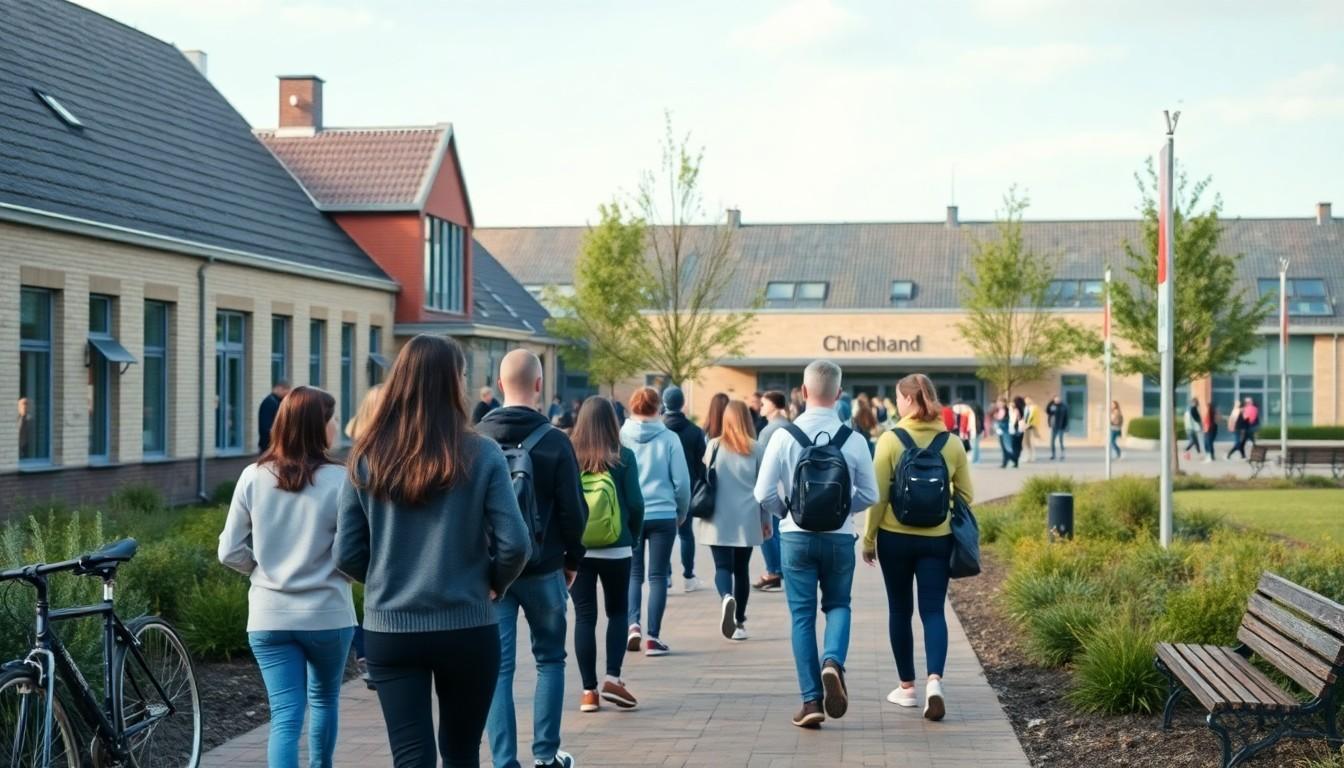
Waalwijk is marking its first year as a regenbooggemeente, but the rainbow crossing is only the visible part of a much bigger effort. With tolerance among young people reportedly slipping, the Dutch town is turning towards schools, sports clubs and youth organisations to make acceptance feel practical, everyday and real.
Essential Takeaways
- The concern is growing: National research suggests young people, particularly boys, are becoming less accepting of homosexuality.
- Waalwijk wants action, not just symbols: Its plan includes education, youth work and cooperation with clubs and community groups.
- The rainbow crossing is complete: The Wilhelminastraat crossing now includes purple, reinforcing its message of belonging.
- Community events need momentum: A monthly social café for LGBTQIA+ residents has attracted limited attendance.
- The focus is shifting to young people: A Respect Foundation project and a longer-term school programme are being developed.
Waalwijk’s rainbow status faces a bigger test
A colourful crossing can brighten a street, but it can't solve discrimination on its own. That’s the central challenge facing Waalwijk as the Dutch municipality completes its first year as a regenbooggemeente, or rainbow municipality.
The town says it’s increasingly concerned about reports of intolerance and discrimination affecting LGBTQIA+ people. National findings point to declining acceptance among young people, particularly boys, making schools, sports clubs and youth spaces important places for prevention. The original report in Brabants Dagblad described the trend as worrying, while Waalwijk officials acknowledged that local figures are difficult to measure precisely.
Waalwijk’s approach is therefore broader than flying a rainbow flag. The municipality is working with COC Tilburg/Breda, Radar, schools, ContourdeTwern and other organisations to help people feel safe and accepted in daily life.
The rainbow crossing sends a clear signal
The Wilhelminastraat rainbow crossing has now gained its missing purple stripe. It may seem like a small detail, but the completed design is intended to underline a straightforward idea: everyone belongs.
Waalwijk’s official announcement about the crossing presents it as a public expression of inclusion, turning an ordinary route across the road into a visible statement. Similar municipal initiatives elsewhere, including those in Velsen and Alkmaar, show how rainbow municipalities often use public spaces to make equality more noticeable.
Not everyone is convinced by the symbolism. Some residents see rainbow crossings as unnecessary, while others regard them as a useful reminder in a world where inclusion still isn't guaranteed. In truth, both reactions explain why they attract attention. A painted crossing is easy to spot, easy to debate and, crucially, only the starting point.
Why youth programmes matter most
The municipality is placing much of its practical work around children and teenagers. In November, Waalwijk planned a project with the Respect Foundation designed to encourage mutual respect, while a dedicated learning pathway is being developed to keep the subject present throughout the year.
Schools, youth centre Tavenu, RKC Waalwijk and local sports coaches are involved in that wider effort. This matters because attitudes are shaped in ordinary settings: changing rooms, classrooms, clubhouses and friendship groups, not only during official awareness days.
Guidance from other rainbow municipalities, including Harderwijk and Den Bosch, similarly frames inclusion as an ongoing partnership involving education, community organisations and local services. For families, the practical takeaway is simple: ask whether a school or club has a clear approach to bullying, discriminatory language and gender diversity. A friendly policy is useful, but staff need to know how to apply it when the atmosphere turns sour.
A social café reveals the difficulty of building community
Waalwijk has also hosted a monthly Social Café for LGBTQIA+ residents, offering a relaxed place to meet and share experiences. Representatives from COC Tilburg/Breda and Brabant Maatjes attended, creating the kind of warm, low-pressure contact that can be valuable for people who feel isolated.
But attendance has been modest. One meeting was cancelled because too few people were expected, showing that even a thoughtfully designed initiative can struggle to find its audience.
That doesn't necessarily mean the idea has failed. People may be unsure who the café is for, reluctant to attend alone or simply unaware that it exists. Better promotion through schools, healthcare providers, libraries, sports clubs and social media could help. Sometimes the hardest part is not creating a safe room, but persuading people that they’ll genuinely feel comfortable walking through the door.
The label is political, but the goal is practical
Waalwijk will remain a regenbooggemeente despite a coalition that includes parties that previously questioned whether the title was useful. The municipality has indicated that its way of working may change, even if the commitment to equal treatment remains.
Wethouder Mascha van Thielen has stressed that the label itself isn't the priority. The stated aim is for residents to be able to live openly, safely and with acceptance, while the municipality insists that practical measures matter more than symbolism.
That balance will be watched closely. Rainbow status can offer a framework and public accountability, but it isn't a magic badge. The work only becomes meaningful when a teenager can report harassment, a sports club knows what to do, and an LGBTQIA+ resident can attend a community event without wondering whether they’ll be judged.
What happens next?
Waalwijk plans to keep monitoring developments and working with sports and cultural organisations on gender diversity, inclusion and discrimination. That long-term approach is important, because attitudes rarely change after one campaign or one lesson.
The town's first year has exposed both progress and limits: the rainbow crossing is brighter, partnerships are forming, but community participation remains uneven and national trends are unsettling. The next test will be whether those visible commitments become habits in the places where young people spend their time.
For residents, the most useful question isn't whether Waalwijk deserves the title. It's whether the municipality's schools, clubs and youth services are becoming safer because of it.
A rainbow crossing can start the conversation, but everyday behaviour is what keeps it going.
Source Reference Map
Story idea inspired by: [1]
Sources by paragraph: