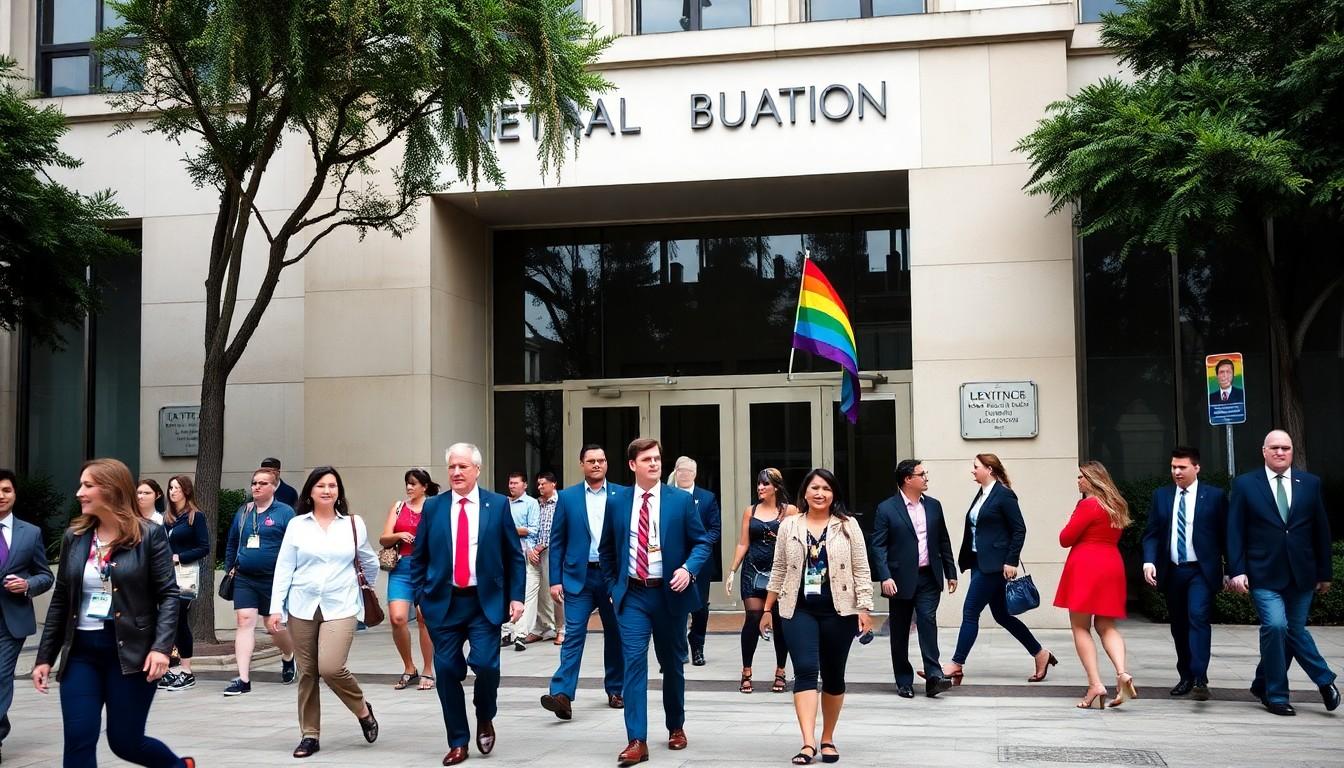
Houston-area voters are weighing races that could influence schools, property taxes, civil rights and representation this November. From the Texas House to the Harris Central Appraisal District, LGBTQ candidates are putting affordability, inclusion and public accountability at the centre of their campaigns.
Essential Takeaways
- Statewide stakes: Texas House races could affect voting rights, healthcare access and LGBTQ protections.
- Education focus: Michelle Palmer is campaigning for fact-based, inclusive curriculum standards on the State Board of Education.
- Property-tax concerns: HCAD candidates are highlighting fair valuations, clearer appeals and better public communication.
- Representation matters: Several candidates are openly LGBTQ, bringing lived experience to decisions affecting housing, schools and local government.
Houston’s LGBTQ candidates are targeting power at every level
The most striking feature of this election slate is its range. Candidates aren't only seeking seats in the Texas Legislature, where culture-war battles tend to dominate headlines. They're also running for education and appraisal positions, roles that can quietly shape everyday life through school content, property bills and access to public services.
According to OutSmart, six candidates are discussing their campaigns, priorities and plans for LGBTQ constituents ahead of the November 3 election. Their races cover west, central and southeast Houston, parts of Harris and Montgomery counties, and countywide appraisal posts. ([2])
That spread matters because local government often feels more immediate than Austin politics. A curriculum rule can reach a child's classroom, while an inaccurate property valuation can put real pressure on a household budget.
Two House races put rights and affordability centre stage
Ann Johnson is seeking another term in Texas House District 134 after first winning the seat in 2020. Her campaign combines opposition to what she describes as political extremism with more familiar household concerns, including healthcare costs, neighbourhood safety and discrimination. The Texas House member's official profile confirms her role representing District 134. ([3])
Jolanda Jones is running again in District 147, following her earlier service on Houston City Council and the Houston ISD board. She presents voting rights and affordability as linked issues, pointing to the cost of housing, insurance, childcare, utilities and groceries. Her campaign website also places community advocacy and equality at the heart of her public work. ([4])
For LGBTQ voters, both races carry a wider question: can representatives protect civil rights while addressing the practical pressures that make life harder? Election coverage from MyReptracker tracks the District 134 contest, while its District 147 listing provides additional context for Jones's race. ([5], [6])
Education is becoming a frontline election issue
Michelle Palmer, a longtime Texas educator, is seeking the State Board of Education District 6 seat. Her priorities include revisiting recently adopted social studies standards and changing a mandatory reading list that she says doesn't belong in its current form.
Palmer's appeal is straightforward: put classroom experience back into decisions about what children learn. She has taught several subjects over a 15-year career and argues that students need curriculum that is accurate, complete and inclusive, rather than shaped by ideological pressure. OutSmart reports that she has previously run for the same seat in 2020 and 2022. ([2])
Her LGBTQ platform is closely tied to education access. She says legislative restrictions have limited LGBTQ student organisations and the teaching of LGBTQ history, so she wants to use the board's public influence to press for change. It’s a reminder that school-board and education races can have consequences well beyond exam results.
HCAD candidates turn property taxes into a representation issue
The Harris Central Appraisal District contests may sound technical, but property valuations affect homeowners, renters, landlords and small businesses alike. Chris Ehlinger wants to reduce errors in HCAD's initial valuation model and examine whether some marginalised communities face a heavier burden.
Jourdyn Wilson is focusing on practical improvements, including evening workshops, plain-language protest guides and a more user-friendly website. That may not sound glamorous, but anyone who's tried to navigate a property appeal knows that clarity is a form of public service. OutSmart says Wilson also wants welcoming sessions that help LGBTQ residents understand appraisals and home-buying. ([2])
Jesus Nieto is campaigning on transparency, fair treatment and a closer look at how large corporations contribute to the tax base. As an openly LGBTQ candidate, he also frames representation as part of competent local government, arguing that residents should see their experiences reflected in the people making decisions.
What voters should check before casting a ballot
These races cover very different responsibilities, so voters should first identify which contests appear on their ballot. Legislative candidates can influence state law, the State Board of Education shapes curriculum policy and HCAD directors oversee a system that affects property-tax calculations.
It’s also worth separating a candidate's promises from the office's legal powers. An appraisal-district director can't write LGBTQ civil-rights legislation, for example, but can push for fair treatment, clearer processes and outreach to communities that have historically struggled to navigate government systems.
For a closer look, voters can compare candidate biographies, campaign priorities and independent election information. MyReptracker provides listings for the two featured Texas House races, while official legislative information confirms Johnson's district and public role. ([3], [5], [6])
A broader test for Houston’s political voice
Taken together, these campaigns show how LGBTQ representation is expanding across the ballot. The candidates are talking about discrimination and trans rights, but they're also discussing medical bills, schoolbooks, housing costs, tax fairness and whether a public website makes sense to ordinary people.
That combination feels important. Rights don't exist in isolation from the cost of living or the systems people must use every day. For Houston-area voters, the November election offers a chance to consider not only who shares their values, but who can make public institutions work a little better.
It’s a diverse group of races, but the message is consistent: representation matters most when it reaches everyday life.
Check your ballot, understand each office and vote with the issues closest to home in mind.
Source Reference Map
Story idea inspired by: [1]
Sources by paragraph: