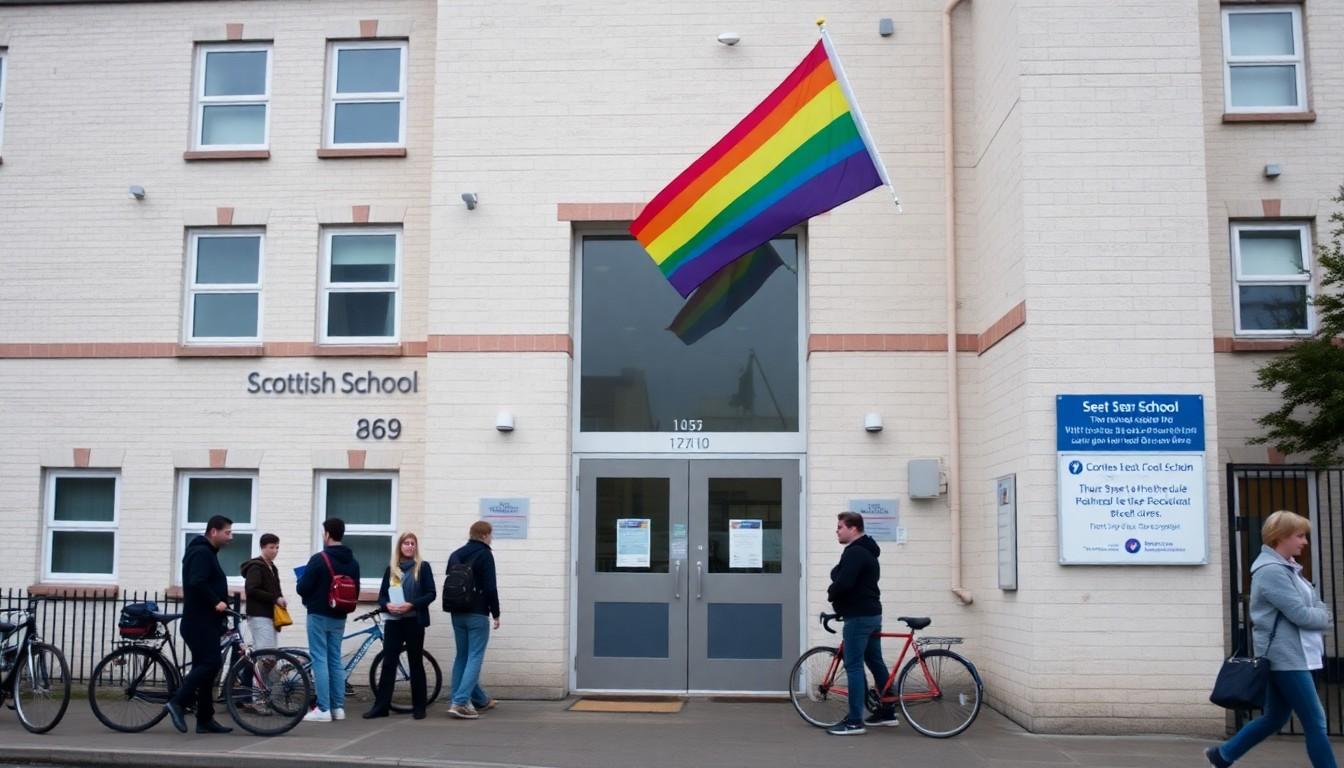
Scottish Trans has challenged updated EHRC school guidance after the Supreme Court’s interpretation of “sex” under the Equality Act. The organisation says the advice could affect trans pupils’ safety, wellbeing and access to education across Scotland, England and Wales, while urging schools to balance legal duties with children’s human rights and inclusion.
Essential Takeaways
- Consultation challenged: Scottish Trans submitted a response to the EHRC’s draft technical guidance for schools.
- Health concerns: The organisation warns that exclusionary approaches could affect pupils’ mental health, physical safety and attendance.
- Inclusion gap: It says the guidance focuses on when trans pupils may be treated differently, without explaining how schools can support and affirm them.
- Rights still matter: Scottish Trans argues that schools must consider children’s human rights alongside Equality Act duties.
- Scottish context: Existing Scottish guidance tells education authorities to support transgender pupils through inclusive, individualised approaches.
Scottish Trans raises alarm over the updated advice
The sharpest concern is not simply what the guidance says about legal duties, but what schools might do with it in practice. Scottish Trans argues that an overly rigid reading could leave trans pupils feeling singled out, unsafe and pushed away from school life.
That matters because school is more than classrooms and timetables. Toilets, changing rooms, uniforms, names, pronouns and access to activities all shape whether a young person feels able to learn normally. The organisation says it is already seeing damaging effects in schools across Great Britain, and fears the updated guidance could intensify them.
The Equality and Human Rights Commission opened its consultation after the Supreme Court clarified how “sex” should be understood under the Equality Act. The regulator’s stated aim was to help schools understand their responsibilities, but the debate has quickly become a wider argument about safety, dignity and inclusion.
Why the EHRC guidance has become so contentious
The EHRC’s updated material is designed to explain how schools should approach single-sex spaces and services under equality law. Legal analysis from HCR Law noted that the September update reflected the Supreme Court’s ruling and set out potential implications for education providers.
For critics, however, the central problem is what they see as an imbalance. Scottish Trans says the draft gives substantial attention to circumstances in which trans pupils might be excluded or treated differently, while offering little practical detail on how schools can continue to include and affirm them.
That distinction is important for headteachers and staff. Legal guidance can identify duties, but it doesn't automatically tell a teacher how to handle a distressed pupil at the school gate, a disagreement over changing facilities or repeated misgendering in class. As the Association of School and College Leaders has indicated in its response to related EHRC guidance, schools need clarity that can work in real settings, not just on paper.
The Scottish approach puts support at the centre
Scotland already has dedicated guidance on supporting transgender pupils in schools. Government advice encourages education authorities and schools to work with pupils and families, consider individual circumstances and create a supportive environment rather than relying on a one-size-fits-all response.
That approach doesn't remove legal complexity, but it does recognise the everyday reality of school life. A young person may need privacy, a trusted adult, a carefully agreed uniform arrangement or reassurance about bullying. These are practical questions, not abstract legal puzzles.
The contrast has sharpened concerns among campaigners. If schools follow only the most restrictive interpretation of equality law, Scottish Trans says they could overlook protections arising from the United Nations Convention on the Rights of the Child, which has been incorporated into Scots law. In other words, compliance should not become a shortcut for forgetting the child at the centre of the decision.
What schools may need to consider in practice
For schools, the safest route is likely to be careful, documented and pupil-focused decision-making. Staff should understand the latest legal advice, but also record how they have considered safeguarding, bullying, privacy, attendance, learning and the child’s views.
Clear communication will matter just as much. Families and pupils should know who to approach, how concerns will be handled and what support is available. Staff training can also help prevent small incidents, such as careless language or inconsistent rules, from becoming a daily source of stress.
Schools will need to avoid making promises that conflict with their legal duties, but they should also avoid treating trans pupils as problems to be managed. Scottish Government guidance stresses the value of consultation and individual support, while the EHRC’s own material is intended to help schools understand their responsibilities. Used together, those sources may offer more useful direction than either a purely legal or purely political reading.
A consultation with consequences beyond the paperwork
Scottish Trans says the EHRC should have acknowledged that the legal framework itself may expose trans children and young people to risks, including discrimination, violence and harm to their human rights. Its argument is that a regulator can explain the law while still warning the Government when that law creates serious practical consequences.
The consultation therefore carries more weight than a technical update might suggest. It could influence how schools handle some of the most sensitive parts of pupils’ lives, often in situations where a young person has limited power and may already be anxious.
For families, the immediate lesson is to ask schools how they interpret the guidance, what safeguarding measures are in place and how decisions will be reviewed. The legal debate is unlikely to disappear soon, but pupils still need calm, consistent support while it continues.
The best guidance will be judged not only by how neatly it describes the law, but by whether children can walk into school feeling safe enough to learn.
Source Reference Map
Story idea inspired by: [1]
Sources by paragraph:
- Paragraph 1: [2], [4]
- Paragraph 2: [3], [6]
- Paragraph 3: [4], [7]
- Paragraph 4: [5], [3]
- Paragraph 5: [5], [6]
- Paragraph 6: [3], [7]
- Paragraph 7: [5], [4]
- Paragraph 8: [3], [5]
- Paragraph 9: [6], [7]
- Paragraph 10: [2], [3]
- Paragraph 11: [4], [5]
- Paragraph 12: [3], [5]
- Paragraph 13: [2], [6]
- Paragraph 14: [5], [7]
- Paragraph 15: [3], [4]