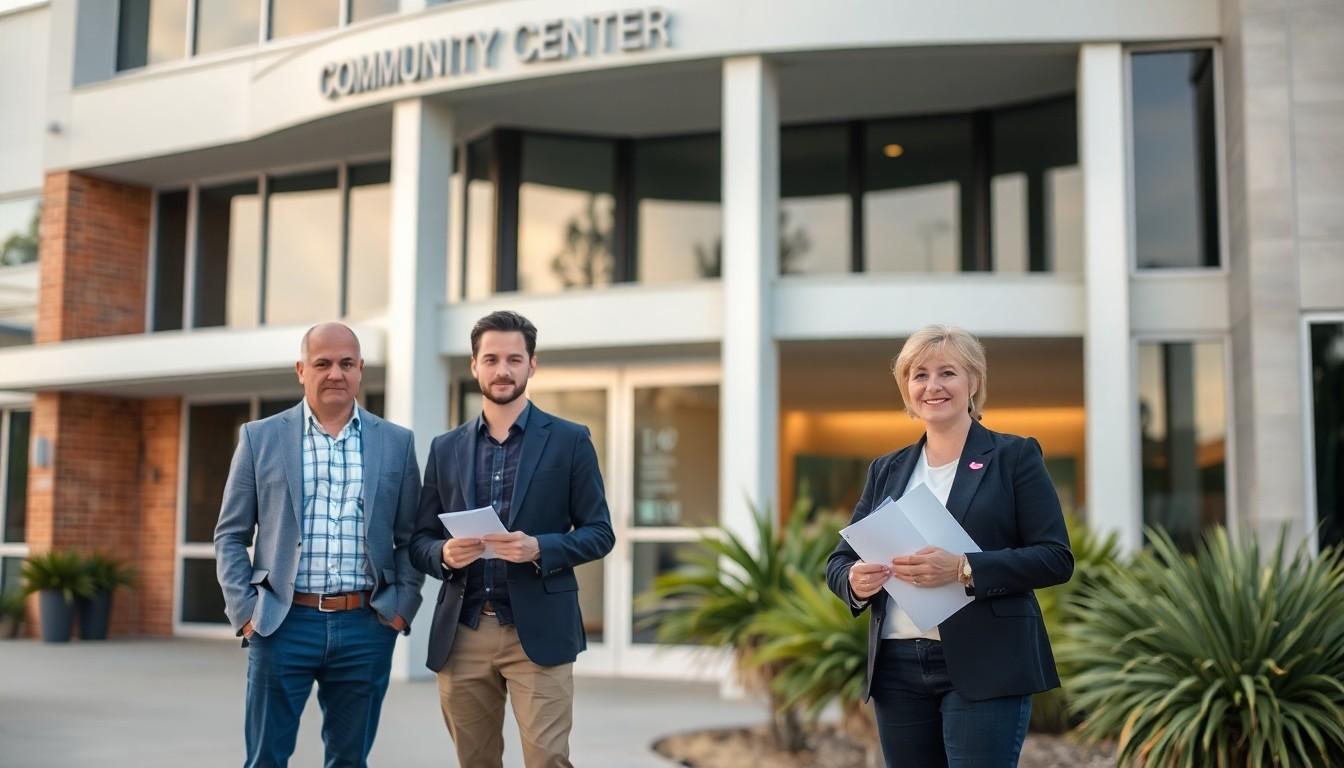
Three LGBTQIA+ leaders in New South Wales have received $17,500 in 2026 study support, helping them advance work in youth mental health, inclusive governance and affirming sexual health care. Their plans show how targeted scholarships can turn lived experience into practical community change.
Essential Takeaways
- Three recipients: Jess Wilcox, Cassandra Armstrong and Dean Millett will share $17,500 through the Pride Business Association Education Fund.
- Mental health focus: Wilcox will use a $10,000 scholarship to continue psychological science studies centred on youth wellbeing and suicide prevention.
- Boardroom representation: Armstrong's $5,000 award supports company director training and a push for more queer voices in governance.
- Rural care matters: Millett's $2,500 scholarship will fund postgraduate sexology study focused on accessible, affirming support.
- Community-backed funding: Donations, fundraising and organisational partners make the scholarships possible.
Three scholarships, three routes to change
The latest Pride Business Association scholarships put a welcome spotlight on a simple idea: education can be a powerful form of community infrastructure. In New South Wales, Jess Wilcox, Cassandra Armstrong and Dean Millett are taking different paths, but each wants to make LGBTQIA+ support more informed, visible and accessible.
The awards support LGBTQIA+ adults aged 30 and over who are returning to study, building professional skills or changing direction. That matters because education doesn't always follow a tidy timeline. Discrimination, financial strain and a lack of support can interrupt ambitions, leaving people to pick them up years later.
According to the Star Observer, the 2026 fund is distributing $17,500 across three scholarships. It's a modest sum beside the scale of the challenges recipients are tackling, but it could provide the breathing room needed to keep moving.
Jess Wilcox is turning experience into mental health expertise
Jess Wilcox is the largest recipient, receiving the $10,000 Michael Glynn Scholarship to support a Bachelor of Psychological Science at the University of Newcastle. She plans to continue into postgraduate social work, with a particular interest in youth mental health and suicide prevention.
Wilcox already works across mental health, disability inclusion and LGBTQIA+ advocacy. Their experience as a lived and living experience consultant gives the study a practical edge, especially in a field where services can feel distant, clinical or simply not designed with the people using them in mind.
The long-term goal is to help people with lived experience influence research, service design and decision-making. It sounds straightforward, but it changes the question from what should be done to people to what can be built with them.
Cassandra Armstrong wants inclusion where decisions are made
Cassandra Armstrong will use the $5,000 Rise Scholarship to complete the Australian Institute of Company Directors' Company Directors Course. The training covers governance, financial oversight and strategic leadership, all of which can seem dry on paper but shape real-world priorities.
Armstrong is Deputy CEO of ADHD Australia, founded Trans and Gender Diverse Kids Australia and sits on the board of Guthrie House. Their next step is about taking inclusion into the rooms where budgets are set, risks are assessed and organisational direction is agreed.
That focus feels increasingly relevant. Representation isn't only about who appears in public-facing campaigns; it's also about who has influence when policies, services and spending decisions are being shaped. A board with broader lived experience may spot gaps that otherwise remain invisible.
Dean Millett is bringing affirming care closer to home
Dean Millett receives the $2,500 MCC Welfare Services Scholarship for postgraduate sexology study at Curtin University. As an Accredited Mental Health Social Worker and former registered nurse with more than two decades in healthcare, he brings substantial frontline experience to the next stage of his work.
His ambition is to expand specialist sexual and relationship wellbeing support for LGBTQIA+ people in rural communities. For someone outside a major city, finding care that is both nearby and genuinely affirming can involve long journeys, limited options and an uncomfortable amount of explaining.
That makes location part of the healthcare conversation. Support shouldn't become less respectful or harder to reach simply because someone lives regionally. Millett's study could help strengthen services that connect sexual wellbeing, mental health and community belonging.
Why community-funded study support still matters
The PBA Education Fund is backed by community fundraising, donors and partners. That model gives the scholarships a distinctly collective feel: the money isn't just helping individual recipients gain qualifications, it's helping develop people already working for broader change.
The Star Observer reported that PBA President Jarrod Lomas described the awards as a way to help LGBTQIA+ people return to study or take the next step in their careers, whatever path brought them there. That message lands because many adult learners aren't starting from a blank page; they're building around work, caring responsibilities, health needs and past barriers.
Wilcox, Armstrong and Millett are already contributing to their communities. The funding simply gives each of them more tools, reach and confidence to carry that work further. And, frankly, better mental health care, stronger governance and more accessible rural support are useful outcomes for everyone.
It's a small fund with an ambitious ripple effect.
Source Reference Map
Story idea inspired by: [1]
Sources by paragraph:
- Paragraph 1: [2]
- Paragraph 2: [3]
- Paragraph 3: [4]
- Paragraph 4: [5]
- Paragraph 5: [6]
- Paragraph 6: [7]
- Paragraph 7: [2]
- Paragraph 8: [3]
- Paragraph 9: [4]
- Paragraph 10: [5]
- Paragraph 11: [6]
- Paragraph 12: [7]
- Paragraph 13: [2]
- Paragraph 14: [3]
- Paragraph 15: [4]
- Paragraph 16: [5]
- Paragraph 17: [6]
- Paragraph 18: [7]
- Paragraph 19: [2]
- Paragraph 20: [3]
- Paragraph 21: [4]
- Paragraph 22: [5]