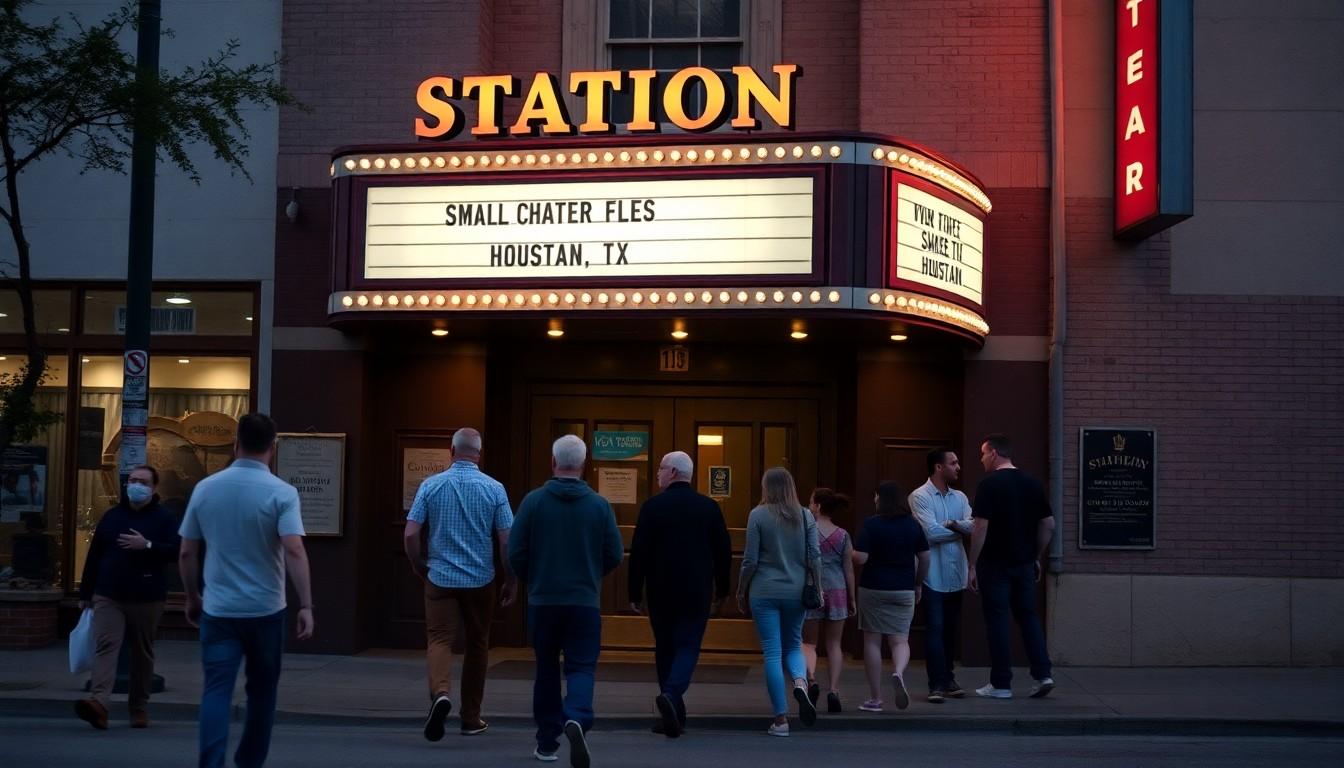
Audiences in Houston will gather at Station Theater on 11 October 2026 for the Coming Out Monologues, a National Coming Out Day production sharing LGBTQ experiences while raising support for University of Houston students. The evening promises honest storytelling, new transgender representation and a carefully protected space for personal reflection.
Essential Takeaways
- When and where: The production takes place on 11 October 2026 at Station Theater, 2000 Nance Street, Houston.
- Why it matters: Proceeds will support LGBTQ student scholarships and emergency crisis aid at the University of Houston.
- Fresh representation: This year's cast includes five transgender performers, marking the production's first presentation of trans stories.
- Audience participation: Attendees can share their own coming-out experiences after the show, with recording prohibited during that segment.
- Stories with range: The monologues explore identity, self-care, family reactions, sexuality and difficult experiences within queer communities.
Houston's Coming Out Monologues returns with bigger ambitions
There’s something unusually intimate about a theatre where the performance doesn’t necessarily end with the final scripted line. The Coming Out Monologues returns to Houston for its second instalment on National Coming Out Day, combining staged storytelling with a live invitation for audience members to speak in their own words.
The University of Houston LGBTQ Alumni Association is presenting the event at Station Theater, with proceeds directed towards scholarships and emergency crisis aid for LGBTQ students. Houston Stage Guide lists the production as a community theatre event connected with the UH LGBTQ alumni network, giving the evening both a cultural and practical purpose.
National Coming Out Day falls on 11 October each year, and the timing gives the production a natural sense of occasion. Still, the stories are not being presented as neat, cheerful announcements. Instead, they look at the uncertainty, repetition and emotional labour that can surround coming out.
Transgender voices take centre stage
This year's production is notable for introducing transgender stories to the programme, with five transgender performers among the cast. That change adds a significant new layer to a show built around the many different ways people understand and communicate identity.
Director Frank De Oro is also performing, sharing his own coming-out experience alongside Casey Martin, Ellen Lui, Raymond Valdez Jr., Marla Joi, Al Mahlsteat, Maximiliano "Max" Ovalles and returning performers Jennifer Correa, Barbie Monroe, Mariah Martinez and Brandon Duran.
Martin is making their acting debut in a story about a transgender man whose hoped-for coming-out moment produces a painful response. The role reflects the less tidy reality of identity conversations, particularly when someone is not easily understood through familiar categories. It’s a valuable reminder that coming out can happen repeatedly, in different places and to different people.
The cast brings lived experience, care and a little drama
Several performers are stepping onstage for the first time, or returning to theatre after long gaps. Lui, for instance, was drawn into performance after a memorable cameo as an angry chef, complete with a dramatic tray slam. She now takes on a demisexual or asexual-adjacent role, exploring feelings of being out of step with expected ideas about attraction.
Marla Joi, meanwhile, returned to acting after nine years as her father's caregiver. She brings sketch comedy and improv experience to the project, while also serving as understudy for Lui's role. The part has encouraged her to think more deeply about the breadth of sexual identities, a process she plans to continue discussing with her wife.
Valdez is performing a gay male role based on the story of Houston drag performer Hannah Santana. The material includes abuse and grooming, so his approach is understandably careful. His leadership work with the Diana Foundation and GiGi's Playhouse Houston has also shaped his interest in stories that ask adults to pay closer attention to queer young people.
Why the fundraising element matters
A night of theatre can entertain, but the financial support attached to this production gives it a longer reach. University of Houston provides a range of scholarship information for students, while its Cougar Emergency Fund supports students facing urgent financial difficulties. For LGBTQ students, emergency assistance can be especially meaningful when family support is uncertain or unavailable.
That practical link turns the production into more than a one-night celebration. Audience members are not simply buying a ticket to hear personal stories; they’re helping create options for students who may need support to stay in education or manage an unexpected crisis.
The university also directs students towards financial aid forms and other assistance routes, showing how scholarships and emergency funding sit within a wider support system. It’s a quiet but important point: representation feels stronger when it is paired with material help.
A private invitation for audience members
After the performances, audience members will be invited to take the stage and share their own coming-out experiences, including the possibility of coming out for the first time. Recording will be prohibited during this part of the evening, offering a clear boundary around privacy and consent.
That safeguard matters. Public storytelling can be powerful, but nobody should feel that a vulnerable moment might appear online without permission. The format gives people the choice to speak while making room for silence, hesitation and stories that may not fit a polished ending.
For performers such as Ovalles and Mahlsteat, the broader hope is that audiences will consider how difficult it can be to explain something deeply personal to people who do not immediately understand it. Sometimes the most useful response is not a clever question, but patience.
Coming Out Monologues 2026 is set to offer Houston an evening that feels personal, purposeful and occasionally theatrical in the best sense. It may leave audiences entertained, moved or simply more curious about the stories unfolding around them.
A thoughtful story can open a door, but support helps people walk through it.
Source Reference Map
Story idea inspired by: [1]
Sources by paragraph: