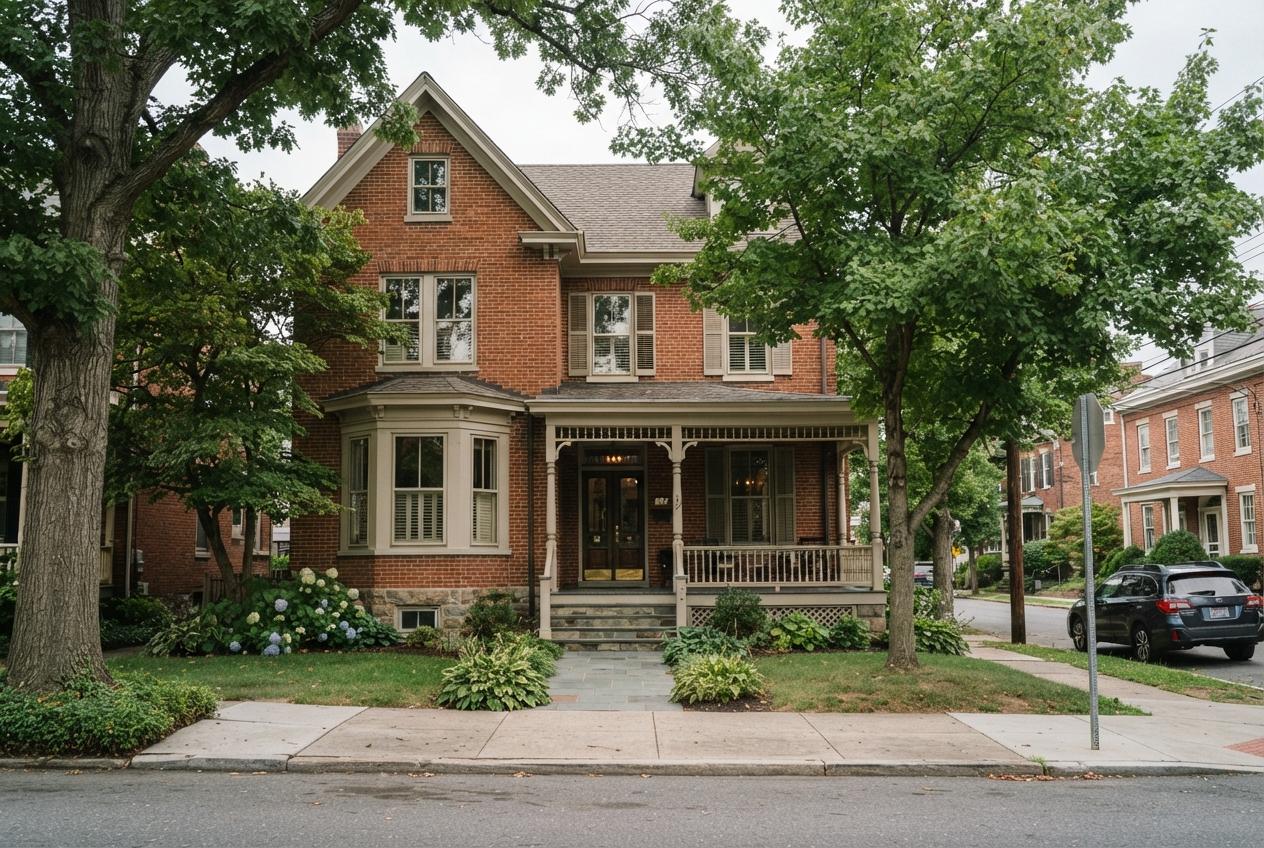
Visitors exploring Pennsylvania LGBTQ history can find it in far more than dedicated archives and memorials. From Bayard Rustin's childhood home in West Chester to Charles Demuth's Lancaster studio and Billy Strayhorn's Pittsburgh school, these places show how ordinary buildings can carry extraordinary stories.
Essential Takeaways
- History is often hiding in plain sight: Homes, schools and studios can reveal LGBTQ stories alongside wider community history.
- West Chester honours Bayard Rustin: His childhood surroundings helped shape the organiser who played a central role in the 1963 March on Washington.
- Lancaster celebrates Charles Demuth: His former home and studio now operates as the Demuth Museum, preserving his bold modernist work.
- Pittsburgh's musical legacy runs deep: Westinghouse High School was attended by Billy Strayhorn and other major jazz figures.
- A thoughtful visit matters: Check opening hours, accessibility and any visitor guidance before setting off.
Pennsylvania's LGBTQ history goes beyond famous landmarks
The most moving historic places aren't always the ones with the biggest signs. In Pennsylvania, LGBTQ history is woven through neighbourhood homes, creative workspaces and schools where people developed the ideas and talents that later travelled far beyond the state.
That makes these locations especially rewarding to visit. They offer a softer, more personal way into history, with the creak of an old floorboard or the quiet presence of a familiar street doing some of the storytelling. The National Park Service's material on Bayard Rustin, for instance, places his Pennsylvania upbringing alongside his later national influence.
For visitors planning LGBTQ history sites in Pennsylvania, the key is to look beyond formal labels. A building may not describe itself as an LGBTQ landmark, yet its connection to a notable figure can make it an essential part of the wider story.
Bayard Rustin's West Chester home reveals where activism began
In West Chester, Rustin's childhood home points to the community networks that shaped him long before he became a nationally recognised civil rights organiser. He was raised by his grandparents in a household closely connected to local Quaker and Black communities, where cooperation and civic action were part of everyday life.
The National Park Service describes Rustin as a major strategist of the civil rights movement and a central organiser of the March on Washington. His sexuality also affected how openly he could be recognised during his lifetime, adding a painful layer to an already remarkable story.
A visit here works best as part of a broader West Chester walk. Rather than expecting a museum packed with objects, visitors should treat the address as a point of reflection: this was a real family home, and its importance grew from the people and relationships that surrounded it.
Charles Demuth's Lancaster studio still feels creatively alive
Lancaster brings a different mood. Charles Demuth's former home and studio connects domestic life with the restless energy of early modern art, and the building now houses the Demuth Museum.
Demuth's paintings were known for sharp lines, architectural forms and a striking interest in urban signs and lettering. The Demuth Museum's account of his career also highlights the European and avant-garde influences that helped shape his visual language. It is easy to imagine how a relatively quiet Pennsylvania setting could become a launchpad for such adventurous work.
For art lovers, this is one of the more accessible places to add to a Pennsylvania LGBTQ history itinerary. Allow time for the paintings rather than rushing through, because Demuth's work rewards close attention. Details that first seem hard-edged can begin to feel surprisingly rhythmic and playful.
Billy Strayhorn's Pittsburgh connection deserves a louder spotlight
Pittsburgh's Westinghouse High School carries a powerful musical legacy. Billy Strayhorn studied there before beginning the collaboration with Duke Ellington that would define much of his career.
Strayhorn's contributions included celebrated compositions such as "Take the 'A' Train" and "Chelsea Bridge". His partnership with Ellington became so closely connected that separating their individual creative input was often difficult, according to biographical accounts from the Encyclopaedia Britannica. He also lived openly as a gay man and took part in the civil rights movement.
The school is part of a larger Homewood story, too. Other important musicians, including Erroll Garner and Mary Lou Williams, were associated with Westinghouse. That makes the site a useful reminder that talent rarely appears in isolation. It grows in schools, streets and communities that may not receive enough credit.
How to plan a respectful history-focused visit
These sites aren't interchangeable, so plan around what you want to understand. West Chester suits a walking and civic-history day, Lancaster is the natural choice for art and architecture, while Pittsburgh offers a deeper dive into music, race and neighbourhood identity.
Check current access arrangements before travelling. A listed historic building may have limited public hours, operate as a museum or simply be best appreciated from the outside. The Demuth Museum provides the clearest visitor experience, while other locations may call for a quieter, more respectful approach.
It also helps to read a little beforehand. Knowing why Rustin mattered, how Demuth worked or what Strayhorn contributed can transform a quick stop into a meaningful encounter. The result is less a checklist of landmarks and more a conversation with the past.
Everyday places can tell extraordinary LGBTQ stories
Pennsylvania's LGBTQ heritage is strongest when viewed as a network rather than a collection of isolated names. Activism, art, music and community organising overlap across these stories, showing how people created change while navigating the limits of their time.
There is something quietly powerful about that. A former home or school can look unremarkable until its history comes into focus, and then the whole setting feels different. These places invite visitors to notice the people whose work shaped public life, even when recognition arrived late.
For anyone exploring LGBTQ history, that is the real value of Pennsylvania's everyday landmarks. They make history feel local, physical and human.
A thoughtful visit can turn an ordinary building into a lasting memory.
Source Reference Map
Story idea inspired by: [1]
Sources by paragraph:
- Paragraph 1: [2], [3]
- Paragraph 2: [4], [5]
- Paragraph 3: [6], [7]
- Paragraph 4: [2], [3]
- Paragraph 5: [4], [5]
- Paragraph 6: [4], [5]
- Paragraph 7: [7], [3]
- Paragraph 8: [7], [3]
- Paragraph 9: [4], [5]
- Paragraph 10: [6], [7]
- Paragraph 11: [2], [3]
- Paragraph 12: [4], [5]
- Paragraph 13: [6], [7]
- Paragraph 14: [2], [3]
- Paragraph 15: [4], [5]
- Paragraph 16: [6], [7]
- Paragraph 17: [2], [4]
- Paragraph 18: [3], [5]
- Paragraph 19: [6], [7]