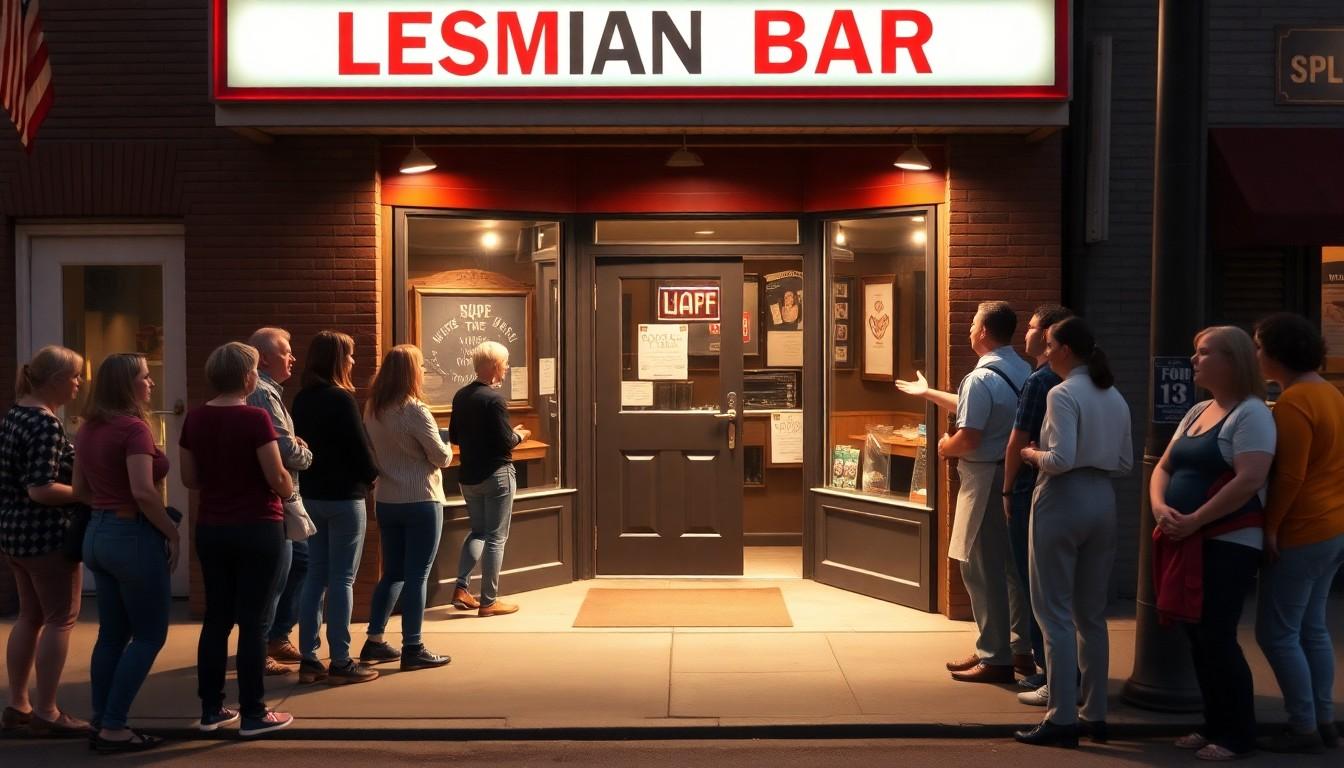
A small lesbian bar in Massachusetts has become an unlikely global talking point after introducing one mask-optional night each week. The change was intended to attract larger crowds and ease serious financial pressure, but it also raised difficult questions about disability access, community responsibility and what a genuinely inclusive venue can look like.
Essential Takeaways
- One mask-optional night: The Last Ditch kept its masking requirement on other nights while trialling a more conventional club evening.
- A venue under pressure: Owner Jackie Matellian reportedly carried substantial debt and worked multiple jobs to keep the bar operating.
- Critics felt excluded: Disabled, chronically ill and immunocompromised queer customers argued that the policy weakened the venue's safe-space promise.
- The dispute went viral: Coverage by the Boston Globe and other outlets turned a local argument into an international culture story.
- No easy resolution: A mediation meeting failed to settle either the masking question or the bar's wider financial predicament.
A small policy change, with very large consequences
The Last Ditch was created as more than a nightlife venue. In Greenfield, Massachusetts, it aimed to offer a welcoming room for lesbians, trans people, sex workers, disabled customers and others who often find mainstream bars uncomfortable or inaccessible.
That promise made the new policy feel particularly personal to some regulars. According to the Boston Globe, the venue planned to keep masks required on most nights but allow customers to attend without them once a week, creating space for DJs, bigger crowds and a more familiar club atmosphere.
On paper, it sounded like a modest compromise. In practice, it touched a raw nerve. For people still taking serious precautions against respiratory illness, one mask-optional event could make the bar feel unavailable altogether. (Boston Globe; LGBTQ Nation)
The money problem behind the masking debate
The dispute can't really be understood without the bar's financial position. Matellian reportedly invested her savings, took on considerable debt and worked several jobs while trying to keep the business alive after two co-founders left.
That pressure helps explain why a busier, mask-optional night seemed attractive. A venue built around access still needs rent, wages, supplies and customers, and idealism doesn't pay the electricity bill. LGBTQ Nation reported that the bar's economic difficulties were central to the controversy, rather than a minor detail in the background.
This is the uncomfortable tension at the heart of the story. The policy was presented as a way to make the venue more sustainable, while critics saw it as shifting the burden on to people the bar had originally promised to protect. (LGBTQ Nation; The Atlantic)
Why the backlash became so intense
Online criticism quickly moved beyond disagreement over masks. Some commenters accused the venue of ableism and argued that disabled and immunocompromised queer people were being treated as an inconvenience rather than as part of the community.
The language became increasingly hostile, with personal attacks and threats reported around the debate. TheWrap described the story as an example of a dispute turning vicious inside a community that otherwise presents itself as supportive and politically aligned.
That escalation matters. There are legitimate questions about risk, access and consent, but social media tends to flatten complicated trade-offs into declarations of loyalty or betrayal. A tiny bar wrestling with survival became a symbolic battleground, and nuance was among the first things to leave the room. (TheWrap; News- USA Today)
Mediation couldn't bridge the gap
The venue later hosted a mediation session involving people in person and others joining remotely. Organisers hoped to discuss both the masking rule and the bar's financial future, but the meeting reportedly became another source of friction.
Accessibility was itself part of the argument. Some remote participants felt that the people physically present were being treated as the more legitimate audience, while others objected to the tone and priorities of the discussion. The meeting ended without a shared solution.
That failure is revealing. The disagreement wasn't only about whether customers should wear masks on one night. It was also about who gets to define a safe space, whose needs take priority and whether inclusion can work when different groups face very different risks. (Der Standard; The Atlantic)
Viral attention may have changed the calculation
The story's reach grew dramatically after coverage in the Boston Globe, followed by attention from the New York Times, the Guardian, podcasts and social media commentators. Reports also suggested that Hollywood companies had shown interest in adapting the episode for screen.
For a struggling independent bar, that visibility could be both damaging and useful. It may bring unwanted scrutiny, but it can also introduce the venue to curious customers who'd never previously heard of it. According to Der Standard, The Last Ditch remained open and continued holding its mask-optional night, with reports suggesting attendance improved on both types of evening.
That doesn't settle the ethical question, but it does show why the decision was made. Small community businesses often have to balance principles with survival, and the answer rarely feels perfect to everyone involved. (Der Standard; Boston Globe; Political.org)
The Last Ditch story is a reminder that accessible nightlife depends on both clear policies and honest conversations about who they serve.
Source Reference Map
Story idea inspired by: [1]
Sources by paragraph: