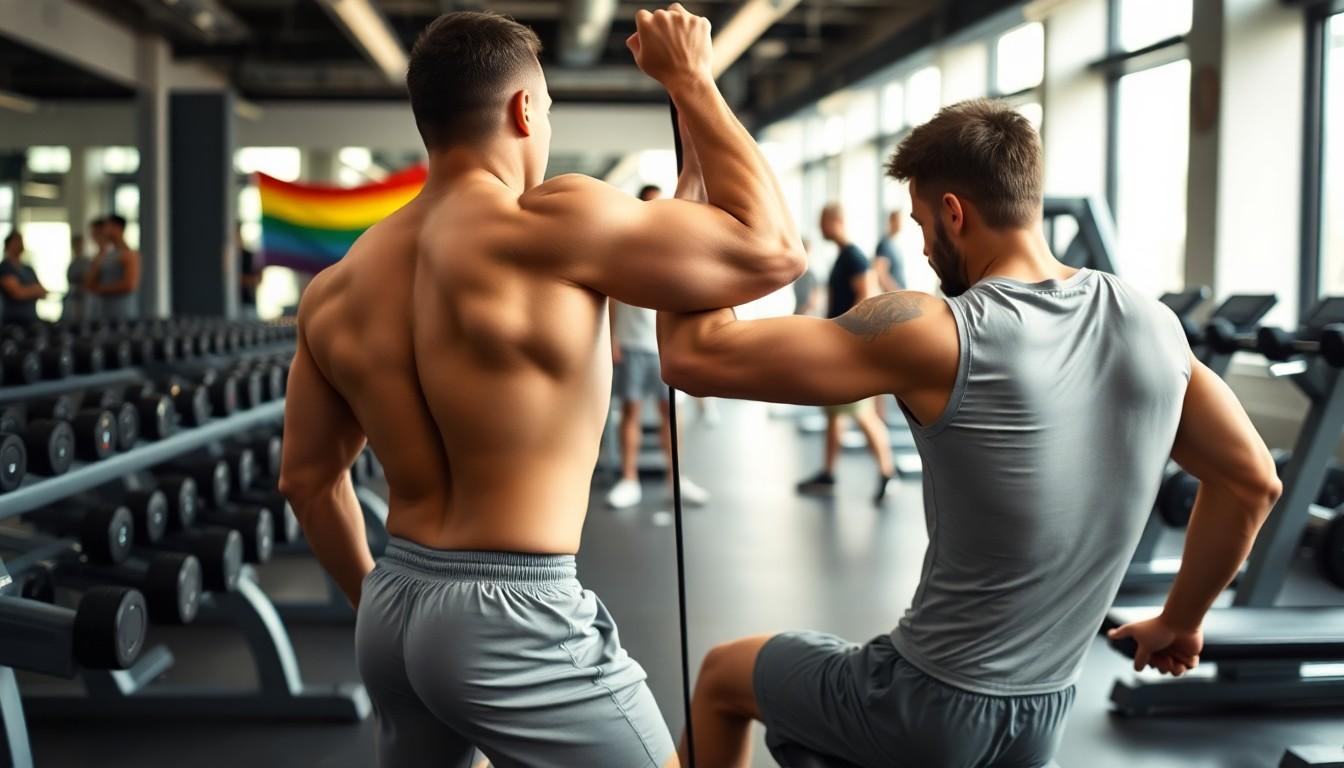
Straight men are embracing bigger glutes, protein-heavy routines and relentless gym content, prompting a familiar question across queer style and fitness circles: can the latest straight-guy glute-maxxing trend really claim the once-distinctive “hockey butt” aesthetic?
Essential Takeaways
- Glutes are having a moment: Straight men are increasingly training for fuller, more defined backsides.
- The routine sounds intense: Popular advice includes frequent lower-body sessions, high protein intake and creatine.
- Queer style has history here: Short shorts, Speedos and body-conscious dressing have all crossed into mainstream menswear.
- The debate is mostly playful: Plenty of people think an attractive bum is universal territory.
- Choose fitness over panic: Good form, rest days and sensible nutrition matter more than chasing internet proportions.
The straight-guy glute-maxxing trend has arrived
For years, the joke was that straight men avoided leg day as if squats came with a compulsory personality transplant. Now that stereotype is wobbling, along with the gym shorts. According to Queerty, online creators are documenting their progress towards bigger, rounder glutes, often with a deliberately deadpan before-and-after format.
The appeal is easy to understand. A well-trained backside looks athletic, photographs dramatically and works nicely with the current obsession with optimisation. It also fits the wider looksmaxxing culture, where every feature, from jawlines to shoulders, becomes a project with a routine, supplement stack and progress report.
There’s just one complication. Queer men have long treated the lower body as a serious area of study, so the sudden straight embrace of glute training feels less like a fresh discovery and more like an overdue arrival at a party already in full swing.
From short shorts to the squat rack
This isn’t the first time mainstream straight style has wandered into territory that queer men helped make visible. Queerty has previously tracked the straight adoption of shorter shorts, while another report examined the growing visibility of Speedos and other traditionally gay-coded swimwear.
The pattern is familiar. A garment or body ideal begins in a subculture, gains confidence through nightlife, sport or social media, then appears in a much broader men’s fashion conversation. By the time advertisers catch up, the original context has often been softened into something called “summer style”.
Glute-maxxing follows the same route, only the outfit is less important than the silhouette underneath it. The result is a slightly surreal moment in which men who once treated leg training as optional are now discussing angles, volume and posterior-chain development with the focus of professional pastry critics.
Why the “hockey butt” effect matters
The latest enthusiasm has also been linked to the popularity of Heated Rivalry, a hockey drama whose players helped turn powerful, rounded backsides into a mainstream fantasy. Queerty reports that the show has encouraged some straight men, often with enthusiastic prompting from their partners, to pursue a more substantial lower-body shape.
That matters because body ideals don’t spread in isolation. Television, social media and fitness influencers all reinforce one another, turning a passing visual preference into a measurable goal. Suddenly, “looking good from behind” becomes a perfectly respectable reason to restructure an entire gym week.
There’s also a cultural shift in what masculine strength is supposed to look like. Broad shoulders and a flat stomach remain popular, but a fuller backside adds softness, movement and a touch of theatricality. It’s a more playful ideal than the old, rigid action-man template.
Can anyone really ruin a good bum?
The mock outrage is entertaining, but the underlying question is worth considering. When a once-niche look becomes mainstream, does it lose some of its charge? Queerty’s coverage captures that suspicion, with some observers joking that straight men have altered the meaning of a desirable backside for the worse.
Probably not. An excellent bum is unlikely to become unusable simply because more people have discovered squats. If anything, the trend may make lower-body strength less embarrassing for men who previously avoided it, which is a small victory for mobility, balance and trousers that fit properly.
Still, context matters. Queer men have often used clothing, grooming and physique to play with gender expectations, while straight men can adopt the same visual cues without carrying the same history. The look may be shared, but the meaning isn’t always identical.
How to chase glute gains without losing the plot
Anyone inspired by the trend should start with basics rather than copying an influencer’s most punishing schedule. Squats, hip thrusts, lunges and Romanian deadlifts can all help build the glutes, but technique, progressive loading and recovery are more useful than squeezing in endless sessions.
Nutrition advice deserves similar caution. High protein can support muscle growth, and creatine is widely used, but more isn’t automatically better. A sensible plan should account for body size, training demands, existing health conditions and advice from a qualified professional.
And remember that social-media transformations are carefully framed. Lighting, posture, clothing and camera angle can make a modest change look enormous. Your glutes don’t need to become too big for your trousers to count as progress.
The bum is bigger than the trend
Queer culture has seen this cycle before, from short shorts and skimpy swimwear to grooming trends that suddenly become everyone’s business. Queerty’s earlier reporting on menswear shows how quickly these lines can move, with yesterday’s niche choice becoming tomorrow’s high-street default.
So perhaps the best response is to enjoy the spectacle and keep the territorial panic light. Straight men can train their glutes, gay men can train theirs, and everyone can continue pretending their gym routine is entirely about health.
The real win is that men are being given more room to care about how they look without pretending they don’t. That’s not appropriation so much as a very muscular reminder that style rarely stays in one lane.
A great bum is still a great bum, whoever discovered squats last.
Source Reference Map
Story idea inspired by: [1]
Sources by paragraph:
- Paragraph 1: [6]
- Paragraph 2: [6]
- Paragraph 3: [6]
- Paragraph 4: [2], [3]
- Paragraph 5: [2], [3]
- Paragraph 6: [4], [5]
- Paragraph 7: [6]
- Paragraph 8: [6]
- Paragraph 9: [6]
- Paragraph 10: [6]
- Paragraph 11: [6]
- Paragraph 12: [2], [3]
- Paragraph 13: [2], [3]
- Paragraph 14: [6]
- Paragraph 15: [4], [5]
- Paragraph 16: [2], [3]