Queer Salvadorans are challenging the idea that culture has only one acceptable shape. From family expectations and colonial history to Pride and university life, this story explores why being gay and Salvadoran can be inseparable parts of the same identity, not competing labels.
Essential Takeaways
- Identity can be layered: Salvadoran heritage and queerness don't cancel each other out.
- History is complex: Gender and sexuality haven't always fitted the rigid categories imposed through colonial and religious systems.
- Visibility matters: LGBTQ+ Salvadoran organising has helped create safer spaces and a stronger sense of belonging.
- Institutions make a difference: Supportive universities can let queer students focus on learning rather than defending their right to exist.
- Culture keeps changing: Traditions can honour the past without silencing people already shaping the future.
Being Salvadoran isn't a single template
A mirror can be an oddly demanding place. It reflects the face in front of you, but it can also bring back every expectation about how you should dress, behave, love and live.
For queer Salvadorans, those expectations can feel especially sharp. Family, faith, masculinity and cultural pride are often treated as if they must point in one direction. But Salvadoran identity is not a uniform costume. It carries Indigenous, European and African influences, alongside generations of migration, family sacrifice and reinvention, as background material on Salvadoran history and identity shows.
That complexity matters because people are often told that queerness is somehow imported, modern or incompatible with Latino culture. It isn't. A gay Salvadoran doesn't become less Salvadoran by refusing to hide. Their food, memories, language, family stories and history don't vanish because they love differently.
Colonial history complicates the story
The claim that strict heterosexuality and a fixed gender binary are timeless traditions doesn't stand up neatly. Indigenous societies across Mesoamerica had their own understandings of gender, intimacy and social roles before Spanish colonisation and Christian moral systems reshaped how those lives were recorded and judged.
That doesn't mean we should lazily attach modern Western labels to every historical community. It does mean the past is more complicated than the tidy version sometimes used to police people today. Research on Indigenous communities in El Salvador, including Nahua, Maya and Lenca populations, offers important context for understanding how identity and social structures changed over time.
The uncomfortable part is that tradition has never been frozen. It has always been interpreted, contested and remade. So when someone says queer Salvadorans are outside the culture, the better question is: whose version of culture are they defending?
Pride turns private survival into public belonging
El Salvador's LGBTQ+ movement has grown through activism, community organising and public demonstrations, even as discrimination and safety concerns remain serious. El Salvador Pride has become a visible expression of that work, offering a way for people to claim space rather than wait for acceptance to arrive politely at the door.
The progress is real, but it isn't simple. Reports on LGBTQ+ rights in El Salvador have documented social stigma, violence and barriers affecting queer and trans people. That context helps explain why visibility can feel both joyful and risky. A bright flag, a crowded march or a community gathering can be celebratory, but it can also carry years of courage.
For many people, belonging begins with language. Once someone can name what they feel, shame loses some of its grip. That doesn't solve everything, but it can be the first quiet step towards self-trust.
Supportive spaces change what success feels like
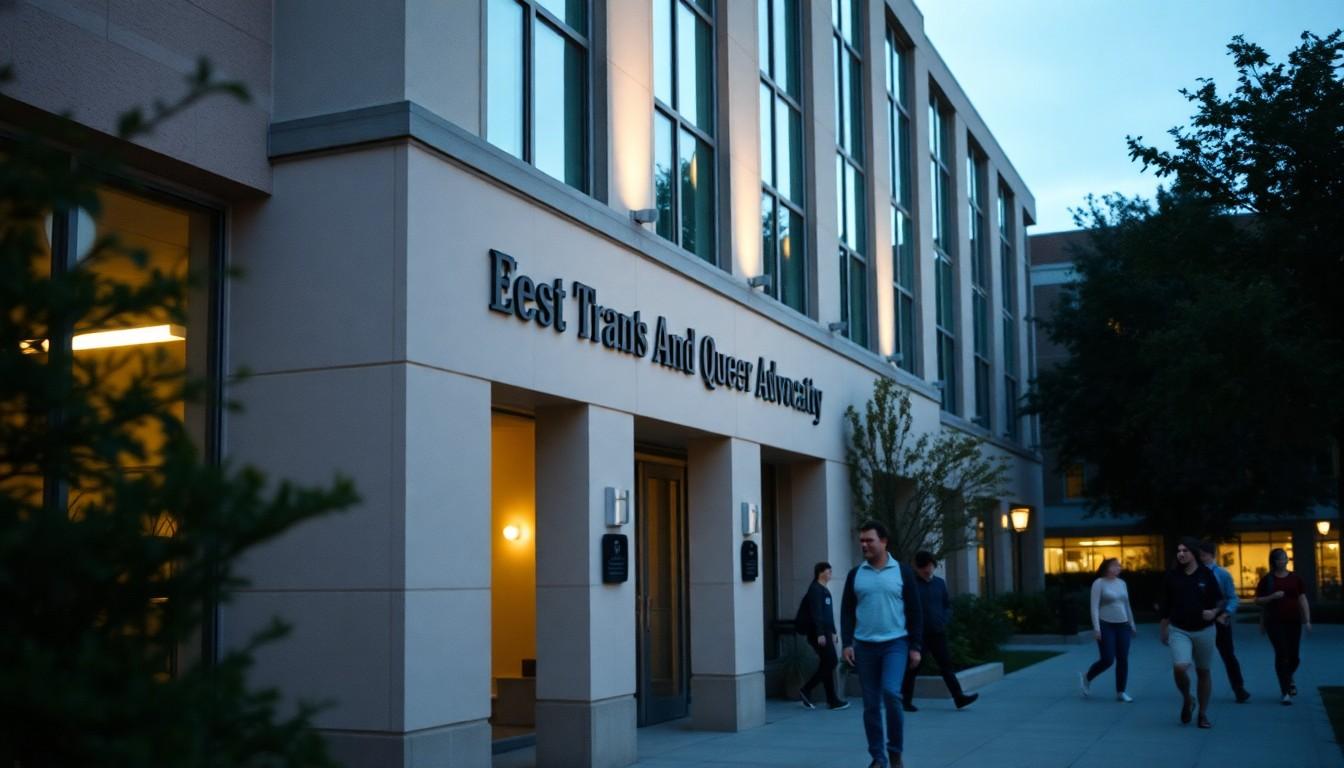
Education can be another route to freedom, particularly for students who have spent years editing themselves. A college or university that offers LGBTQ+ support isn't simply providing a nice extra. It can reduce the exhausting work of explaining why queer students deserve safety, recognition and room to thrive.
That support matters beyond the classroom. Students need places where they can ask questions, find peers and imagine a future without separating achievement from authenticity. For a queer Salvadoran student, seeing their culture and sexuality treated as compatible can be a small revelation, especially after years of hearing the opposite.
There is a practical lesson here for families, schools and employers. Inclusion works best when people don't have to campaign for basic dignity every time they enter a new room. The goal isn't to make someone fit more comfortably into an old mould. It's to stop pretending the mould was ever big enough.
The next chapter is already being written
Queer Salvadorans aren't footnotes to Salvadoran history. They're part of its present, from community organisers and artists to students, veterans, parents and professionals building lives that would once have seemed impossible.
Broader Salvadoran communities are also shaped by migration and changing ideas of belonging. Salvadorans living in the United States and elsewhere often carry culture across borders, adapting it while keeping family connections, food, language and memory alive. That same process applies to identity. Culture survives not by refusing change, but by making room for the people who are already living inside it.
The most hopeful idea is also the simplest: acceptance doesn't require anyone to choose between heritage and honesty. A person can honour the sacrifices that came before them while creating a life those sacrifices never quite anticipated. That's not betrayal. It's what belonging looks like when it grows.
Being queer and Salvadoran isn't a contradiction. It's one lived, complicated and entirely valid way of being Salvadoran.
Source Reference Map
Story idea inspired by: [1]
Sources by paragraph:
- Paragraph 1: [2], [7]
- Paragraph 2: [4], [5]
- Paragraph 3: [3], [6]
- Paragraph 4: [4], [5]
- Paragraph 5: [2], [6]
- Paragraph 6: [3], [5]
- Paragraph 7: [4], [6]
- Paragraph 8: [2], [7]
- Paragraph 9: [3], [5]
- Paragraph 10: [2], [6]
- Paragraph 11: [4], [5]
- Paragraph 12: [2], [7]
- Paragraph 13: [3], [6]
- Paragraph 14: [4], [5]
- Paragraph 15: [2], [7]