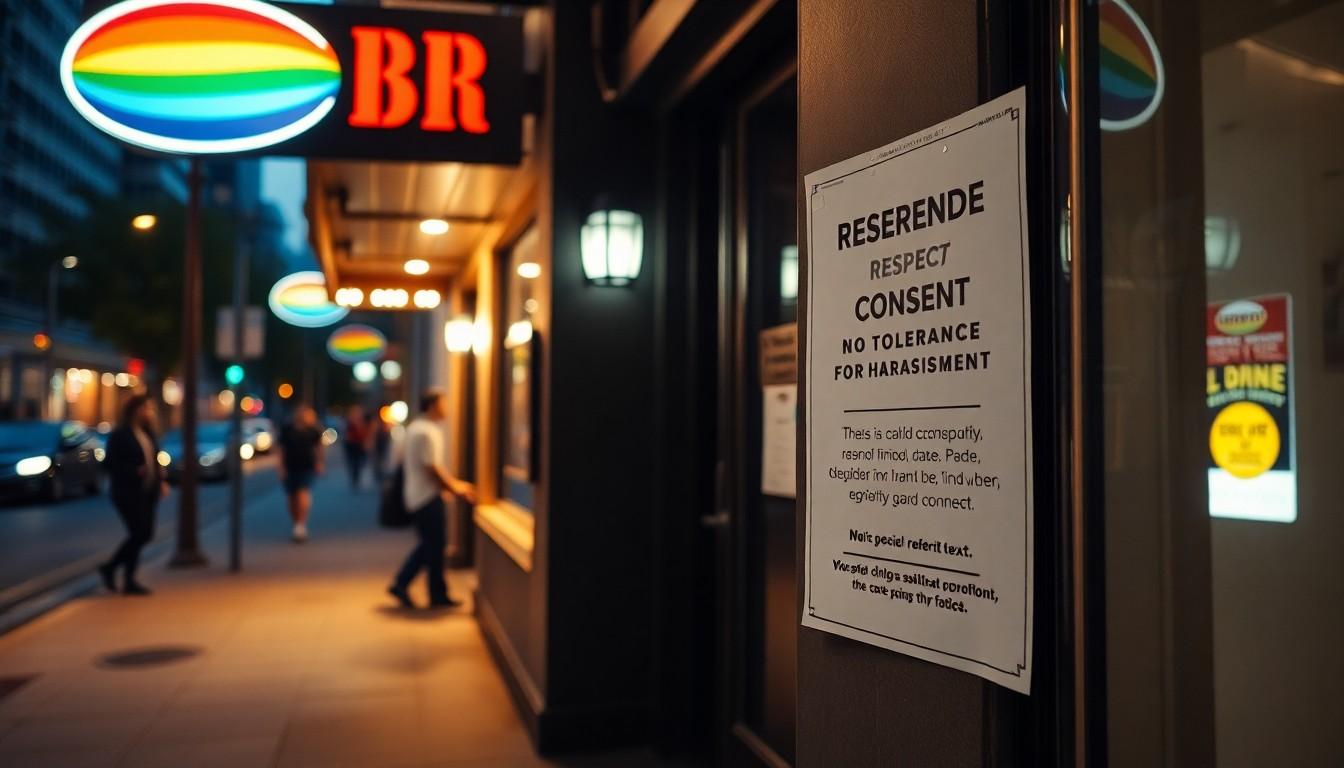
Visitors to gay bars, dance parties and queer gatherings deserve the same clear rules about consent as anyone else. A San Francisco political controversy has renewed debate over unwanted touching, community accountability and the dangerous idea that sexual assault should be judged by a different standard among gay men.
Essential Takeaways
- A gay venue isn't automatic consent: Being in a flirtatious or sexual environment doesn't give anyone permission to touch another person.
- Unwanted touching matters: Repeated grabbing, especially after someone objects, can amount to sexual assault.
- History isn't an excuse: Past discrimination and trauma may shape a generation, but they don't justify crossing another person's boundaries.
- Power raises the stakes: Allegations involving a political candidate demand serious scrutiny, not a quick redemption narrative.
- Good venues set clear expectations: Staff training, visible policies and trusted reporting routes can make nightlife safer.
A crowded bar isn't a free pass
The most important point is also the simplest: a gay bar is still a public space, not a blanket permission slip. Someone might be dressed provocatively, dancing closely or enjoying a flirtatious atmosphere, and still not want a stranger's hands on them.
That distinction can be easy to lose amid loud music, alcohol and the charged energy of queer nightlife. But the setting doesn't erase personal boundaries. As the original commentary makes clear, a person can be open to romance or sex while rejecting one specific touch, one specific person or one specific moment. Unwanted contact remains unwanted contact. The 48 Hills essay frames that tension through a personal encounter in a gay bar, while reporting by the San Francisco Standard placed the broader debate in the context of allegations involving Manny Yekutiel. [2], [3]
The practical rule is refreshingly unfashionable: ask first, pay attention to the answer and stop immediately when the answer is no. That applies whether the interaction happens in a Castro bar, a house party or a private club. [4]
Consent still applies in sexual spaces
There are venues where touching is part of the agreed atmosphere. Sex clubs, backrooms and certain parties may invite more direct sexual contact, but even there, consent isn't a one-time transaction at the door. It can be limited, withdrawn or renegotiated at any moment.
That's why venue culture matters so much. Clear signs, staff who know how to intervene and an atmosphere where people can complain without being mocked all help turn consent from a slogan into something usable. The 48 Hills piece contrasts those deliberately sexual settings with ordinary bars and parties, where proximity alone shouldn't be interpreted as willingness. [2]
For visitors, a useful test is to ask yourself whether the setting has explicitly established the behaviour as welcome. If not, keep your hands to yourself. A compliment, a smile or a dance can open a conversation; it shouldn't be treated as permission to skip one. Reporting on the allegations against Yekutiel has also highlighted how questions about boundaries can become questions about accountability when the accused holds public influence. [5], [6]
Why the generational argument falls short
Some older gay men lived through periods when queer intimacy was criminalised, stigmatised or driven underground. That history deserves understanding, but it doesn't create a special exemption from modern standards of conduct. Trauma may explain why a community developed certain habits; it can't make those habits harmless.
The generational defence is especially weak when it asks younger people to absorb conduct they didn't consent to. It also risks turning survival stories into shields for people who behave badly. The commentary argues that this logic can reproduce, rather than repair, the damage inflicted by decades of shame and silence. [2]
There has been a wider cultural shift towards naming sexual misconduct more clearly, including within LGBTQ+ communities. Coverage by the San Francisco Standard and San Francisco Chronicle shows how allegations in the D8 supervisor race prompted renewed attention to political responsibility, community responses and the risks of minimising claims. [3], [6], [7]
Political power changes the conversation
Allegations involving a private party and allegations involving a political candidate aren't identical, but they intersect when questions of trust and judgement come into play. Voters aren't only choosing someone to manage budgets or attend meetings; they're also deciding whom they believe should exercise authority.
That doesn't mean an allegation is the same as a finding of guilt. It does mean claims should be examined seriously, with room for due process and without dismissing complainants as oversensitive or treating a candidate's rehabilitation as the main event. The San Francisco Standard reported on the allegations, the candidate's political withdrawal and the fallout among supporters and local figures. [3], [5], [7]
For communities that have often had to fight to be believed, the stakes are particularly high. A quick appeal to loyalty can sound less like solidarity and more like an instruction to stay quiet. Accountability should be measured by actions, not by how familiar or well-liked someone is. [4], [6]
What safer nightlife can look like
For venue owners, the basics are practical. Train staff to recognise persistent unwanted touching, make it easy to report problems and give employees permission to act before a situation escalates. A calm intervention can spare someone the awkward, frightening task of defending themselves alone in a packed room.
For guests, trust your reaction. You don't need to produce a courtroom-quality explanation before moving away, telling a friend or asking staff for help. If someone keeps touching you after you've objected, the responsibility for the discomfort belongs with them, not you. [2], [4]
The encouraging news is that queer nightlife already has the tools to do better. Consent campaigns, community organisations and more confident conversations are making the language less mysterious. The challenge now is consistency, especially when the person accused is popular, powerful or protected by old habits. [5], [6]
A safer culture doesn't require less flirtation or less fun. It requires better listening, clearer boundaries and the humility to understand that desire is only exciting when it's shared.
It's a small rule with a big effect: ask first, listen closely and stop when the answer is no.
Source Reference Map
Story idea inspired by: [1]
Sources by paragraph: