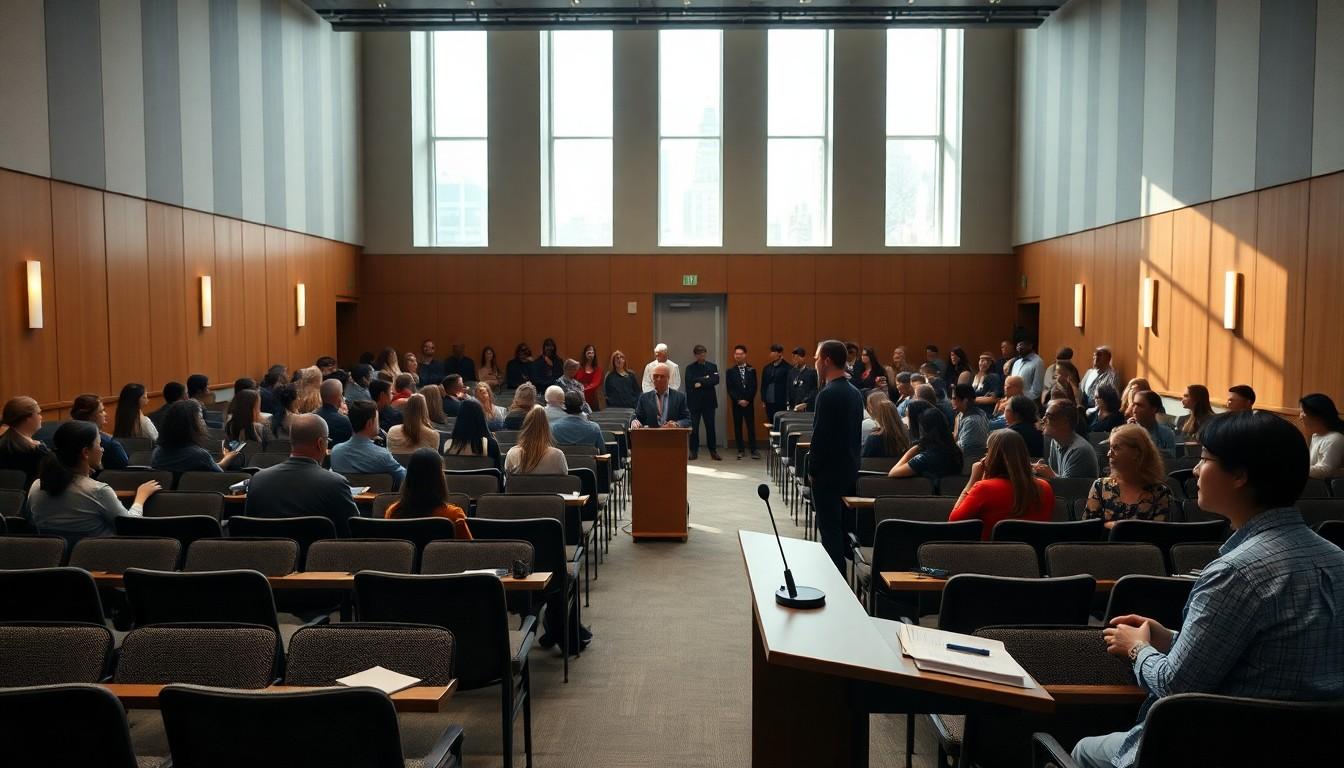
Readers are returning to Audre Lorde’s “The Master’s Tools Will Never Dismantle the Master’s House” because its challenge to narrow feminism remains startlingly current. First delivered at a 1979 conference in New York, the speech asks who gets heard, whose differences count, and whether genuine change is possible without shared power.
Essential Takeaways
- Difference is central: Lorde argues that race, sexuality, class and age must shape feminist thinking.
- Inclusion isn’t enough: Merely allowing marginalised voices into existing structures doesn't necessarily change those structures.
- Community creates strength: She presents interdependence between women as a source of freedom, creativity and political power.
- The famous metaphor endures: The “master’s tools” line warns against using oppressive systems as the main route to liberation.
- The speech remains widely circulated: It appears in quotation collections, books, videos and academic discussions.
A speech that refused the polite version of feminism
Audre Lorde's speech lands with the force of a door being pushed open. Delivered at New York University's Institute for the Humanities conference in 1979, it challenged a feminist conversation that, in her view, gave too little space to Black women, lesbians, poor women and women from the Global South.
The issue wasn't simply who had been invited. Lorde questioned the framework itself. If a conference examined feminism through structures shaped by racism, sexism and homophobia, could it really produce radical change? That question remains at the heart of how the speech is discussed today, including in educational recordings and public readings.
Lorde's argument was direct: feminism couldn't claim to speak for women while treating some women's experiences as specialist topics or late additions. That tension still feels familiar, particularly whenever institutions celebrate diversity without changing who makes decisions.
What does “the master’s tools” really mean?
The central metaphor is memorable because it is both simple and unsettling. Lorde argues that oppressive systems cannot be dismantled by relying exclusively on the habits, categories and power arrangements that created them.
The phrase is often repeated as a standalone quotation, but its meaning sits inside a wider argument. Lorde wasn't making a case for abandoning strategy, institutions or political organising. She was warning that a movement can lose its purpose when it tries to win approval on the existing system's terms.
Quote collections and reference works preserve the line in slightly different contexts, which helps explain why it travels so easily. It has become shorthand for a broader idea: reform can be useful, but reform alone may leave the underlying house standing.
Difference isn't a problem to smooth away
One of the speech's most important contributions is its insistence that difference can be productive. Lorde rejects the idea that solidarity requires women to pretend their lives are alike or to set uncomfortable distinctions aside.
Instead, she describes difference as a source of connection and creative tension. Race, class, sexuality and age affect how oppression is experienced, but recognising those differences can also help movements build more accurate, durable forms of collective action.
That is why her criticism goes beyond representation. Adding one Black woman or one lesbian speaker to a programme doesn't automatically transform the programme. The harder task is allowing those perspectives to alter the questions being asked in the first place.
Why intersectionality still points back to Lorde
Modern readers often encounter Lorde alongside discussions of intersectionality, although the speech itself uses its own language and political vocabulary. Its emphasis on overlapping forms of power helps explain why a single, universal account of “women's experience” can leave many women invisible.
Academic studies continue to revisit how feminist communication, identity and power operate across different social positions. Meanwhile, readers find the speech through online quotation pages, library catalogues and recorded talks, ensuring that its core challenge reaches far beyond the original conference room.
There is a practical lesson here for organisations, campaigners and workplaces. Ask who carries the cost of a policy, who has been left out of the room, and whether inclusion changes authority or merely decorates it. The answers are usually more revealing than a polished statement about values.
The lasting power of a difficult message
Lorde's speech remains influential because it doesn't offer the comfort of easy unity. It asks people who benefit from existing arrangements to examine that benefit, rather than treating marginalised voices as a final paragraph in an otherwise settled argument.
It also offers something more hopeful than criticism. Mutual support, interdependence and community are presented as ways to make difference a source of power rather than suspicion. That combination of steel and possibility is what gives the speech its staying power.
More than four decades later, the words still work as a test. When a movement talks about liberation, is it changing the structure, or simply learning to operate it more attractively? That's an uncomfortable question, but Lorde understood that discomfort can be the beginning of honesty.
It's a small sentence with a large demand: don't just enter the house, change what makes it stand.
Source Reference Map
Story idea inspired by: [1]
Sources by paragraph: