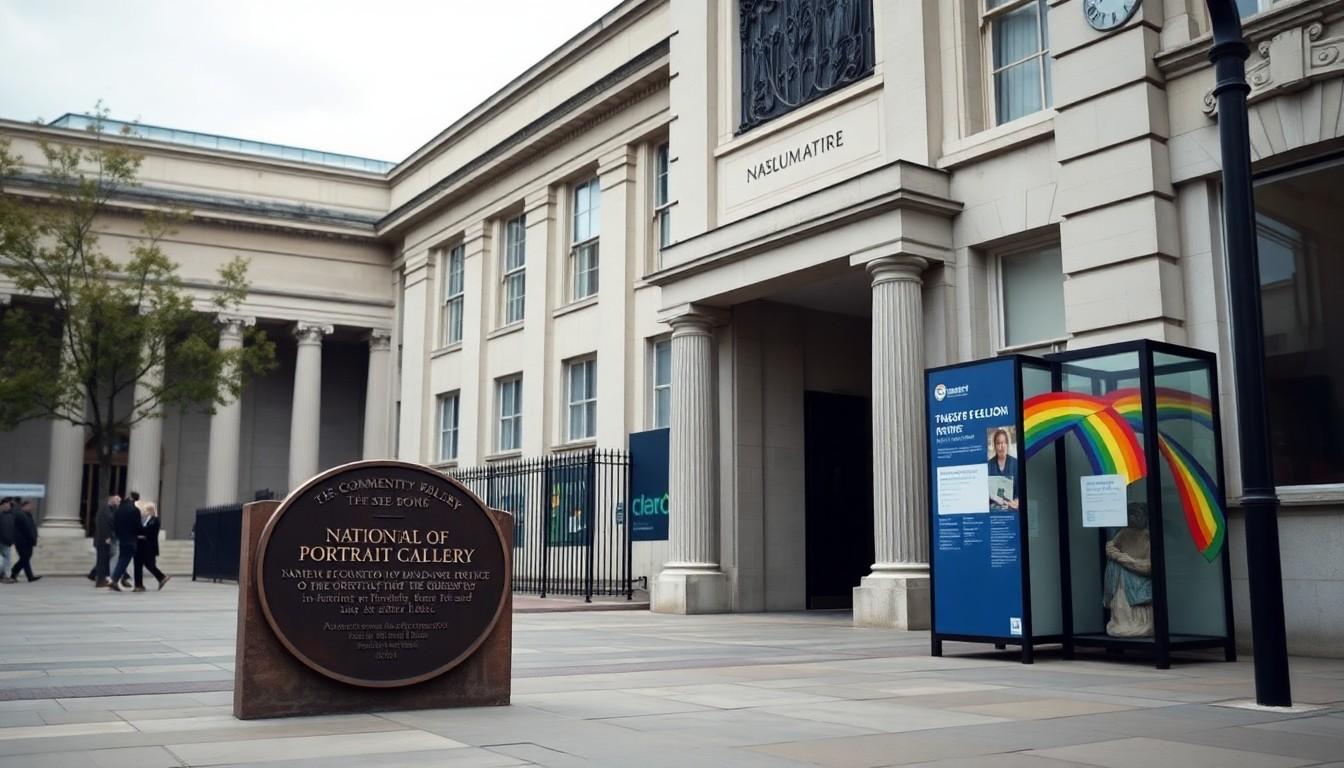
Visitors to London's National Portrait Gallery can step into Tim Walker's Fairyland: Love and Legends, a vivid portrait exhibition celebrating queer British life through fantasy, memory and community. Opening in October 2026, the show matters because it places activists, artists, carers and everyday pioneers alongside famous faces, giving overlooked histories the grandeur they deserve.
Essential Takeaways
- A six-year project: Walker's idea began with a plaque marking an early British gay rights protest in London.
- A broad community portrait: The exhibition includes activists, performers, writers, healthcare workers, veterans and cultural figures.
- Fantasy meets history: Renaissance-inspired portraits sit alongside Walker's familiar theatrical sets and surreal imagery.
- A deeply personal show: The fairyland theme turns childhood memories and experiences of homophobia into celebration.
- Some images are for adults: The exhibition's more explicit erotic work is grouped into an 18-plus area.
A plaque sparked something much bigger
The starting point was a chance discovery in Highbury Fields. Walker found a plaque describing the 1970 arrest of Louis Eakes and the protest that followed, organised by the Gay Liberation Front. The date caught him off guard: it was the day he was born.
That coincidence turned into a question about the people who marched, what became of them and how their stories might be remembered. According to the National Portrait Gallery, Fairyland: Love and Legends grew from that desire to connect personal lives with the wider history of queer Britain.
The result isn't simply a display of celebrity portraits. It feels more like a family album assembled across generations, only with Walker's soft-focus magic, elaborate styling and occasional visual mischief.
Portraits with history in every detail
Walker has photographed people including Ian McKellen, Troye Sivan and Chappell Roan, but the exhibition's emotional weight often comes from its less familiar subjects. Activists, nurses, doctors and community figures are given the same considered attention as international stars.
Some portraits draw on old master painting, particularly the formal atmosphere of Hans Holbein. Others use a clean white backdrop, allowing a person's expression, clothing or chosen object to take centre stage. The contrast keeps the exhibition from becoming visually predictable.
The National Portrait Gallery's exhibition listing highlights this mixture of historical reference and contemporary identity. A camera, a script, a newspaper or a familiar piece of clothing can become a quiet key to someone's life. That's a useful reminder that portrait photography isn't just about appearance; it's about what people carry with them.
AIDS history gives the show its emotional centre
One of the most affecting strands concerns the HIV and AIDS crisis. Walker includes people connected to the early reporting, medical response and long-term care that shaped queer life in Britain.
A newspaper from the early 1980s appears as a potent historical object, bringing back the fear and uncertainty of the period. Elsewhere, a portrait brings together a nurse, a former patient and a medical academic, turning scientific progress into something tactile and human: hands, posture and the instinct to care.
Art Fund describes the exhibition as a wide-ranging celebration of queer community and cultural memory. That breadth matters, because the story of AIDS isn't only about loss or medical breakthroughs. It's also about the people who stayed, treated patients, shared information and refused to let shame have the final word.
Why the fairy theme feels personal
The word "fairy" carries two very different histories for Walker. As a child, it belonged to a bedroom world of pixies, elves and garden hideaways. At school, he encountered it as an insult.
Fairyland reclaims the imaginative side of that word and turns it into a source of confidence. The sets, props and costumes aren't decoration for decoration's sake; they create a space where identities that were once mocked can appear grand, strange, tender and entirely at home.
Digital Camera World has noted Walker's reputation for enormous sets and storybook fantasy, making the exhibition's simpler white-background portraits especially revealing. They show that the theatricality can fall away when the sitter's presence is strong enough. Sometimes a quiet face against an empty background is the boldest image in the room.
Expect glamour, camp and a sharper edge
Visitors can expect the high drama associated with Walker's fashion work, but Fairyland also pushes into more sensual and explicitly erotic territory. The exhibition's later rooms explore fantasy, kink and queer desire through baroque styling, unusual props and deliberately surreal compositions.
That shift gives the show a little bite. It also explains why the more adult material has been separated into an age-restricted section, allowing the wider exhibition to remain accessible while acknowledging that queer lives include sexuality as well as activism, romance, work and family.
The exhibition's listings from Art Fund and Exhibitionary position it as a major London cultural event rather than a conventional fashion retrospective. That's the key distinction. Walker isn't only looking backwards at a successful career; he's using his visual language to ask whose stories deserve scale, beauty and attention now.
A career reframed through queer imagination
Walker is best known for fantastical fashion photography, but Fairyland gives that work a new context. Looking back, he sees the camp, theatricality and imaginative excess that ran through his earlier pictures as expressions of his own identity, whether he named them that way at the time or not.
The show also arrives as printed magazines and lavish editorial photography face a less certain future. Exhibitionary and the National Portrait Gallery present Fairyland as an ambitious physical experience, where large-scale portraits and carefully built displays can be encountered in person rather than reduced to a phone screen.
That may be the exhibition's most generous idea: fantasy isn't an escape from history. It can be a way of surviving it, remembering it and finally celebrating the people who made room for others. Walker's fairyland is glittering, but it has roots.
It's a bold reminder that queer history belongs in the grandest rooms.
Source Reference Map
Story idea inspired by: [1]
Sources by paragraph: