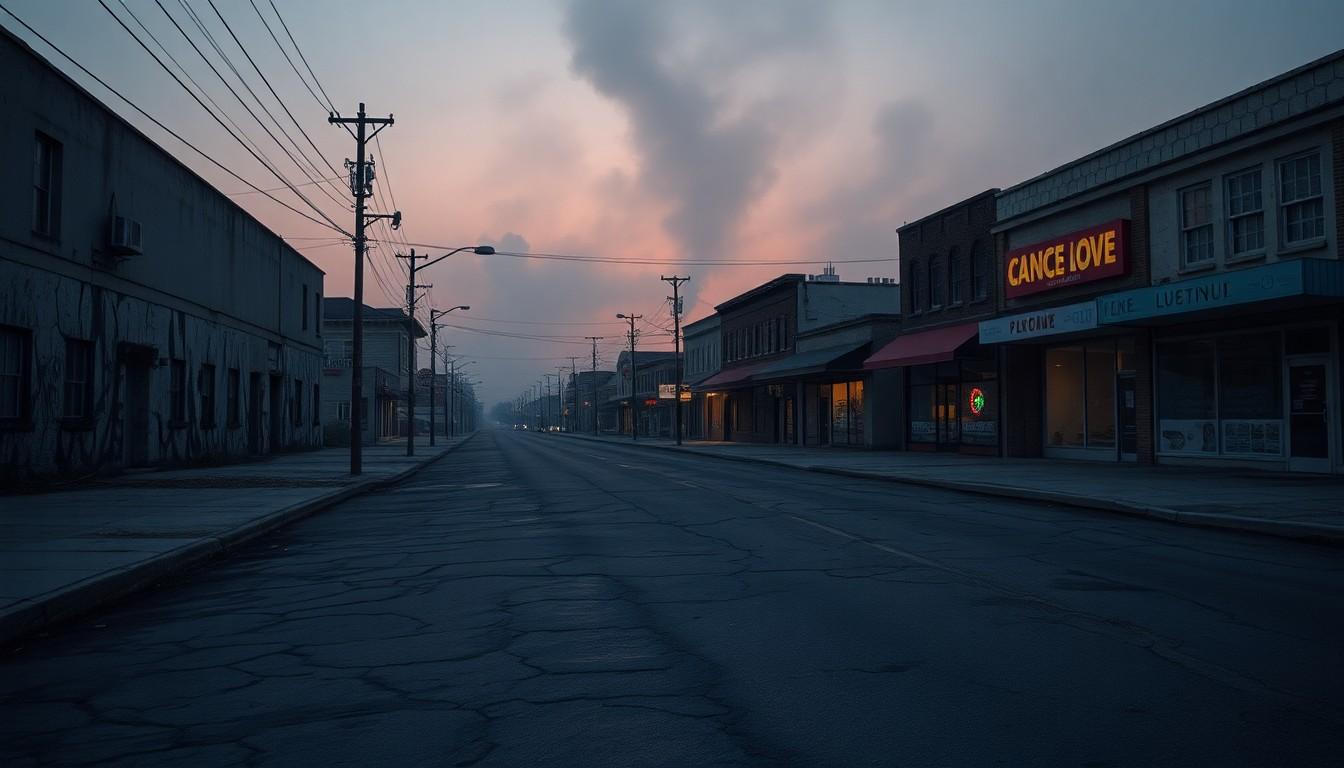
Viewers are turning to Scorch Marks, now streaming exclusively on Dekkoo, for a queer horror story where an end-of-the-world disaster collides with the more intimate terror of a controlling ex. Starring Chris Salvatore and Brandon Shypkowski, the film uses monsters, storms and emotional fallout to explore survival, identity and the possibility of healthier love.
Essential Takeaways
- A new queer horror release: Scorch Marks is streaming exclusively on Dekkoo.
- A relationship at the centre: Chris Salvatore plays Joel, whose apparent concern masks troubling control.
- The apocalypse has meaning: The film's disaster mirrors isolation, trauma and pressure to conform.
- Unlikable characters take the lead: Brandon Shypkowski's Beckett is flawed, selfish and forced to grow.
- Horror with emotional bite: The film turns familiar relationship fears into literal monsters and haunting encounters.
When the ex is more frightening than the apocalypse
The most unsettling thing in Scorch Marks isn't necessarily the storm raging outside. It's the moment when care starts to sound like control, and affection becomes difficult to separate from fear.
Chris Salvatore plays Joel, a man who doesn't always recognise the harm in his own behaviour. That distinction matters. Rather than presenting him as a cartoon villain, the film gives him enough warmth and insecurity to make his actions feel disturbingly plausible. As Salvatore explained to Las Vegas PRIDE Magazine, Joel may genuinely believe he's helping Beckett, which makes his version of love even harder to escape.
The result is a horror film with a recognisable emotional sting. The threat isn't simply something with claws in the darkness. Sometimes it's the person insisting they know what's best for you.
A post-apocalyptic setting with personal stakes
Scorch Marks began as part of a wider queer horror universe before being reshaped into a standalone feature. According to Dekkoo's announcement, the finished film centres on Beckett and Joel while using a collapsing world to examine toxic relationships, isolation and the expectations inherited from a heteronormative culture.
The setting gives those themes room to grow. A catastrophic storm hangs over the story, but the characters are also dealing with a more private kind of devastation. The world outside is falling apart, while Beckett must confront the patterns and wounds that have already taken root inside him.
That double pressure gives the film its strongest idea: surviving a disaster doesn't necessarily mean escaping the past. Sometimes it means finally looking at it without the usual excuses.
Why an unlikeable hero can work
Brandon Shypkowski's Beckett isn't designed as a spotless survivor. He's passive, arrogant and, at times, thoroughly irritating, which is precisely what makes his journey more interesting than a conventional heroic arc.
In an interview with the Los Angeles Blade, Shypkowski discussed the appeal of characters audiences want to understand rather than invite to dinner. It's a useful distinction. Beckett doesn't need to be instantly charming for viewers to care about what happens to him; he needs to feel recognisably human.
As the crisis intensifies, the external apocalypse begins to reflect Beckett's emotional state. The more he faces his trauma, the more capable he becomes of making clearer decisions. It's a modest but satisfying shift, and one that suggests survival can involve self-knowledge as much as physical endurance.
Queer horror turns old fears up loud
Horror has always been good at making invisible anxieties visible. In Scorch Marks, emotional baggage, internalised shame and unhealthy relationship habits are pushed into a heightened world of monsters and cosmic danger.
The cast expands that unsettling landscape. Peter Stickles plays Leith, a volatile survivalist wrestling with internalised homophobia, while Tiffany Shepis appears as an ominous technology executive. Vander Von Odd plays Tiamat, a primordial presence drawing on ancient Mesopotamian mythology and cosmic horror.
For LGBTQ+ audiences, that genre freedom can be cathartic. As Salvatore told The Pink Times, horror can give shape to the fears people carry around in their heads. A demonic former partner may sound fantastical, but the emotional conversation can still feel uncomfortably familiar.
What the film says about healing after control
Beneath the spectacle, Scorch Marks asks a quieter question: how do people learn to separate present-day love from old patterns of harm?
Salvatore has spoken about the way past relationships can influence reactions to new ones. A phrase, tone or gesture may trigger an old wound, even when the person in front of you isn't the person who caused it. That doesn't mean every concern should be dismissed as trauma, but it does make patience and discernment important.
The film's hopeful note comes from that possibility of change. A damaging relationship can affect confidence and self-image long after it ends, but it doesn't have to dictate everything that follows. Dekkoo's release coverage presents the story as more than a bleak survival exercise, and that balance is welcome. The monsters may be memorable, but the real comfort lies in the suggestion that safer love is still possible.
For viewers looking for queer apocalyptic horror with emotional depth, Scorch Marks offers plenty to unpack after the credits roll. It may even leave you wondering whether your own apocalypse plan includes snacks, a first-aid kit or an extremely reliable group chat.
A queer horror film where surviving the end of the world starts with facing what came before.
Source Reference Map
Story idea inspired by: [1]
Sources by paragraph:
- Paragraph 1: [2], [4]
- Paragraph 2: [3], [5]
- Paragraph 3: [6], [7]
- Paragraph 4: [4], [5]
- Paragraph 5: [3], [6]
- Paragraph 6: [2], [4]
- Paragraph 7: [3], [5]
- Paragraph 8: [5], [6]
- Paragraph 9: [2], [4]
- Paragraph 10: [3], [5]
- Paragraph 11: [4], [7]
- Paragraph 12: [5], [6]
- Paragraph 13: [2], [4]
- Paragraph 14: [3], [5]