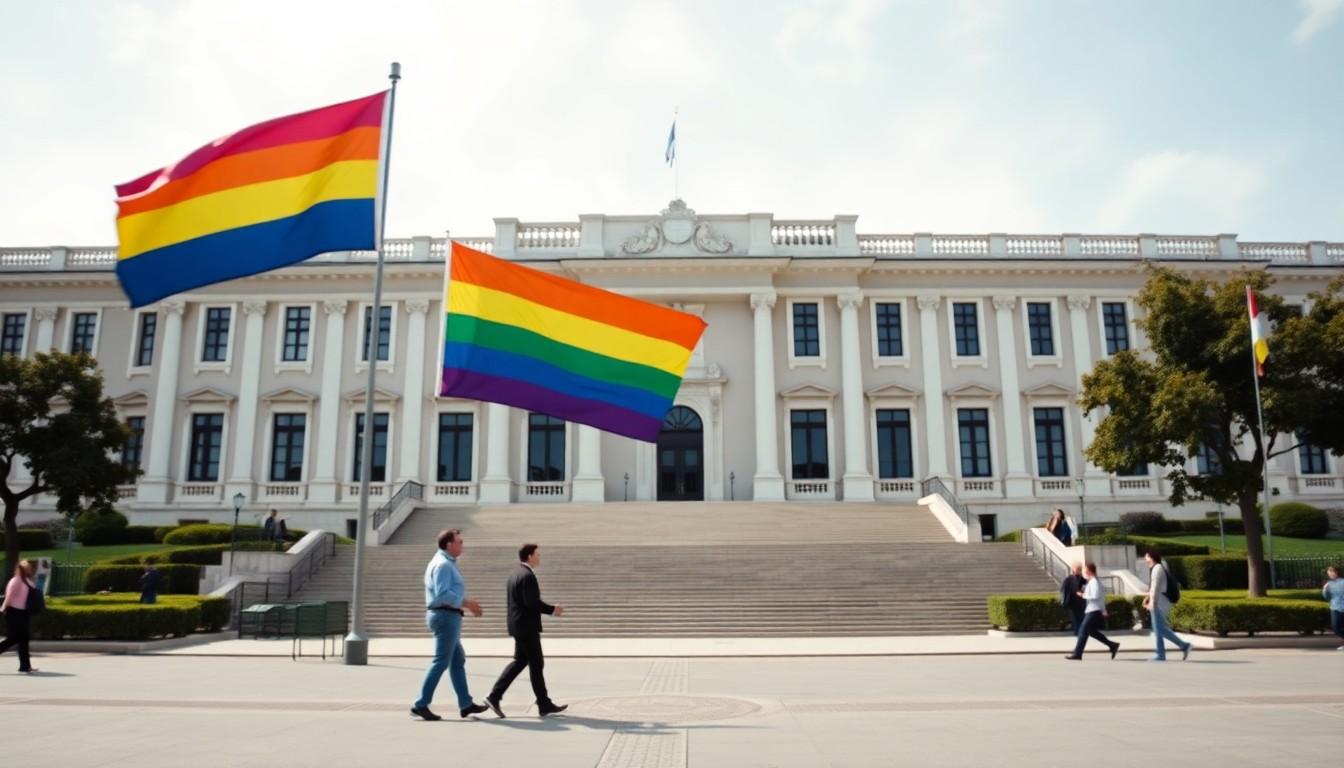
European lawmakers are watching Portugal’s gender identity law debate closely as MPs consider proposals that could change civil registration rules and restrictions on healthcare for young people. The dispute matters because it sits at the crossroads of personal autonomy, medical decision-making and the country’s wider human rights commitments.
Essential Takeaways
- Three proposals are under discussion: The PSD, Chega and CDS-PP have put forward separate measures affecting legal gender recognition and healthcare.
- The current framework dates from 2018: Law 38/2018 removed the need for medical validation in gender and name changes on civil records.
- The proposed changes differ: Some would restore medical requirements, while others target puberty blockers and hormone treatment for under-18s.
- European concern is growing: The European Parliament’s LGBTIQ+ Intergroup says the proposals could weaken protections for trans and intersex people.
- Portugal’s equality body supports the existing approach: The Commission for Citizenship and Gender Equality has said the current law is consistent with international standards.
Why Portugal’s gender identity law is back in the spotlight
Portugal’s gender identity law is facing a fresh political test, with three bills seeking to revise protections introduced in 2018. The proposals cover everything from how someone changes their name and gender in official records to what medical support may be available to young people experiencing gender dysphoria.
The debate has quickly moved beyond Lisbon. The European Parliament’s LGBTIQ+ Intergroup said the plans risk rolling back safeguards for trans and intersex people, while European organisations have also warned of a possible attack on established rights, according to reporting by Correio da Manha. [6]
For people directly affected, this isn't an abstract legal argument. A civil registry document can shape everyday moments, from collecting a parcel to starting a job, while healthcare rules can influence deeply personal decisions made by families and clinicians.
What the three proposals would change
The PSD proposal would repeal the 2018 framework and return to rules associated with the 2011 system. In practical terms, that would bring back medical validation for changing a person’s legal name and gender, according to the reporting on the parliamentary proposals. [7]
Chega’s bill takes a similar approach on civil registration but also seeks to prohibit medical treatments for gender dysphoria in people under 18. CDS-PP has separately proposed banning puberty blockers and hormone therapies for minors, citing precaution and concerns about possible physical and psychological effects. [7]
That means the bills aren't identical, even though they overlap. One focuses heavily on legal recognition, another combines registration with healthcare restrictions, and the third puts particular emphasis on delaying treatment decisions until adulthood.
Supporters and critics are drawing different lines
Supporters of the proposals frame them around safeguarding children, caution in medical practice and the role of parents and clinicians. Critics argue that broad restrictions could prevent individualised care and replace medical judgement with a one-size-fits-all rule.
LGBTI organisations have criticised the PSD, Chega and CDS-PP plans as a serious reversal of progress, according to Correio da Manha. [3] Other associations have described the proposed changes as a major setback and expressed sadness at the direction of the debate. [4]
The Commission for Citizenship and Gender Equality, meanwhile, has defended the existing law as being aligned with international standards. That position gives the argument an important institutional dimension: the question is not only what Parliament wants to change, but whether the current framework is already meeting recognised rights principles. [2]
Why the 2018 framework matters
Law 38/2018 was designed to protect gender expression and sexual characteristics while making legal recognition less dependent on medical approval. Its supporters see that as a move towards autonomy, dignity and fewer administrative barriers.
The European Parliament’s LGBTIQ+ Intergroup says the law was appropriate and has urged Portuguese MPs to reconsider the proposed revisions. It has also called on the European Commission to monitor developments and ensure that Portugal respects European and international commitments on equality and fundamental rights. [6]
That appeal adds pressure to an already sensitive national discussion. Any amendment would be watched not just for its wording, but for its real-world effect on access, privacy and the ability of trans and intersex people to deal with public services without unnecessary scrutiny.
What happens next in Parliament?
The proposals remain part of an active parliamentary process, with votes revealing a sharp divide between the right and left. Reporting on the approved projects showed opposition from left-wing parties and the Liberal Initiative, underlining how politically charged the issue has become. [7]
The debate may also bring further scrutiny from government bodies. The Left Bloc has called for an urgent hearing involving the culture minister and the Commission for Citizenship and Gender Equality, according to Correio da Manha. [5]
For now, the outcome is uncertain, but the central question is clear: should Portugal preserve a self-determination model introduced in 2018, or return to a system with more medical oversight and tighter limits on treatment for minors? The answer will be closely followed at home and across Europe.
The coming votes could shape not only Portuguese paperwork and healthcare policy, but the country’s reputation as a rights-focused European state.
Source Reference Map
Story idea inspired by: [1]
Sources by paragraph: