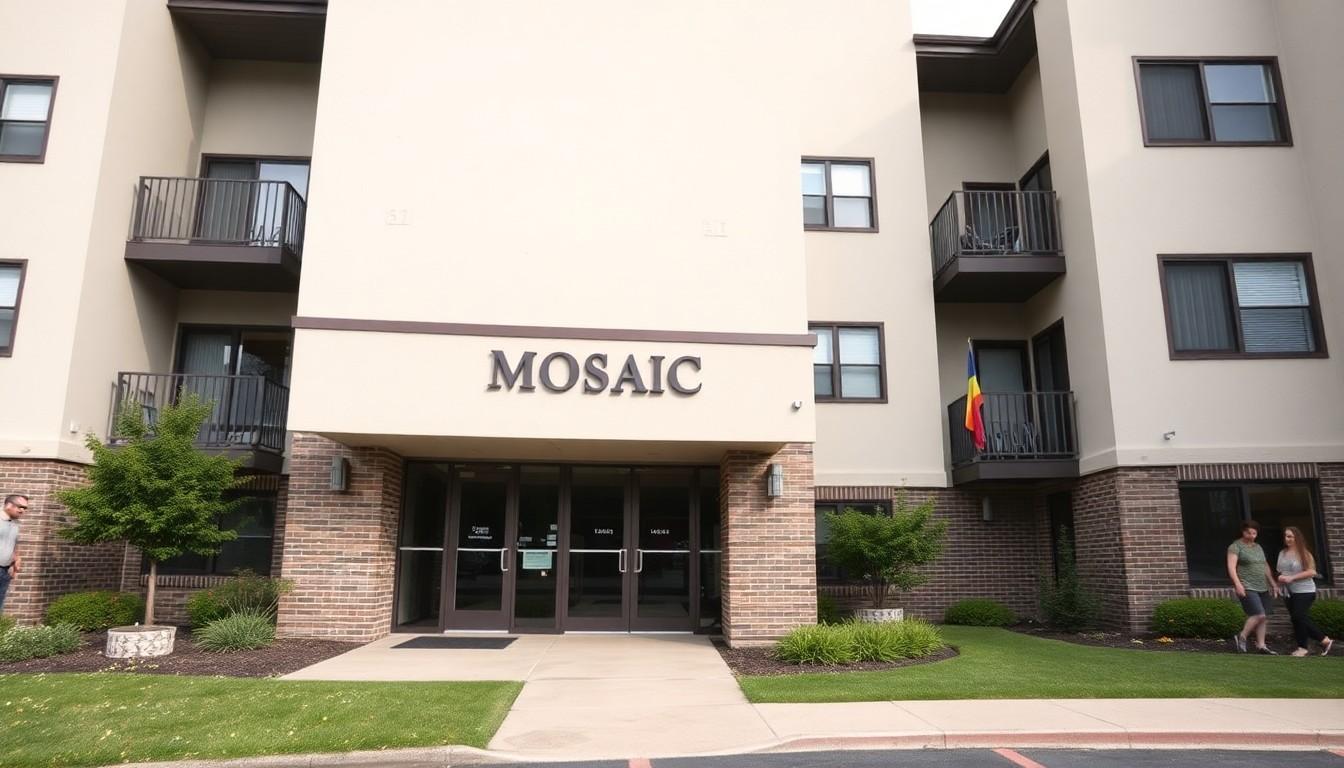
Residents are settling into Mosaic Apartments in Oakland, Pittsburgh, a new affordable housing community designed to offer older LGBTQ+ adults safety, dignity and connection. With accessible homes, shared spaces and a strong sense of identity, the development matters far beyond its colourful facade.
Essential Takeaways
- A regional first: Mosaic is the first LGBTQ+-focused senior housing development in Western Pennsylvania.
- Affordable by design: Residents pay 30% of their annual gross income, with rents capped at $1,500 a month.
- Built for later life: The five-storey building includes accessible homes, lifts, parking and communal facilities.
- More than bricks and mortar: Residents have access to social spaces and support intended to reduce isolation.
- Demand is high: The waiting list is more than twice the size of the current resident community.
A new kind of welcome in Pittsburgh
Mosaic Apartments stands out before you even step inside. Its angular facade catches the light as people pass, shifting through blue and green tones that reflect the diversity of the community, according to the project’s design team.
That visual statement is important, but the real impact is quieter. For residents who have spent decades facing hostility, hiding parts of themselves or worrying about discrimination at home, a secure front door can feel like a profound luxury. The Housing Authority of the City of Pittsburgh described the development as the region’s first affordable housing community created specifically with LGBTQ+ older adults in mind.
Mosaic opened in November 2025 with 53 homes. It was developed through a partnership involving Presbyterian SeniorCare Network and local housing agencies, bringing together public support, nonprofit expertise and a clear response to a long-standing gap in the market.
Why LGBTQ+ senior housing is increasingly urgent
Older LGBTQ+ adults are more likely than their heterosexual and cisgender peers to live alone and may be less likely to have children or a spouse available to provide care. That can make ordinary housing challenges, such as rising rents, mobility needs and social isolation, feel much heavier.
SAGE USA estimates that millions of LGBTQ+ older adults live in the United States, with the population expected to grow sharply over the coming years. Industry coverage from LeadingAge PA also points to the expanding need for housing that is not only affordable, but affirming.
Affordability is central here. Many older adults have spent their working lives navigating employment discrimination, interrupted careers or lower earnings. A rent linked to income can therefore offer more than a cheaper monthly bill. It can provide breathing room for food, medicine, transport and the occasional pleasure of a life beyond simply keeping up with rent.
What residents get for their money
Mosaic's homes are designed around practical comfort. Residents can use a lift, secure entry points, communal rooms and accessible features, while the building also includes parking and a dog-washing area. For anyone who has wrestled with stairs, a large old house or unreliable building security, these details are hardly minor.
The community's location is another advantage. Being near public transport and everyday services helps residents remain independent, especially those who no longer drive. A well-placed home can make appointments, shopping and social visits feel manageable rather than exhausting.
Rent is calculated at 30% of annual gross income, with income limits applying to applicants. Project information from Presbyterian SeniorCare and its partners shows how the model is intended to keep homes within reach of older adults on fixed or modest incomes.
For fast-moving renters and their families, the practical lesson is simple: check eligibility early, gather income documents and ask about waiting lists. Affordable developments often fill long before the official opening, and Mosaic's strong demand proves that patience may be part of the process.
Safety means emotional security, too
A secure entrance or camera can help, but residents describe safety in broader terms. It also means not having to explain a partner, defend a gender identity or wonder whether a neighbour will turn hostile in a corridor.
That distinction is especially meaningful for people who grew up when LGBTQ+ rights were far less visible and social attitudes were often openly cruel. The construction company and project partners describe Mosaic as a community built around accessibility, affordability and inclusion, but residents' experiences show why those words need to be felt day after day.
Shared living still brings challenges. Mosaic requires residents to follow behaviour standards, and management has said bullying and harassment can lead to lease consequences. That matters because an LGBTQ+-friendly building cannot rely on its branding alone. It must actively protect trans residents and respond when community life becomes uncomfortable.
In other words, safety is not a finished product delivered with the keys. It's an ongoing promise, tested in lifts, laundry rooms and shared lounges.
Community could be the biggest amenity
The risk of loneliness is one of the strongest arguments for this kind of development. A community room, resident events and informal conversations in the hallway can help replace the social networks that many older people lose after retirement, bereavement or a move.
Mosaic's shared spaces also carry symbolic weight. A room named in honour of LGBTQ+ activist Kathi Boyle connects the building to the campaign that helped bring it into existence. It reminds residents that the development is part of a much longer story, rather than a sudden piece of fashionable real estate.
The demand suggests the idea has landed. Reports from local housing organisations indicate that the waiting list has grown well beyond the number of available homes, while Presbyterian SeniorCare has said it would consider similar projects if the right site and financing could be found.
That may be the next test. Mosaic shows what's possible, but it also underlines how many older LGBTQ+ adults still need housing where affordability and belonging come as part of the same address.
It's a colourful building, but its most important feature may be the feeling of finally being able to relax at home.
Explore housing options that make safety, affordability and community part of everyday life.
Source Reference Map
Story idea inspired by: [1]
Sources by paragraph:
- Paragraph 1: [2], [3]
- Paragraph 2: [4], [7]
- Paragraph 3: [2], [3]
- Paragraph 4: [5], [6]
- Paragraph 5: [5], [6]
- Paragraph 6: [2], [3]
- Paragraph 7: [4], [5]
- Paragraph 8: [3], [4]
- Paragraph 9: [2], [5]
- Paragraph 10: [3], [7]
- Paragraph 11: [2], [6]
- Paragraph 12: [5], [7]
- Paragraph 13: [2], [3]
- Paragraph 14: [4], [7]
- Paragraph 15: [2], [3]
- Paragraph 16: [5], [6]
- Paragraph 17: [2], [7]