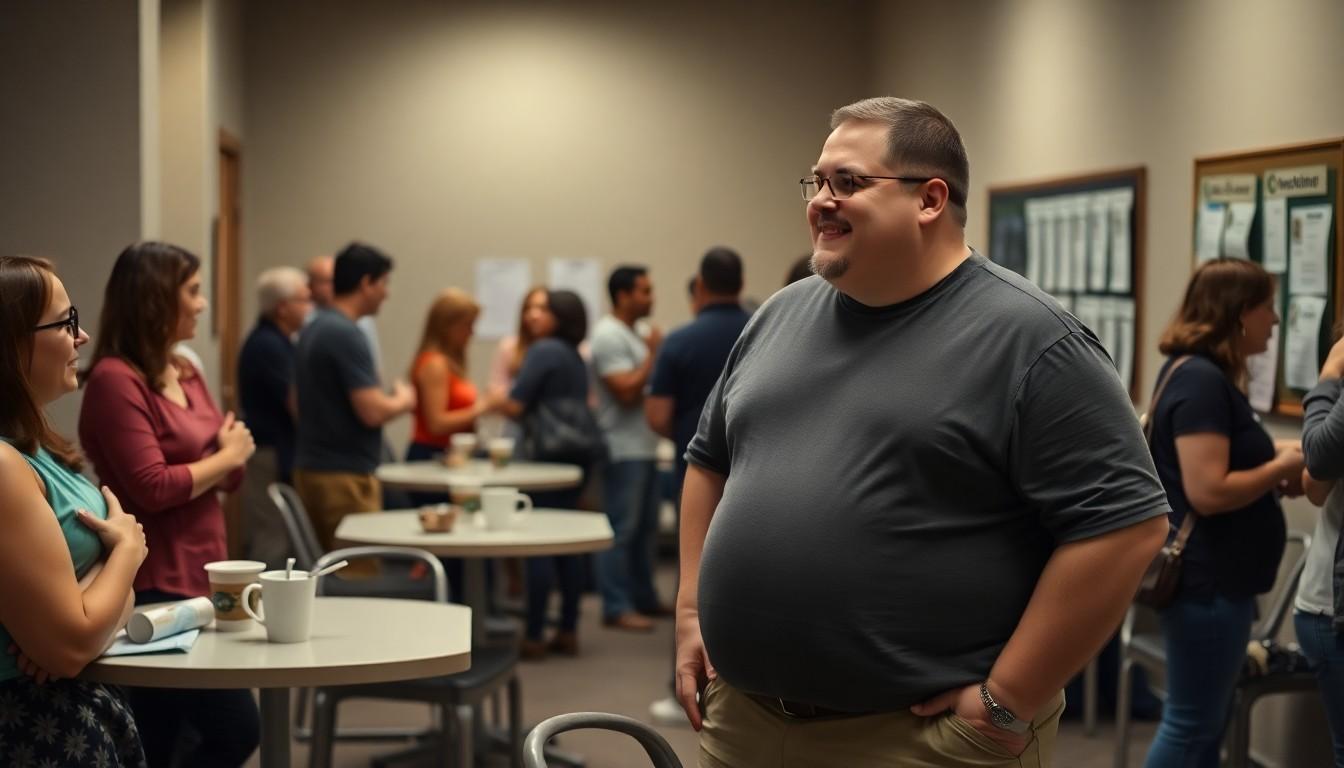
Finding friends or romance as a fat, gay, trans and possibly autistic person can feel daunting, especially when queer spaces carry their own narrow body ideals. But supportive communities, specialist platforms and low-pressure events can make meeting people feel safer, kinder and far less like a test.
Essential Takeaways
- You aren't the only one: Fat, trans and autistic queer people often face overlapping social pressures.
- Start with safer spaces: Look for communities that clearly welcome different bodies, identities and communication styles.
- Online can ease the pressure: Friendship and dating platforms let you build trust before meeting in person.
- Take attraction slowly: A friendly person may simply enjoy your company, but boundaries and public first meetings still matter.
- Events can help: Fat queer and trans gatherings offer an easy point of connection when small talk feels awkward.
Queer spaces don't always feel as inclusive as they promise
The hardest part isn't necessarily meeting people. It can be believing that people might genuinely want to meet you, rather than feeling sorry for you or waiting to ask for something. That suspicion can turn an ordinary conversation into a mental detective story, complete with clues nobody else can see.
For fat trans men, queer dating can bring a particularly tangled set of expectations. Some spaces centre slim bodies, others treat transness as a question mark, and some seem welcoming only if you fit a very specific version of masculinity. That doesn't mean the wider community has no place for you. It means choosing your spaces carefully matters.
Specialist communities can make that search less exhausting. Platforms such as Grommr and Oomphfy are built around body-positive or size-focused connections, while Hips, Crips, Queers offers a more community-led space for people whose identities and bodies may be sidelined elsewhere.
Friendship is a perfectly good place to begin
If dating feels like too much, friendship isn't a consolation prize. It gives you room to practise conversation, notice how people treat you and discover what makes you feel relaxed around someone. You don't need to become dazzling at parties overnight; showing up repeatedly is often the real social skill.
A useful opening can be wonderfully ordinary. Ask how someone knows the host, comment on the music, or say that you don't know many people there. Plenty of guests are quietly hoping somebody else will make the first move. Awkwardness isn't proof that you've failed. Sometimes it's simply the first shared experience.
For online connection, ND Friends is aimed at neurodivergent people seeking friendship and community. UniqMeet also offers another route into meeting people beyond the usual dating-app circuit. These options won't remove every risk, but they can make the first conversation feel less exposed.
Fat-positive events can offer genuine common ground
A fat appreciation event isn't automatically the right environment, so it makes sense to check its language, organisers and community guidelines before attending. Look for clear statements on trans inclusion, pronouns, harassment and accessibility. If the welcome feels vague or conditional, that's useful information.
Fat queer and trans events can be especially valuable because they bring several shared experiences into the same room. Daya Yoga Studio, for instance, lists fat queer trans yoga, combining movement with a space designed around belonging rather than changing your body. The point isn't to perform confidence. It's to find somewhere you can breathe.
Hips, Crips, Queers takes a broader community approach, which may appeal if you want conversation and connection without the pressure of a conventional singles event. Arriving with one trusted friend can also help, as can setting a modest goal such as speaking to one new person before heading home.
What to do when someone attractive keeps talking to you
It’s possible that the handsome man who approaches you simply likes your company. Anxiety is very good at filling in missing information with the bleakest available explanation, but friendliness isn't automatically pity or manipulation. Still, attraction should be explored with curiosity rather than pressure.
Try a small invitation instead of a grand confession. Suggest coffee after class, a walk somewhere busy, or a casual event with an easy end time. If he responds warmly, you can continue. If he becomes pushy, ignores your boundaries or only contacts you when he wants something, that tells you plenty.
Keep first dates public, tell a friend where you'll be and arrange your own way home. These precautions aren't a judgement on him. They're simply good dating habits, particularly when you're still learning whether somebody is safe and respectful.
Build a social life at your own pace
You don't have to diet, reshape yourself or become more conventionally outgoing before you're allowed to date. The right people won't require you to win approval by making yourself smaller, quieter or easier to categorise. Your body and identity aren't obstacles that friendship must help you overcome.
A gentle plan might involve one online community, one local event and one low-stakes invitation. Notice how your body feels afterwards. Energised, calm and curious are promising signs; tense, diminished and frightened are signals to pause and reassess.
And if a particular group isn't welcoming, leave it behind. A bad room isn't evidence that every room will be bad. Somewhere among the quieter meet-ups, specialist platforms and kind people who enjoy your company, there may be a much better fit.
You deserve connection that feels safe, mutual and comfortably yours.
Source Reference Map
Story idea inspired by: [1]
Sources by paragraph:
- Paragraph 1: [2], [3]
- Paragraph 2: [4], [7]
- Paragraph 3: [5], [6]
- Paragraph 4: [2], [5]
- Paragraph 5: [6], [7]
- Paragraph 6: [3], [4]
- Paragraph 7: [2], [5]
- Paragraph 8: [6], [7]
- Paragraph 9: [3], [4]
- Paragraph 10: [2], [5]
- Paragraph 11: [6], [7]
- Paragraph 12: [3], [4]
- Paragraph 13: [2], [5]
- Paragraph 14: [6], [7]
- Paragraph 15: [3], [4]
- Paragraph 16: [2], [5]
- Paragraph 17: [6], [7]
- Paragraph 18: [3], [4]
- Paragraph 19: [2], [5]
- Paragraph 20: [6], [7]