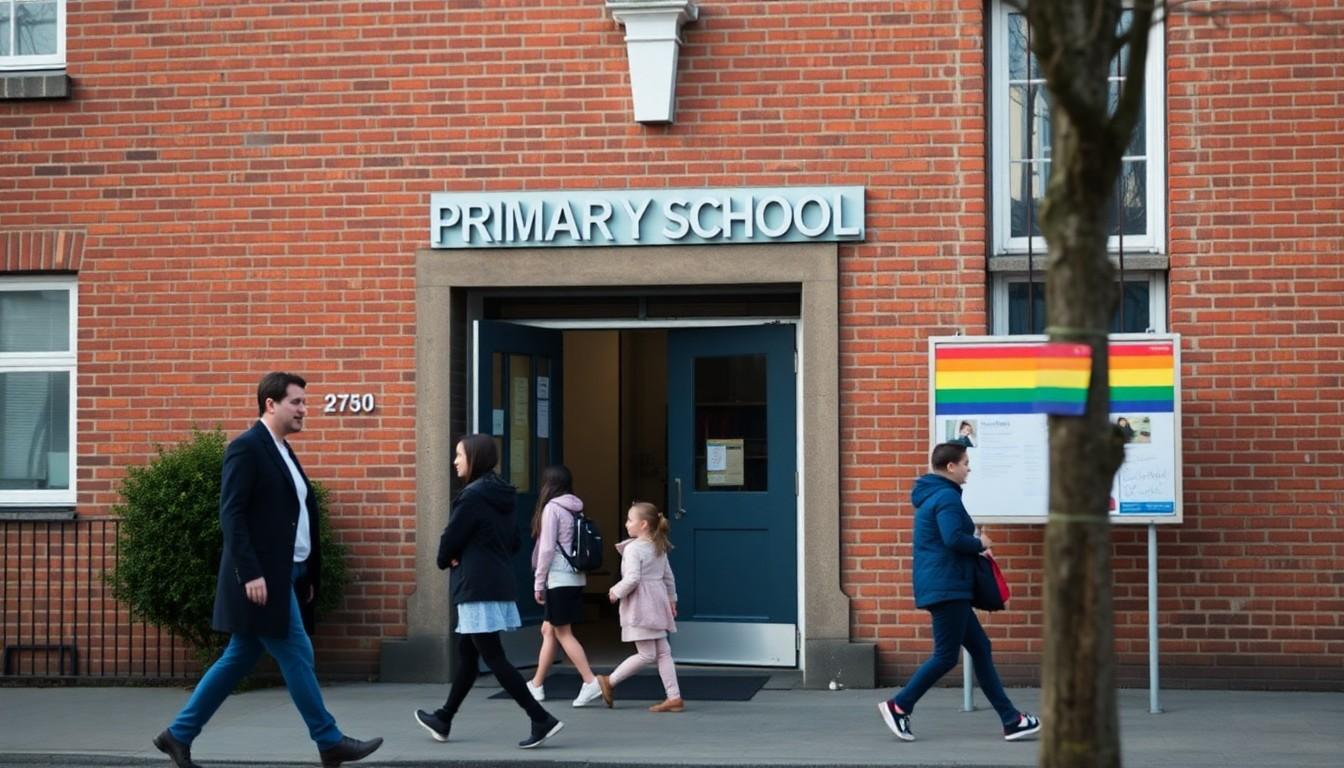
Teachers are navigating a delicate balance between privacy, visibility and safety as LGBTQ+ inclusion becomes a bigger part of school life. In Berlin, one openly gay primary teacher’s experience shows why representation can matter to children, while also revealing the emotional cost of coming out again and again.
Essential Takeaways
- Coming out is personal: LGBTQ+ teachers may face questions from pupils, parents and colleagues, often without knowing how people will react.
- Representation helps: Visible role models can reassure children who are questioning their identity or growing up without LGBTQ+ examples.
- Schools reflect society: Classrooms bring together families with very different cultural, religious and political backgrounds.
- Support matters: Diversity groups, staff networks and clear anti-discrimination policies can help teachers respond safely and consistently.
- Visibility carries risk: Being open can build trust, but it may also expose teachers to prejudice, harassment or violence.
A simple question can change everything
For Jörg Begler, the moment arrived during a school break in Berlin. A pupil asked whether he was gay, and the question landed before he had worked out exactly how he wanted to answer.
Rather than shutting the conversation down, Begler asked what the child understood by the word. The exchange continued over time, eventually leading him to confirm that he was gay. It was a quiet moment, but it opened the door to further questions from other pupils.
The experience reflects a wider tension in schools. Children are curious about the adults around them, yet teachers aren't required to disclose intimate details about their lives. For LGBTQ+ staff, however, simply mentioning a partner can become a highly visible act.
Why representation in primary schools matters
Begler believes younger children benefit from meeting a wider range of adults, including openly LGBTQ+ teachers. That doesn't mean turning lessons into personal testimony. Instead, it makes diversity part of ordinary school life, rather than something discussed only in special assemblies or themed projects.
The GEW Berlin has highlighted the importance of sexual education that recognises different identities and family structures. Its work on diversity in education places inclusion within the broader responsibilities of schools, alongside respect, participation and protection from discrimination.
For some pupils, a visible teacher may be the first positive LGBTQ+ example they encounter. That can be especially important for children growing up in families or communities where homosexuality is rarely mentioned, or discussed only negatively.
A role model doesn't need to make a grand speech. Sometimes it's simply an adult who seems comfortable, competent and accepted. That everyday normality can be surprisingly powerful.
The classroom contains the whole world
Berlin schools can include children from rainbow families, conservative households, migrant communities and families shaped by war or political conflict. Those experiences don't disappear at the school gate. They arrive in the classroom, sometimes in the form of difficult questions or sharp disagreements.
The AG Schwule Lehrer describes itself as a network supporting gay teachers and advocating for a more inclusive approach to education. Such networks give staff somewhere to share experiences, discuss policy and think through difficult situations before they happen.
That preparation matters. A teacher facing a hostile comment shouldn't have to improvise a response alone, especially when the incident involves a pupil, a parent or a colleague. Clear school-wide expectations make it easier to protect both the teacher and the learning environment.
According to the GEW's work on diversity, inclusion is strongest when it isn't left to one enthusiastic member of staff. It needs backing from school leadership, colleagues and established procedures.
Why many queer teachers stay private
Coming out at work can feel like stepping into a spotlight. Teachers are assessed by pupils, families, colleagues and management, while also representing a public institution. Any concern about authority, job security or personal safety can make disclosure feel like an unnecessary gamble.
The network Schwule Lehrer Berlin has long argued for better protection and visibility for gay educators. Its political work reflects a simple reality: legal equality doesn't automatically remove prejudice from school corridors, staffrooms or parents' meetings.
There is also a familiar double standard. Straight teachers may mention a husband, wife or children without anyone treating it as a declaration. An LGBTQ+ teacher can make the same ordinary reference to a partner and suddenly be accused of making their private life public.
So the decision isn't merely about openness. It's about whether a teacher should have to edit everyday conversation to avoid being identified. Many choose privacy not because they feel ashamed, but because they are weighing the likely consequences.
Safer schools need more than good intentions
A supportive school should have practical measures in place before a problem appears. Staff need a clear route for reporting harassment, leadership must respond consistently, and pupils should learn that homophobic and transphobic language isn't harmless banter.
The GEW has also emphasised the value of diversity-conscious sexual education. Age-appropriate teaching can help children understand different families and identities without making LGBTQ+ pupils or staff responsible for explaining everything themselves.
Size and context matter, too. A calm conversation may work with one child, while another situation could require a colleague, safeguarding lead or senior member of staff. Teachers should be able to set boundaries without being expected to absorb abuse in the name of education.
Small details help create a safer atmosphere: inclusive books, respectful language, visible anti-discrimination rules and adults who challenge slurs promptly. None is a magic fix, but together they tell children what kind of community their school intends to be.
Visibility brings hope, but never comes free
Begler continues to describe each new class, parent group or school community as another moment of uncertainty. Even with experience, openness can still produce a nervous flutter. That emotional reality deserves more attention than the usual celebration of representation.
At the same time, his story shows why visibility remains worthwhile. Children learn not only from worksheets and formal lessons, but also from the adults they encounter every day. A teacher who is openly gay can quietly demonstrate that difference doesn't prevent someone from being trusted, capable and part of the community.
The future of LGBTQ+ inclusion in schools won't depend on every queer teacher coming out. It will depend on schools making sure that those who do aren't left exposed, and that those who don't are equally respected.
For a child searching for proof that they belong, one ordinary, confident adult can make the world feel a little less narrow.
Visibility works best when it comes with safety, support and choice.
Source Reference Map
Story idea inspired by: [1]
Sources by paragraph:
- Paragraph 1: [2], [3]
- Paragraph 2: [4], [7]
- Paragraph 3: [2], [6]
- Paragraph 4: [3], [4]
- Paragraph 5: [2], [5]
- Paragraph 6: [3], [7]
- Paragraph 7: [2], [6]
- Paragraph 8: [4], [7]
- Paragraph 9: [2], [5]
- Paragraph 10: [3], [4]
- Paragraph 11: [2], [6]
- Paragraph 12: [4], [7]
- Paragraph 13: [2], [5]
- Paragraph 14: [3], [6]
- Paragraph 15: [2], [4]